
Start with the essentials
Orthodox Gongfu and CTC both produce black tea, but handle leaves differently. Rolling commonly forms strips, while crushing, tearing and curling create particles. Tissue and form then influence oxidation, extraction and the liquor.
This article compares the routes through equipment, grades, blending, evaluation and brewing uses. Understanding the intended cup helps explain their differences without ranking tea solely by whether its leaves are intact.
Three key points
- Leaf handling is the key distinctionRolling and cutting create different conditions for later reactions.
- Equal recipes can give unequal strengthForm and unfolding require separate adjustments.
- Evaluation follows the purposePlain drinking, milk and blending value different characteristics within relevant grade systems.
Compare the two methods
Inspect strips and CTC particles, brew each from a suitable starting point and compare extraction and drinking with or without milk. Establish comparable strength before judging aroma and texture.
Why two paths emerged
Congou black tea grew out of the Chinese oolong and black-tea tradition, relying on careful rolling to shape the leaf and controlled oxidation to build fragrance[5]. In the late 19th century, British-led plantations in India and Ceylon (Sri Lanka) began producing tea on a far larger scale, and by the early 20th century they needed a faster, more uniform product for export and tea bags.
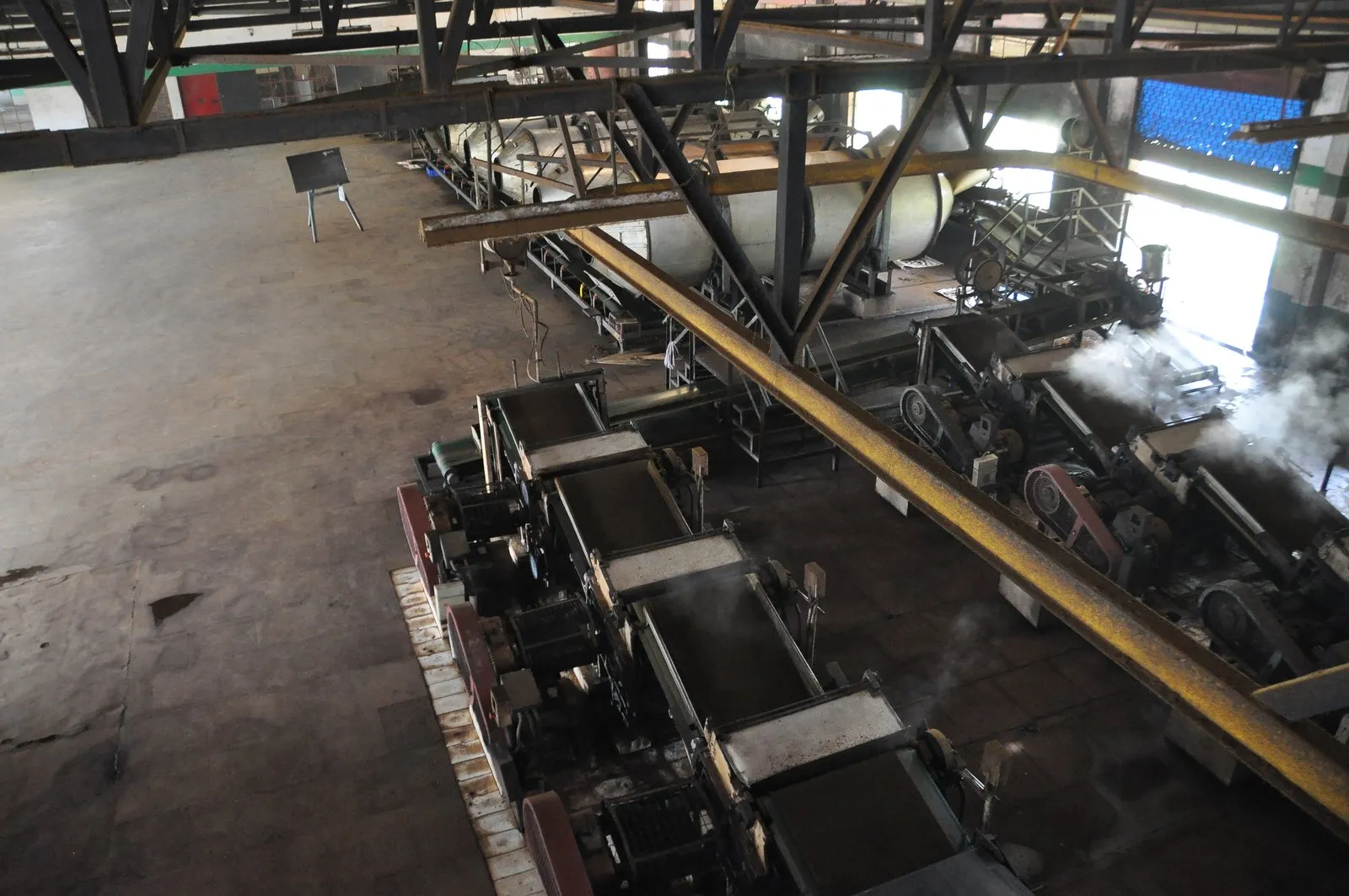
In the 1930s, Sir William McKercher, superintendent of the Amgoorie Tea Estate in Assam, India, developed the CTC machine: a pair of toothed rollers rotating at different speeds that simultaneously crush, tear and curl the leaf into small pellets[3]. The method spread rapidly from the 1950s onward and now dominates Indian black-tea production, making up well over 80% of output[3].
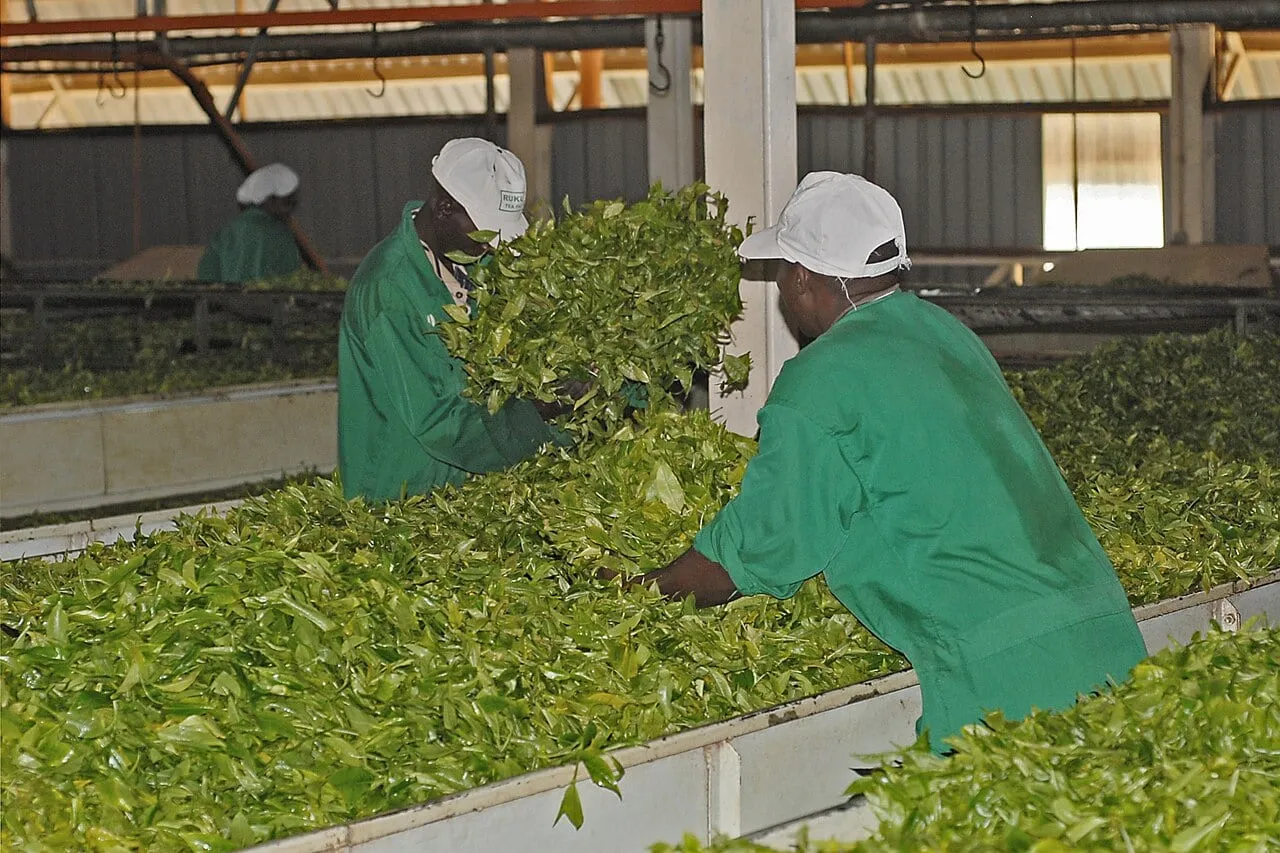
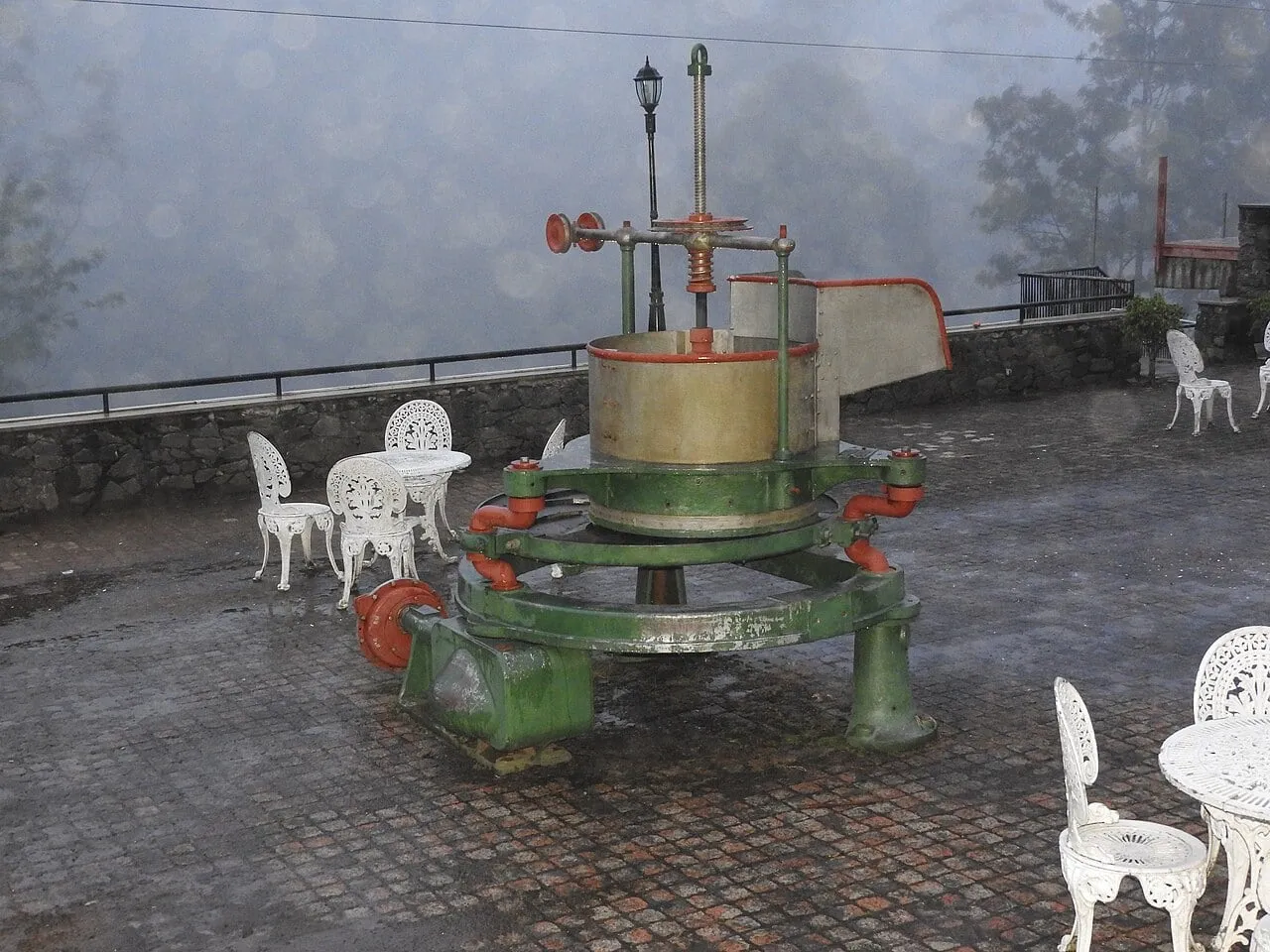
Both approaches involve preparation and shaping. These examples show leaf stirring in a withering trough and a displayed traditional roller at different factories; they are neither one batch nor close-ups of CTC teeth.
Process at a glance
| Stage | Congou black tea | CTC black tea |
|---|---|---|
| 1. Withering | Natural, warm-air or sun withering to ~55–65% leaf moisture | Trough or continuous withering to ~60% moisture |
| 2. Rolling / maceration | Slow rolling under graded pressure to form strips | CTC rollers or rotorvane chop leaves into granules |
| 3. Oxidation (“oxidation”) | 3–6 h under controlled temperature and humidity | 1.0–1.5 h, fast and even oxidation |
| 4. Drying | Two-stage firing: initial high heat, then lower finish | Fluid-bed or chain dryer at high temperature |
| 5. Refining | Sorting, de-stemming, blending, re-firing | Sieving and grading (BOP / BOPF / Dust) |
Values are representative ranges; actual parameters vary by cultivar, region and equipment[5].
The critical difference: breakage and oxidation speed
Congou rolling breaks roughly 60–85% of leaf cells. CTC maceration breaks 90% or more[5]. The more complete the breakage, the more fully polyphenol oxidase (PPO) meets catechins and the more oxygen can reach the exposed compounds, so oxidation runs faster and more intensely[1].
Whole leaf or pellets: how much is broken?
Switch methods; compare the cells in the loupe.
Slow rolling keeps whole leaf
- A round rolling table turns slowly (25–35 rpm)
- Leaves twist into tight, whole strips
- Loupe: some cells break, the vein framework stays
- Juice coats the surface; oxidation moves inwards
Cells stay largely intact, so flavour comes out over infusions.
Equipment, flavour scores & sources
- Primary Shaping Machinery
- Circular rolling machine (25–35 rpm)
- Cell Wall Rupture Rate
- 60%–80% (Preserved cell framework)
- Primary Culinary Applications
- Gaiwan Gongfu Infusion; Single-Origin Red Tea (Keemun/Dianhong); Floral & Honey Appreciation
Relative flavour scores (editorial 0–100): Mellowness (Body) 92; Briskness (Punch) 68; Astringency (Tannin) 42; Sweetness (Honey) 90
Tightly twisted intact lanceolate cordons, glossy black hue with golden down, supple whole infused leaf
Artisanal rolling gently expresses cell sap onto leaf cuticles without obliterating structural cell walls. Solutes leach out steadily over multiple steepings with smooth floral honey sweetness.
Mechanisms: Based on ISO 3720 and GB/T 13738.1/2 standards (R-062, R-031). Orthodox rolling preserves vascular bundle frameworks; CTC shearing allows unrestricted substrate-enzyme contact for rapid theaflavin synthesis.
Note: Orthodox Congou is crafted for contemplative gaiwan infusion; CTC granules are engineered for instant extraction in teabags and milk teas.
Rupture and extraction are illustrative, not measured; strength also depends on brew ratio.
Use the toggle above to focus on either style or compare them side by side. The short version: if congou is about nuance and re-steepability, CTC is about efficiency and intensity.
Research on CTC manufacture in North East India found that total catechins fell by about 96% from fresh leaf to finished black tea, with theaflavins peaking around 20 minutes of oxidation and then declining as they converted into larger thearubigins[1]. Another study showed that theaflavins form faster under CTC maceration than under orthodox rolling[2].
| Parameter | Congou black tea | CTC black tea |
|---|---|---|
| Cell breakage | ~60–85% | 90% or higher |
| Typical oxidation time | 3–6 h | 1.0–1.5 h |
| Dry-leaf shape | Long, twisted strips | Small pellets or broken pieces |
| Oxidation-product balance | Relatively balanced theaflavins and thearubigins | Higher thearubigin/theabrownin share |
Flavour and liquor colour
Congou teas brew a bright reddish liquor with a mellow, sweet and often floral or fruity aroma; high grades can show honeyed or region-specific notes such as the famous “Keemun fragrance”[4].
CTC teas are typically described as strong, brisk, bright and astringent. They give a dark, robust cup that keeps its character through milk and spices, which is why CTC is the base of English breakfast blends, Indian masala chai and Hong Kong-style milk tea[3].
Congou (Orthodox) Black Tea
Black · Orthodox Whole-LeafCTC Black Tea
Black · Crush-Tear-CurlThe silhouettes are relative guides; real cups vary with origin, cultivar and season.
Grades and typical uses
Under China’s GB/T 13738.2-2017 standard, congou black tea is made from buds, leaves and tender stems through withering, rolling, oxidation, drying and refining; it is divided into large-leaf and small/medium-leaf types[4]. Quality is judged by tight, glossy strips, bright red liquor and a fresh, sweet aroma.
CTC teas are graded by particle size. Common grades include:
| Grade | Full name | Particle | Typical use |
|---|---|---|---|
| BOP | Broken Orange Pekoe | Small broken leaf | Plain tea, tea bags |
| BOPF | Broken Orange Pekoe Fannings | Fine particles | Tea bags, milk tea |
| Dust | Dust | Fine dust | Tea bags, instant tea |
Representative origins and teas
Congou classics:
- Keemun (Anhui, China) — orchid-like “Keemun fragrance”
- Dian Hong (Yunnan, China) — bold, honeyed, golden tips
- Yihong, Chuanhong, Ninghong, Huhong and other regional styles
CTC powerhouses:
- Assam, India — malty, strong breakfast-tea base
- Kenya — bright, brisk, often used in blends
- Low-grown Sri Lanka — full-bodied and dark
Brewing tips
Because CTC leaf exposes so much surface area, it infuses far faster than congou. The parameters should be adjusted accordingly.
Many slow infusions or one fast burst?
Switch vessels; watch how fast colour spreads.
Short gaiwan steeps, repeated
- Boiling water, short gaiwan steeps
- Flavour diffuses slowly out
- Leaves unfurl more each time
- 8–10 infusions in all
Slow, steady extraction gives a smooth, sweet, layered liquor that lasts.
Equipment, flavour scores & sources
- 30s Solute Extraction Rate
- Slow & Steady (Multi-steep endurance)
- Infusion Endurance
- 8–10 brews without flavor collapse
- Primary Culinary Applications
- Gaiwan Gongfu Infusion; Single-Origin Red Tea (Keemun/Dianhong); Floral & Honey Appreciation
Relative flavour scores (editorial 0–100): Mellowness (Body) 92; Briskness (Punch) 68; Astringency (Tannin) 42; Sweetness (Honey) 90
Tightly twisted intact lanceolate cordons, glossy black hue with golden down, supple whole infused leaf
Orthodox Mastery: Preserving intact cell walls encapsulates high-boiling essential oils, providing multi-layered lingering finish.
Mechanisms: Based on ISO 3720 and GB/T 13738.1/2 standards (R-062, R-031). Orthodox rolling preserves vascular bundle frameworks; CTC shearing allows unrestricted substrate-enzyme contact for rapid theaflavin synthesis.
Note: Orthodox Congou is crafted for contemplative gaiwan infusion; CTC granules are engineered for instant extraction in teabags and milk teas.
Rupture and extraction are illustrative, not measured; strength also depends on brew ratio.
| Parameter | Congou black tea | CTC black tea |
|---|---|---|
| Water temperature | 90–95 °C (194–203 °F) | 95–100 °C (203–212 °F) |
| Leaf-to-water ratio | 3–5 g / 150 ml | 2–3 g / 150 ml |
| First infusion | 20–30 s | 10–15 s |
| Vessel | Gaiwan, small teapot | Teabag, mug, milk-tea pot |
| Re-steepability | Good, 4–6 infusions | Low, usually 1–2 infusions |
With CTC, avoid long steeping: tannins extract quickly and can overpower the brisk sweetness.
Common Myths & Scientific Clarifications
Myth 1: “Is CTC black tea simply cheap, low-grade sweepings?”
Scientific Clarification: CTC is an efficient industrial processing method rather than a quality downgrade[3]. By crushing, tearing, and curling withered leaves between high-speed toothed rollers, cell breakage exceeds 90%, allowing polyphenol oxidase to rapidly catalyze catechins into abundant theaflavins and thearubigins within 1–1.5 hours[1][2]. While congou black tea emphasizes whole twisted leaves and layered floral-fruity sweetness for straight sipping, premium CTC is engineered specifically for milk tea and teabags where instant briskness and strength are essential[4][5]. When purchasing, evaluate uniform granule density and bright coppery liquor rather than assuming all broken leaf is inferior.
Myth 2: “Does premium whole-leaf congou make a richer, more flavorful milk tea than CTC?”
Scientific Clarification: Whole-leaf congou tea actually produces a thin, watery milk tea because of physical mass transfer limitations[5]. Congou leaves have a lower cell maceration rate (60%–85%) and minimal specific surface area, yielding gradual extraction. Its polyphenol and caffeine concentrations are insufficient to bind milk casein micelles effectively, so dairy easily suppresses tea aromatics[2][6]. Conversely, CTC’s high specific surface area yields an instantaneous surge of thearubigins and theaflavins that cuts cleanly through milk richness. For daily preparation, reserve whole-leaf congou for mindful gaiwan brewing, and use CTC as the robust backbone for milk tea.
Myth 3: “Is all broken black tea just fine dust and floor sweepings?”
Scientific Clarification: Broken black tea is governed by rigorous international and national grading standards (GB/T 13738.1) based on precise vibrating sieves[4][5]. Leaf grades span Broken Orange Pekoe (BOP) with distinct granules, Broken Orange Pekoe Fannings (BOPF) for premium teabags, down to Fannings and ultrafine Dust. Dust grades are tailored specifically for high-speed commercial extraction and instant tea manufacturing. High-grade BOP and BOPF consist of sorted, clean leaf tissues free from extraneous stalks and dirt. Inspect dry leaf uniformity: well-graded CTC displays even, dense, deep-brown pellets that produce sparkling ruby infusions.
Myth 4: “Do congou and CTC black teas differ primarily in their ‘fermentation percentage’?”
Scientific Clarification: Both styles are fully oxidized black teas; neither undergoes partial oxidation[5][6]. The divergence lies in oxidation kinetics driven by cell breakage rather than nominal “fermentation degree”. In CTC, >90% cell disruption exposes catechins instantly to endogenous enzymes and oxygen, accelerating oxidation to completion in just 1–1.5 hours and depleting ~96% of unoxidized catechins into dark thearubigins[1]. Congou rolling breaks only 60%–85% of cells, requiring 3–6 hours of gentle oxidation that retains a higher theaflavin-to-thearubigin ratio[6]. When tasting, differentiate them by congou’s layered honeyed finish versus CTC’s upfront, brisk astringency.
Related entries
- The science of black tea oxidation — the same enzymatic oxidation, approached two different ways
- China’s six tea categories — where black tea sits in the bigger picture
Full process and parameters
| Stage | Congou parameters | CTC parameters | Purpose |
|---|---|---|---|
| Withering | To ~62% moisture, 12–20 h | To ~60–62% moisture, often continuous | Soften leaf, activate enzymes |
| Rolling / maceration | 90–120 min, light–heavy–light pressure | CTC rollers, seconds to minutes | Break cells, create oxidation surface |
| Oxidation | 25–30 °C, 90–95% RH, 3–6 h | Near room temperature, ≥95% RH, 1.0–1.5 h | Convert catechins to theaflavins/thearubigins |
| Drying | Initial 110–120 °C, finish 90–100 °C | Fluid bed 120–130 °C, rapid | Stop enzymes, fix quality |
| Refining | Sorting, de-stemming, blending, re-firing | Sieving, grading, blending | Standardise grade and stable supply |
Parameters are representative; adjust to leaf material, weather and equipment[4][5].
References
- R-062 — Deka, H., Sarmah, P. P., Devi, A., Tamuly, P., & Karak, T. (2021). Changes in major catechins, caffeine, and antioxidant activity during CTC processing of black tea from North East India. RSC Advances, 11, 11457–11467. https://doi.org/10.1039/d0ra09529j
- R-063 — Senthil Kumar, R. R., et al. (2011). Biochemical quality characteristics of CTC black teas of south India and their relation to organoleptic evaluation. Food Chemistry, 129(4), 1640–1646. https://doi.org/10.1016/j.foodchem.2011.04.042
- R-064 — Sarkar, S., Chowdhury, A., Das, S., Chakraborty, B., Mandal, P., & Chowdhury, M. (2016). Major tea processing practices in India. International Journal of Bioassays, 5(11), 5143–5150. https://doi.org/10.21746/ijbio.2016.11.0015
- R-065 — GB/T 13738.2-2017.《红茶 第2部分:工夫红茶》(Black tea—Part 2: Congou black tea). 全国茶叶标准化技术委员会(SAC/TC339).
- R-031 — 施兆鹏, 夏涛 主编 (2016).《茶叶加工学》(第3版). 中国农业出版社. ISBN: 978-7109214347.
- R-205 — Balentine, D. A., Wiseman, S. A., & Bouwens, L. C. (1997). The chemistry of tea flavonoids. Critical Reviews in Food Science and Nutrition, 37(8), 693–704. https://doi.org/10.1080/10408399709527797
Article Knowledge Network
Explore the connections between the teas, processes and flavours in this article.