
Flavour & Cupping
Sensory Evaluation · Flavor Wheel and Standards
From interactive dual-tier flavour wheels and polyphenol-amino acid ratios to national five-factor cupping standards and quality fault triage: building an objective sensory vocabulary.
Flavour is far more than slapping poetic adjectives like “floral” or “sweet” onto an infusion. This chapter uses the tea flavour wheel, chemical-to-sensory models, and quality troubleshooting workflows to ground aroma volatiles, taste thresholds, and mouthfeel descriptors in an objective, reproducible framework[1][2].
Chemical composition provides valuable clues, but individual compounds can never be equated directly with subjective sensory perception. Harvest grade, craft precision, storage conditions, and brewing environment interact continuously; this chapter provides rigorous descriptive tools while maintaining clear boundaries between instrumental analytics and human tasting[1][2][3].
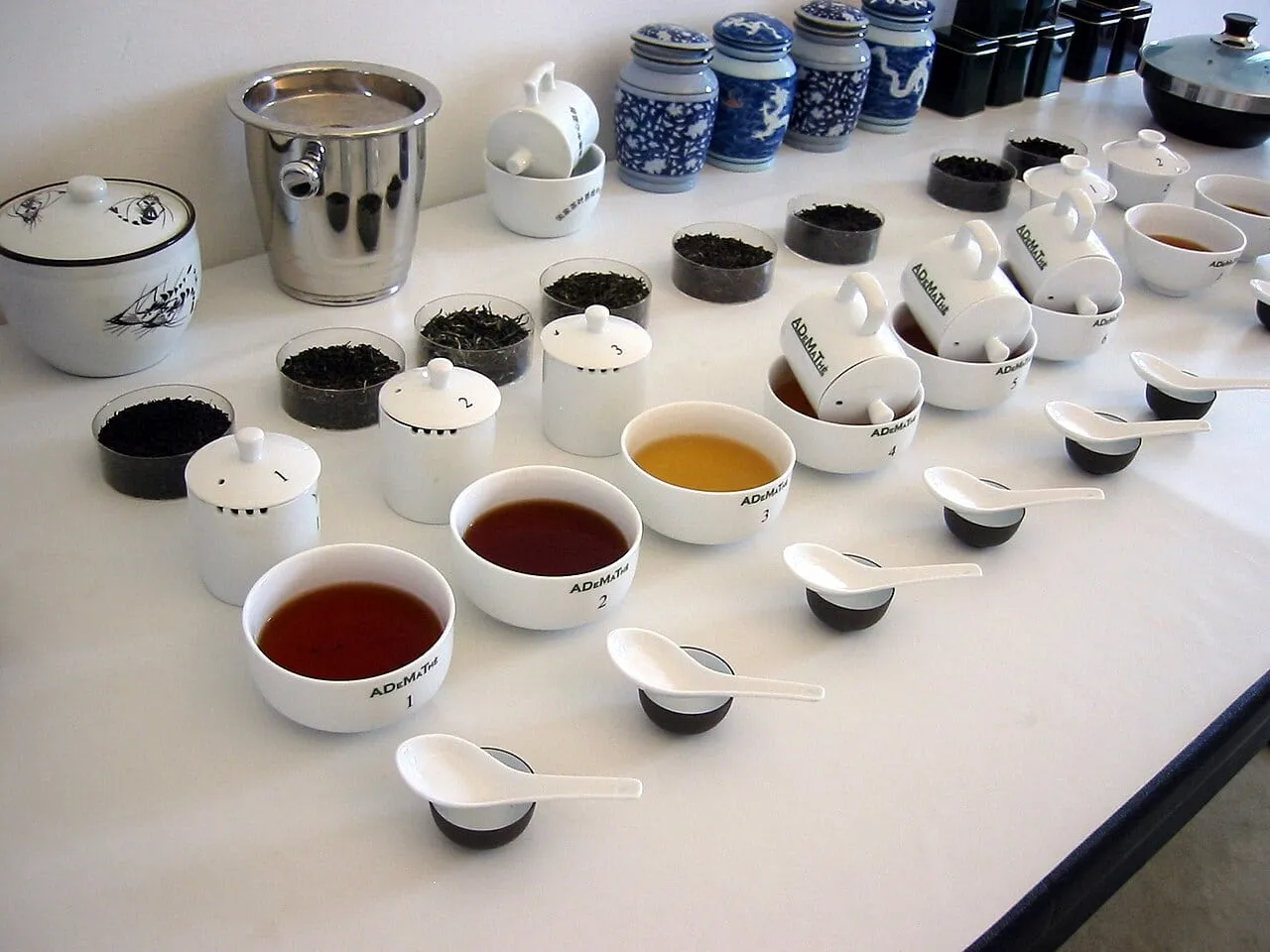
A shared vocabulary connecting volatiles to sensory perception
Interactive Tea Flavour Wheel
Explore primary aroma families and specific volatile descriptors. Built alongside the national sensory evaluation standard (GB/T 23776) for professional tasting.
Chapter articles
3 articlesTea Flavour Wheel & Sensory Lexicon
A flavour wheel groups related aroma associations into a word map, helping move from “pleasant” to a clearer description.
Can one compound ratio predict tea flavour?
The polyphenol-to-amino-acid ratio relates two measured compound groups and can help explain some taste differences.
Tea Sensory Evaluation & Five-Factor Standard Method
Sensory evaluation brings samples, vessels, water and timing into comparable conditions, then examines dry leaf, liquor colour, aroma, taste and infused leaf separately.
Open sensory tools · professional beta in preparation
Build shared language before deeper triage
The open edition retains foundational terms, representative paths and every stop-use notice; the complete professional workflow is being prepared as a separate edition.Sensory terminology
Search foundational terms, English names and concise definitions across six sensory dimensions. Full distinctions, observation and source locators are moving to the professional edition.
Use open tool →Quality fault triage
Start from tea type and sensory signs to establish a basic frame, with high-frequency paths and every stop-use notice openly available.
Use open tool →METHODOLOGICAL RIGOR & EVIDENCE BOUNDARIESStandardized Sensory Protocol & Objective Cupping
Vocabulary and scoring rules strictly follow national sensory standards (GB/T 23776). Volatile GC-MS and odor activity value (OAV) thresholds are fully cited.
Objective cupping metrics are carefully separated from subjective consumer appreciation.
Primary References
- R-029 — Wan Xiaochun, ed. (2003). Tea Biochemistry (3rd ed.). China Agriculture Press. ISBN: 978-7109066274. Taste mechanisms of catechins, amino acids, caffeine, and aromatic volatiles.
- R-161 — GB/T 23776-2018. Methodology for Sensory Evaluation of Tea. Standardization Administration of China. National standard for professional cupping protocol.
- R-033 — Wang, K., et al. (2010). Comparison of catechins and amino acids in white, green, oolong, black, and pu-erh teas. Food Chemistry, 121(2), 338–344.