
Start with the essentials
Brewing finds a combination of leaf quantity, water volume, temperature and time that suits the sample and your taste. A different method can change strength, aroma and texture. Understanding each variable makes a consistent cup easier to achieve.
This article starts with cup and gongfu approaches, separates bitter, astringent and weak results, and uses paired infusions to create repeatable notes. Tables provide starting points; small adjustments reveal what works.
Three key points
- Leaf and water establish a strength basisRecord actual water volume alongside the leaf quantity.
- Time and temperature shape extractionForm, tenderness, compression and infusion number require attention.
- One change helps identify causesDescribe the problem, compare the result and retain useful adjustments.
A simple way to try it
Record leaf, water, temperature and duration, then change only time in the next cup. Once strength suits you, explore temperature or quantity and preserve the result in a simple reusable note.
Choose a method you can repeat
Cup brewing uses relatively little leaf and longer contact for a convenient drink. Gongfu brewing uses more leaf relative to water and shorter repeated infusions. Begin with a method you can handle consistently.
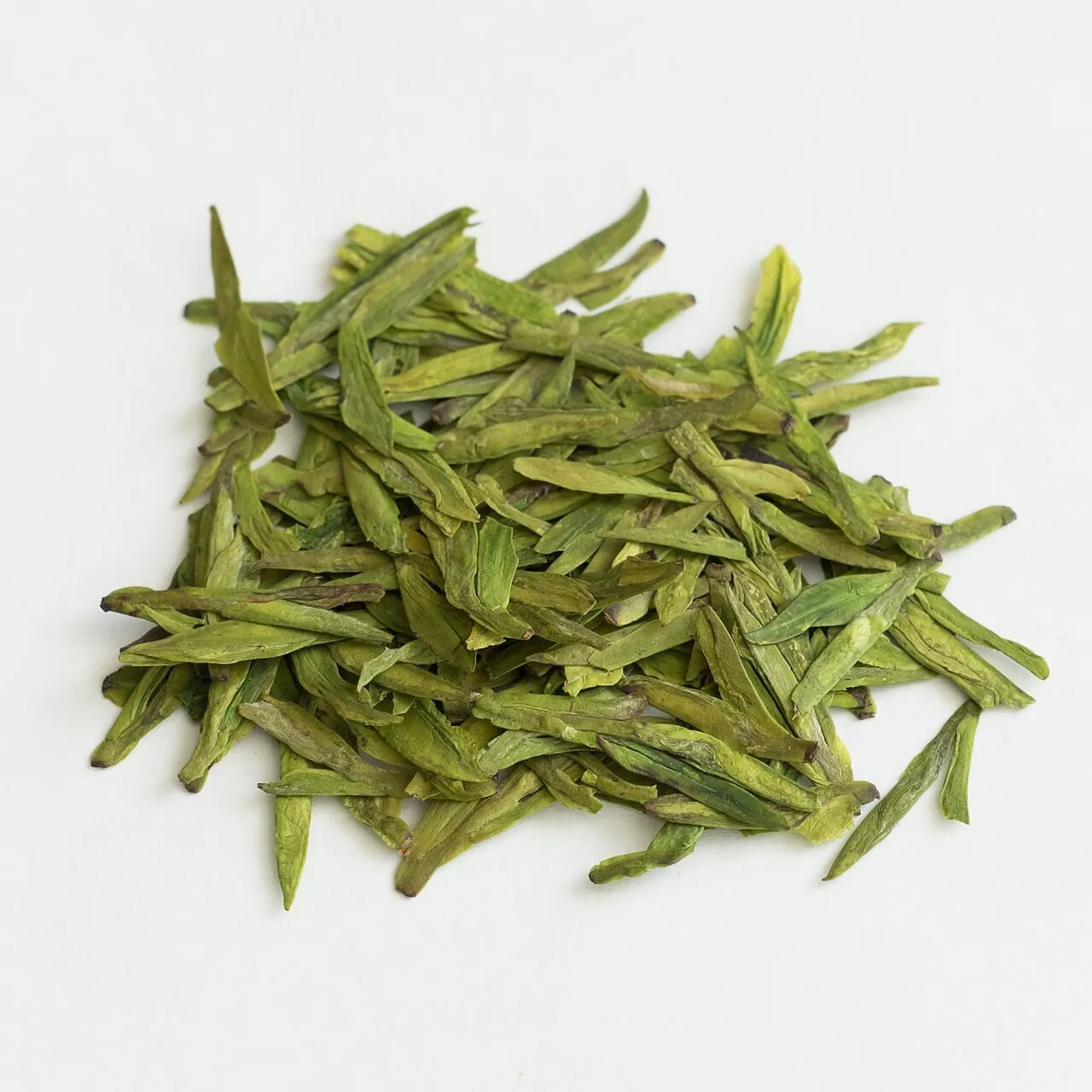
Record actual water added, not the vessel’s advertised capacity. Tea occupies space, and slow or incomplete pouring extends contact. Start by observing the shape and condition of the dry leaf, and record the tea and quantity before comparing methods.
Find a starting point
Choose a category and method below. These are editorial starting points for typical samples, not product standards, quality scores or guarantees. Time refers to the first infusion; volume means actual water added.
Brewing starting points
Pick a tea and method to see five settings.
Tip: No rinse needed. Start cooler or shorter for buds and broken leaf; mature or tightly shaped leaf may take more heat.
Scope & how to adjust
Editorial starting points for typical whole-leaf tea; timing is the first infusion and volume is actual water added. Adapt for broken or compressed leaf and preference.
Adjust for tenderness, leaf shape or compression, roast and storage, water and taste; change one variable at a time. If harsh, shorten or cool; if weak, modestly add leaf, time or heat.
Camellia Tea Knowledge Base · by 茶食新知 | Updated 2026-10-08
Editorial starting points, not standards or quality judgments.
Maturity, broken leaf, compression, roast, water and preference all affect the choice. CTC and tea-bag material should not automatically receive whole-leaf timing[2][3].
How Dry-Leaf Geometry and Rolling Tightness Shape Early Infusions
Even at the same 3–5 g leaf weight, dry-leaf geometry governs how quickly hot water wets the interior and how fast effective surface area expands across infusions[2][3]:
| Dry-Leaf Geometry | Representative Examples | Wetting & Extraction Behaviour | Early-Infusion Pacing Advice |
|---|---|---|---|
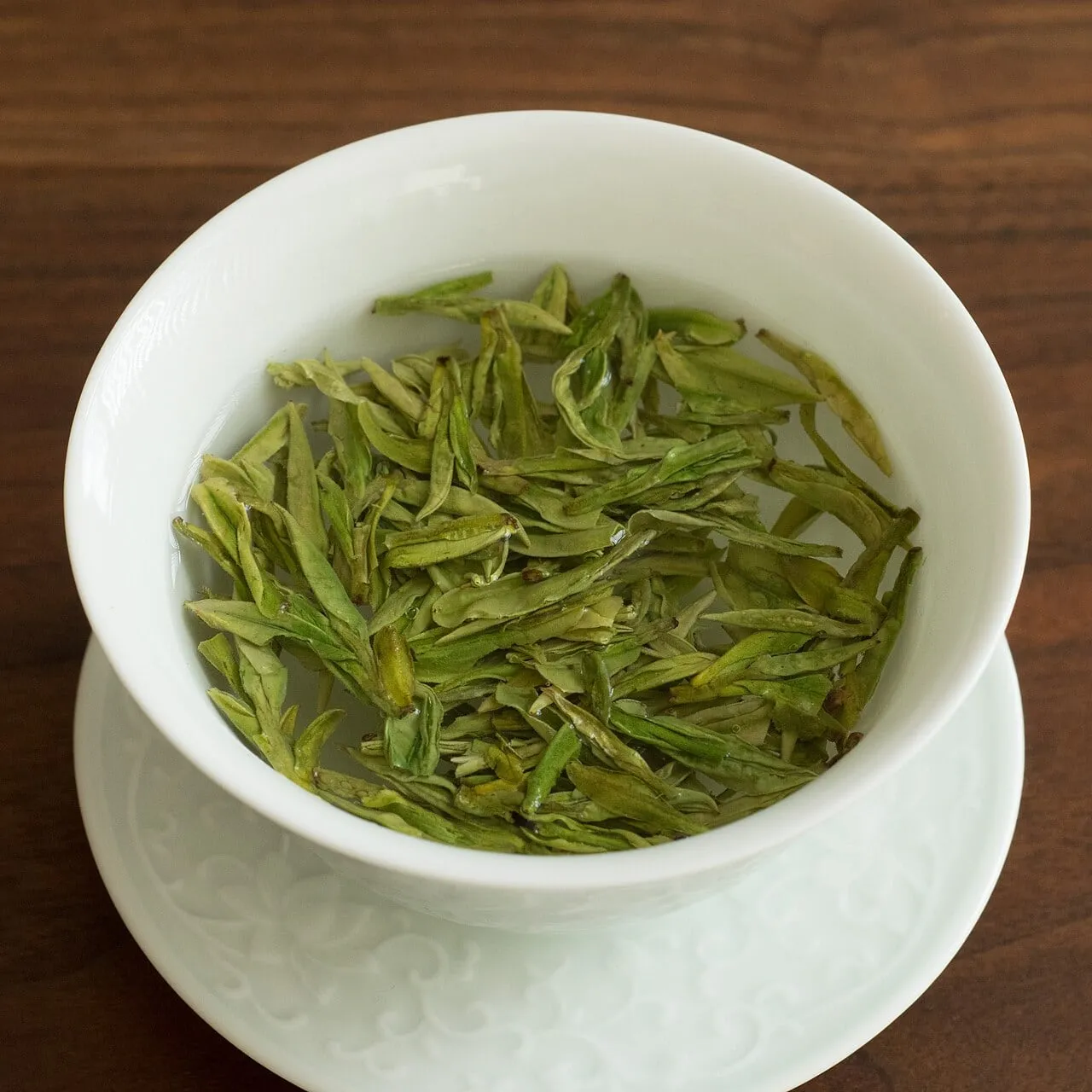
| Flat / Sparrow-Tongue | West Lake Longjing | Pan-flattened leaves are thin with large exposed surface area; they wet rapidly and release amino acids and surface polyphenols together | No wetting rinse needed; pour at the baseline time and leave the lid ajar between infusions |
| Curled Tippy / Fine Tender Strips | Dongting Biluochun, Xinyang Maojian | Extremely tender buds with thin cell walls and abundant trichomes release water-soluble compounds rapidly and turn astringent if held too long | Pour gently down the wall; use brisk 10–15 s gaiwan infusions and avoid turbulent high pours that cloud the liquor |
| Plump Single Buds (Dense Down) | Baihao Yinzhen, Junshan Yinzhen | Thick, tightly layered buds coated in hydrophobic trichomes wet slowly during the first 15 seconds | Extend the first infusion to ~20–30 s so the bud core hydrates; infusions 2–3 enter a steady extraction phase |
| Tightly Rolled Semi-Ball | Anxi Tieguanyin, Dongding Oolong | Repeated cloth-ball rolling compacts the leaf; infusion 1 wets the exterior, then balls unfurl dramatically on infusions 2–3 | Give infusion 1 slightly longer (or a brief wetting wakeup), then shorten infusions 2 and 3 sharply once the leaves open |
| Twisted Strip / Open Leaf | Wuyi Rock Tea, Keemun, Lapsang Souchong | Uncompressed strips with higher cell-wall disruption allow rapid water penetration and fast early extraction | Keep infusions 1–3 brisk (5–10 s), then add 5–10 s progressively from the fourth infusion onward |
| Compressed Cake / Brick Pieces | Raw Pu-erh, Ripe Pu-erh, Anhua Fuzhuan | Steam-compressed chunks release surface dust first while dense cores require heat and moisture to loosen layer by layer | Give a quick boiling wetting rinse, drain completely, leave uncovered for ~1 min to let steam penetrate, then begin timed infusions |
For a repeatable exercise, record 3 g of one tea and 150 ml of water actually added. Time it from the starting point chosen for that tea, pour it out, and record the taste. Brew another cup changing only the time to compare that one adjustment. These figures are an example, not a recipe for every tea.
Understand the four variables
| Variable | Contribution | Adjustment |
|---|---|---|
| Leaf quantity | Available material and concentration | Weigh first; add modestly if weak |
| Water temperature | Extraction rate and liquor character | Change and taste rather than assuming hotter is better |
| Contact time | Extent of extraction | Shorten harsh tea and check drainage |
| Vessel and handling | Heat retention and pouring | Keep vessel, preheating and timing consistent |
Extraction research shows effects from temperature, particle size and manufacturing[1][2][3]. Components need not extract together, but this does not establish a universal “sweet first, bitter later” curve.
When pouring, first keep the water volume, starting point and decanting method consistent. To compare pouring styles, change the stream or entry position separately and record the result; a single photograph cannot establish a change in chemical composition or aroma.
Four brewing variables: what speeds extraction?
Switch variables; see which curve rises first.
Up: strength (no scale) · Right: steeping time
Broken leaf releases first
- Broken / CTC: fast release
- Whole, tight leaf: slow, lasting
- The gap is widest early on
Don’t reuse whole-leaf timing for broken or CTC tea; halve the first steep.
Sources
Price & Spiro (1985): sieved leaf fractions vs. theaflavin and caffeine extraction rates.
Curves show direction only, not measured strength; tea, vessel and water matter.
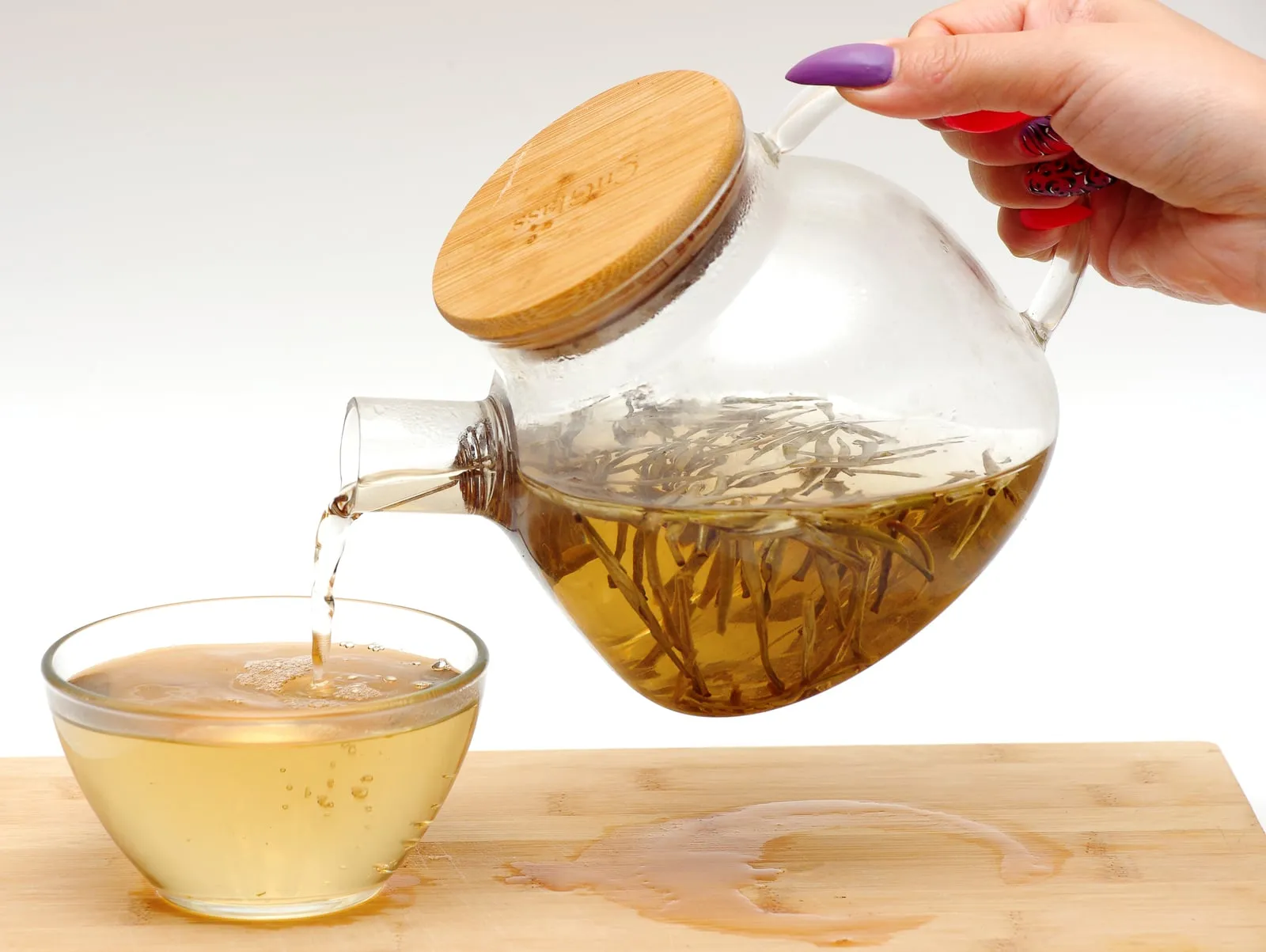
Pouring contributes to contact time too. The glass-teapot photograph shows liquor entering a cup; it is a different tea from the Longjing above and does not document a complete timed preparation.
Separate bitterness, astringency and weakness
Bitterness is a taste; astringency is often a drying, contracting mouthfeel. Note persistence and whether aroma stays clear. Distinguish generally weak liquor from adequate taste with muted aroma.
Check timing and pouring before changing one variable. See brewing troubleshooting. Stop tasting suspected contamination or mould rather than treating it as a recipe problem.
Try a two-cup comparison
- Use the same tea, quantity, water, vessel and temperature.
- Brew one cup at your usual duration; change only time in the other.
- Taste at similar drinking temperatures and record aroma, bitterness, astringency and body.
- Refine time in the preferred direction before changing temperature.
This is a home tasting exercise. Formal evaluation follows a particular standard and a different purpose[4].
Wetting and cold brewing
- Wetting is optional: It can help some tightly shaped leaves open; adjusting the first steep is another choice.
- Rinsing does not establish safety: Do not salvage mouldy or contaminated tea by washing it.
- Cold brewing extracts caffeine: Mild taste does not establish decaffeination.
- Hygiene and refrigeration matter: Use potable water and clean vessels, avoid prolonged warm storage, make small batches and drink promptly[5]. See cold brewing.
Keep a repeatable record
| Item | Record |
|---|---|
| Tea | Name, batch or source, whole or broken leaf |
| Parameters | Grams, actual water volume, temperature and contact time |
| Handling | Vessel, preheating, pouring and drainage |
| Sensations | Aroma, bitter taste, astringency, freshness, body and finish |
| Next step | One variable to change |
Related Articles
- Brewing Troubleshooting: Follow a single-variable decision matrix when a cup tastes bitter, drying, weak, or muted.
- Water Quality & Tea Liquor: Hold leaf and vessel constant to see how mineral hardness, alkalinity, and pH shift liquor colour and taste.
- Teaware Thermodynamics: Factor vessel capacity, wall thickness, rim opening, and pouring speed into your brewing control.
- Cold Brew Science: Explore low-temperature extraction kinetics, suitable tea styles, and refrigerated hygiene practices.
- Home Tea Storage: Protect dry leaves from moisture, light, and odours so your brewing starts from stable material.
- Professional Sensory Evaluation & Flavor Wheel: Learn standardised cupping vocabulary and compare 23 benchmark teas in the Interactive Flavor Wheel.
References
- R-116 — Spiro, M., Jaganyi, D., & Broom, M. C. (1992). Kinetics and equilibria of tea infusion: Part 9. The rates and temperature coefficients of caffeine extraction from green Chun Mee and black Assam Bukial teas. Food Chemistry, 45(5), 333–335. https://doi.org/10.1016/0308-8146(92)90033-x
- R-129 — Price, W. E., & Spiro, M. (1985). Kinetics and equilibria of tea infusion: rates of extraction of theaflavin, caffeine and theobromine from several whole teas and sieved fractions. Journal of the Science of Food and Agriculture, 36(12), 1309–1314. https://doi.org/10.1002/jsfa.2740361216
- R-266 — Jaganyi, D., & Price, R. D. (1999). Kinetics of tea infusion: the effect of the manufacturing process on the rate of extraction of caffeine. Food Chemistry, 64(1), 27–31. https://doi.org/10.1016/s0308-8146(98)00101-0
- R-161 — GB/T 23776-2018.《茶叶感官审评方法》(Methodology for sensory evaluation of tea). 全国茶叶标准化技术委员会(SAC/TC339).
- R-339 — 農業部茶及飲料作物改良場. 常見問答集-茶葉爭議訊息澄清. https://www.tbrs.gov.tw/theme_list.php?print=Y&theme=question&type=1
Article Knowledge Network
Explore the connections between the teas, processes and flavours in this article.