
Start with the essentials
Anxi Tieguanyin is an oolong, while Tieguanyin also names a cultivar. Tight pellets, unfolding leaves and floral aromas lead to different parts of manufacture: selection, leaf working, cloth rolling and roasting.
This article connects origin and material with movement and resting, shaping, and lighter, roasted or aged styles. Brewing and infused leaves then help explain variation between teas carrying the same name.
Three key points
- Leaf working manages changeMovement and resting coordinate damage, moisture and reactions.
- Cloth rolling creates tight formUnfolding and extraction can change across infusions.
- Roasting develops different stylesHeat treatment works with earlier stages and the particular product.
What to notice when tasting
Observe unfolding across several infusions and note aroma, strength and taste separately. Compare styles at similar strength, checking roasting and storage information to distinguish manufacture from brewing.
1. Terroir & Cultivars: Genetic Foundations of Hongxin Waiweitao
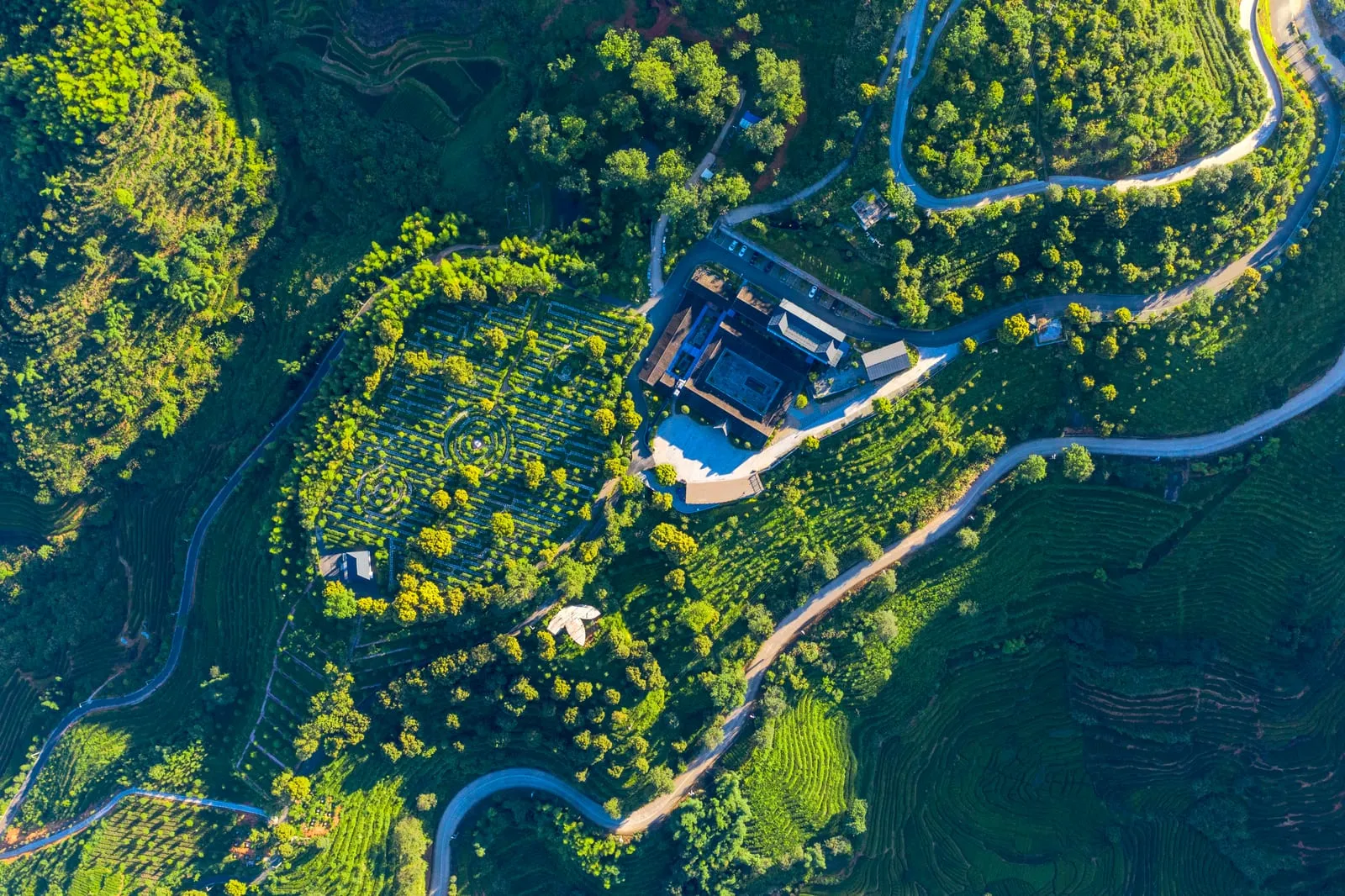
1.1 Anxi Geography: Inner Anxi vs Outer Anxi
According to GB/T 19598-2006, Anxi is located in the southeastern Daiyun Mountain range of Fujian Province, featuring complex mountainous topography[1]:
- Inner Anxi (High-Altitude Core): Encompassing Gande, Xianghua, Jiandou, and Daping townships at altitudes of 600–1,000 meters. Dense forests, frequent mists, high diurnal temperature swings, and weathered granite acidic red-yellow soil yield leaves packed with L-theanine and clean, razor-sharp natural orchid aromatics;
- Outer Anxi (Lower Altitude): Ranging between 300–500 meters with higher temperatures and longer growth cycles, yielding higher polyphenol contents that produce robust, full-bodied tea liquors[1][2].
1.2 Botanical Cultivar: Hongxin Waiweitao (True Tieguanyin)
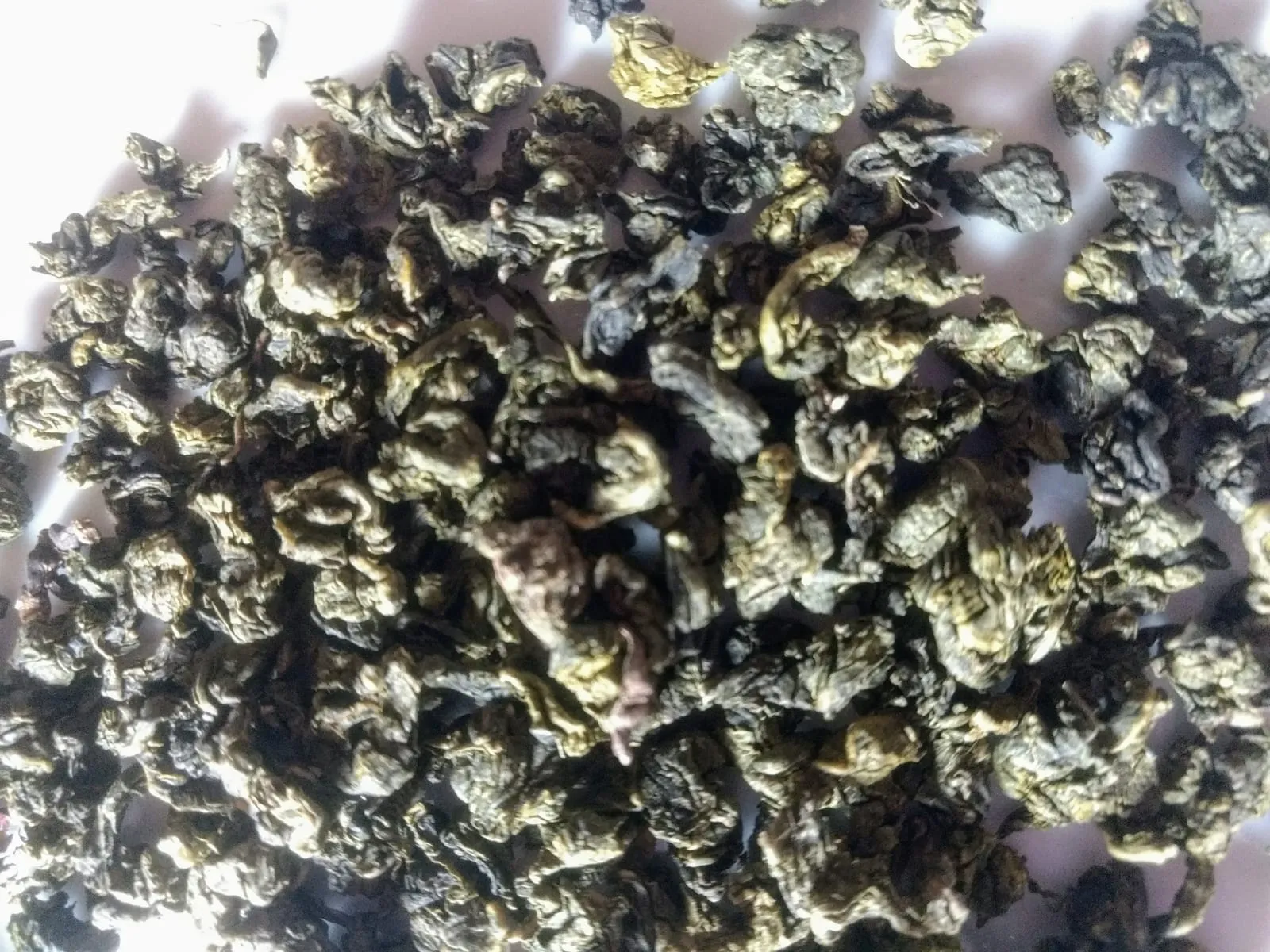
Authentic Tieguanyin is an asexual, medium-leaf shrub cultivar characterized by the classic morphological trait “Hongxin Waiweitao” (红心歪尾桃 / Red Heart, Crooked Tail Peach)[3]:
- Morphology: Tender spring bud tips exhibit a purplish-red blush (“Red Heart”); mature leaves are thick, leathery, and oval with blunt serrations, while the leaf apex curves gently to one side (“Crooked Tail”);
- Biochemical Richness: Cells hold extraordinary reserves of glycosidically bound volatiles (GBVs), specifically precursors for nerolidol, geraniol, and jasmone. Water extractable substances reach 42%–48%, providing the material foundation for its legendary endurance across seven or more infusions[3][4].
Tieguanyin (Hongxin Waiweitao)
Thick, leathery leaves rich in nerolidol precursors and extractable solids (45%+), yielding the peerless natural orchid Guanyin Charm.
Benshan (Close Relative)
Yellowish-green bud, elongated leaf; hardy and productive; high soaring floral aroma, though slightly lighter in throat depth.
Huangjingui (Huangdan)
Extra-early sprouting, thinner leaf; piercing and exuberant “heavenly” floral fragrance, but lighter body and less steep-endurance.
Maoxie (Hairy Crab)
Dense, sharp marginal serrations, heavy trichomes; robust, thick liquor with a signature rustic, full-bodied texture.
2. Plucking Criteria: The Logic of “Open-Surface Dormant Buds”
Tieguanyin strictly rejects young single buds, instead adhering rigorously to “Zhudan Kaimian” (驻芽开面采 / Open-Surface Dormant Bud Harvesting)[1][2]:
- What is Open-Surface Plucking: Harvesting occurs when apical shoot elongation halts and forms a tiny dormant bud tip, with the uppermost leaf expanding to half to two-thirds the size of a mature leaf (“medium open-surface”). One bud with two to three leaves is plucked.
- Why Open-Surface Leaves are Crucial:
- Optimal Cuticle Thickness: Tender buds tear easily during shaking, causing blackening; open-surface leaves have a resilient cuticle, confining bruising strictly to the margins (“green leaf with red border”);
- Peak Aroma Precursors: Mature leaves have maximized their synthesis of glycosidically bound aroma precursors and soluble polysaccharides, offering the exact chemical balance required for zuoqing[3][4].
3. Traditional Complete Workflow in Anxi
Traditional Tieguanyin craft is an arduous 24–36 hour sequence encompassing sun withering, indoor zuoqing, fixation, cloth-ball rolling, and charcoal roasting[2]:
3.1 Sun Withering & Indoor Cooling
- Sun Withering: Spread thinly over bamboo sieves under gentle afternoon sun (15:30–17:00, light intensity 15,000–25,000 lux, leaf temperature 25–30 °C) for 15–30 minutes to reduce fresh leaf weight by 3%–5%. Leaves lose luster and become soft;
- Cooling (Liangqing): Transferred to a climate-controlled room (20–24 °C, 70%–80% RH) and rested for 1–1.5 hours. Stem water transpires towards leaf margins, revitalizing leaf turgor.
3.2 Zuoqing (Tossing & Resting · 8–12 Hours)
Zuoqing is a dynamic, multi-stage regulation process alternating between mechanical shaking and quiet resting across 4–5 progressive cycles[2][4]:
| Round | Drum Rotations / Time | Resting Time | Morphological & Water State | Aroma & Chemical State |
|---|---|---|---|---|
| 1st Shake | 20–30 revs (~2 min) | 1.5–2.0 h | Leaf edges slightly bruised | Evaporates grassy vapor |
| 2nd Shake | 40–60 revs (~3 min) | 2.0–2.5 h | Moisture transpires through stem | Subtle fresh floral note emerges |
| 3rd Shake | 80–120 revs (~5 min) | 2.5–3.0 h | Edge cells rupture, red margins show | Floral notes intensify |
| 4th Shake (Heavy) | 150–250 revs (~8–10 min) | 3.0–4.0 h | Classic “green leaf with red border”, spoon-curled | Peak sweet orchid bouquet |
Four shakes: from grassy to orchid
Four rounds; watch the rim redden in the loupe.
A slow, short turn sheds surface water
- The bamboo drum turns slowly
- Leaves roll gently in the drum
- Loupe: surface water leaves
- Grassy vapour drifts off
A light first shake sheds field heat without bruising tender stems.
Conditions, techniques & sources
- Shaking drum speed & time
- Speed 20 rpm, 2–3 min
- Resting aeration duration
- Resting 1.5–2.0 h
- Volatile aroma evolution phase
- Fresh green · raw vegetative scent
Surface water evaporates, leaf texture begins softening, grassy notes dissipate
Gentle tumbling in the bamboo drum opens leaf stomata, expels surface moisture, and initiates leaf margin respiration.
Gentle Initiation: Keep speed low and time short to prevent early stem bruising.
Mechanisms: Synthesised from Tea Processing (R-031) and Tieguanyin National Standards. Zuoqing involves partial enzymatic oxidation and glycosidic aroma hydrolysis; Baorou utilizes thermal pectin cohesion and shear torque.
Note: Masters adjust shaking durations and plate rolling pressures dynamically based on leaf flush grade, ambient air pressure, and temperature.
Aroma and moisture cues are relative, not a measured index; they vary with leaf and style.
3.3 High-Heat Fixation (220–260 °C)
Once aroma peaks, leaves are pan-fired or drum-fixed at 220–260 °C for 3–5 minutes. This halts oxidation immediately, prevents excessive reddening, and evaporates water down to 50%–55%, making leaf tissue supple enough to endure immense rolling pressure[4][5].
3.4 Primary Rolling & Cloth-Ball Pellet Shaping
After slight cooling, leaves undergo preliminary mechanical rolling for 3–5 minutes, followed by the defining Cloth-Ball Wrapping (Baorou)[2]:
- Bagging: Portions of 5–8 kg of warm leaves are poured into a heavy square canvas cloth. The four corners are pulled tight and twisted into a dense sphere (“tea ball”);
- Plate Pressing: The ball is loaded beneath a dual-plate rolling machine, applying rotating vertical and horizontal shearing forces that squeeze, twist, and compact the leaves;
- De-blocking & Re-baking: After 5–8 minutes of compression, the cloth is unwrapped, clumps are loosened in a de-blocking machine, and dried with hot air (80–90 °C);
- Iterative Cycles: This cycle of “wrapping ➔ plate rolling ➔ de-blocking ➔ baking” is repeated 3 to 5 times with escalating pressure. As moisture drops to 15%–20%, leaves curl tightly into dense, sandy-green pellets with distinct “dragonfly heads”[2].
Five wraps to a "dragonfly head"
Five rounds: watch the pellet tighten.
Bag hot; twist the neck tight
- Hands twist the cloth neck shut
- Light pressure, slow turning
- Loupe: cords begin to curl inwards
- Residual heat keeps it pliable
Bagging while hot keeps the leaf pliable so it does not snap.
Conditions, techniques & sources
- Temperature
- Post-fixation warm (60–65 °C)
- Physical pellet morphology
- Loose curled strip
Hot fixed leaves packed tightly into canvas bags; rotated under plate pressure to initiate inward curling.
Warm Bagging: Uses residual steam and heat to soften pectins without snapping brittle leaves.
Mechanisms: Synthesised from Tea Processing (R-031) and Tieguanyin National Standards. Zuoqing involves partial enzymatic oxidation and glycosidic aroma hydrolysis; Baorou utilizes thermal pectin cohesion and shear torque.
Note: Masters adjust shaking durations and plate rolling pressures dynamically based on leaf flush grade, ambient air pressure, and temperature.
Aroma and moisture cues are relative, not a measured index; they vary with leaf and style.
4. The Three Major Aroma Styles
Craft variations and post-harvest roasting have created three distinct styles of Anxi Tieguanyin[1][2]:
1. Light Aroma (Qingxiang)
Craft: Light oxidation (15%–18%), low-temperature electric drying (60–75 °C).
Flavour: Vibrant sand-green pellets, bright yellow-green liquor, razor-sharp natural orchid bouquet, brisk and sweet mouthfeel.
2. Rich / Charcoal-Roasted (Nongxiang)
Craft: Traditional oxidation (20%–25%), multi-stage slow charcoal roasting (80–120 °C for 8–24h).
Flavour: Oily dark-brown pellets, golden amber liquor, rich caramelized chestnut and honeyed notes, stomach-warming sweetness.
3. Aged Vintage (Chenxiang)
Craft: Premium Nongxiang bases aged in clean dry warehouses for 5–10+ years with periodic light re-roasting.
Flavour: Deep wine-red liquor, aged sandalwood, ginseng, and licorice notes, silky, thick, and non-astringent.
5. Biochemical Mechanisms & Flavour Silhouette
- Zuoqing Enzymatic Hydrolysis & Stress Response:
- Leaf-edge mechanical wounding triggers lipoxygenase (LOX) and hydroperoxide lyase (HPL) to cleave unsaturated fatty acids into fresh floral aldehydes;
- Moisture stress activates cellular β-glucosidase, hydrolyzing odourless glycosidically bound volatiles into free nerolidol, linalool, jasmine lactone, and indole, producing the iconic complex orchid fragrance[3][4].
- Maillard Roasting Kinetics: During 90–120 °C charcoal baking, free amino acids and reducing sugars condense into alkylpyrazines (roasted nutty notes) and furanones (sweet caramel notes), mellowing any harshness and dramatically enhancing sweetness retention[5].
Anxi Tieguanyin
Oolong · Southern Fujian RolledFlavour silhouette represents top-grade Nongxiang (charcoal-roasted) Tieguanyin. Qingxiang style emphasizes fresh floral brightness and briskness.
6. Sensory Evaluation, Brewing & Storage
6.1 Sensory Evaluation Standards (GB/T 19598)
| Metric | Qingxiang (Grade Standard) | Nongxiang (Grade Standard) | Sensory Defect Identification |
|---|---|---|---|
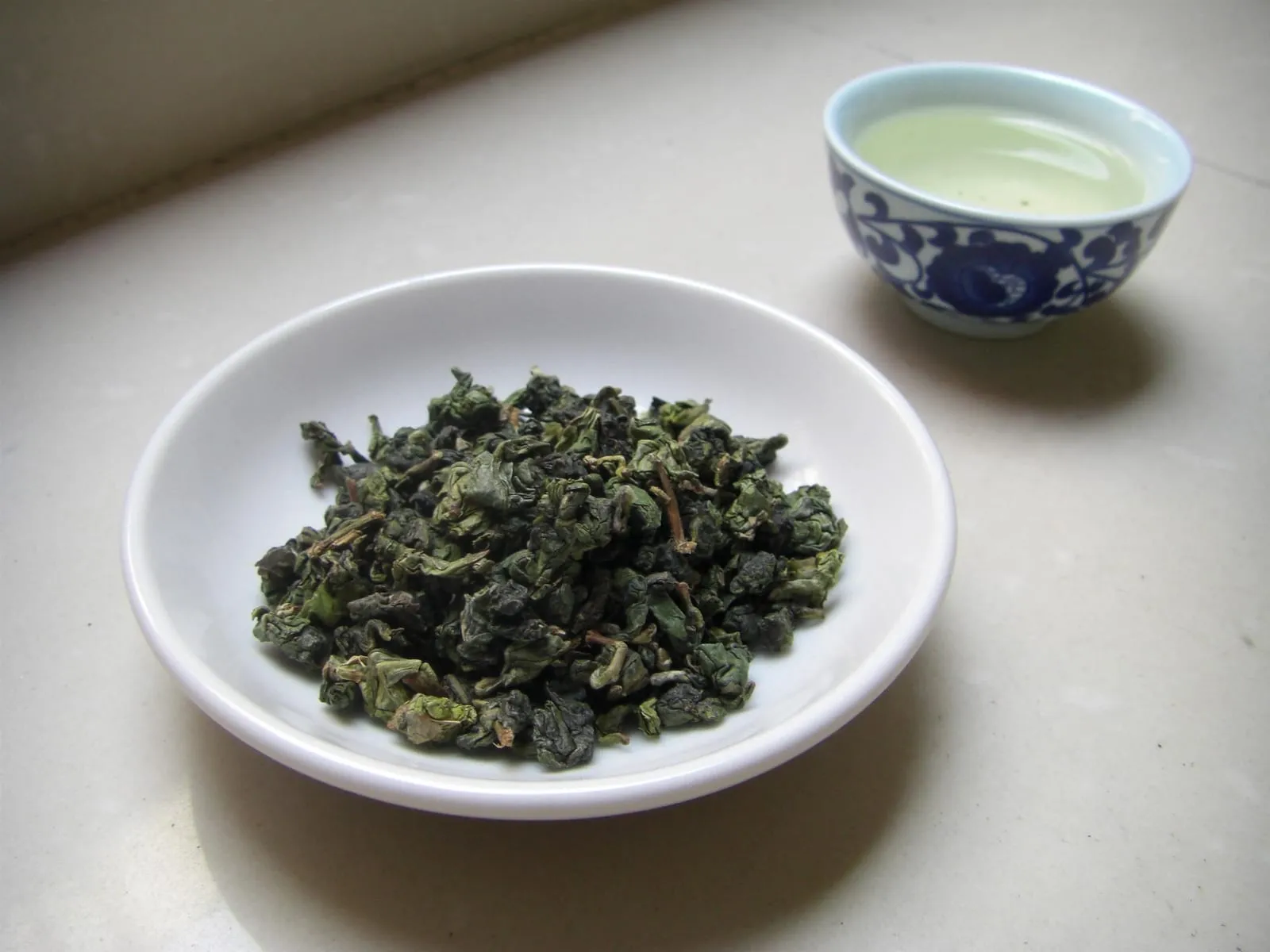
| Appearance | Tightly rolled spherical pellets, dragonfly head, sand-green | Heavy compact pellets, oily dark brown with subtle sand-green | Loose, flat strips, excessive broken fragments, coarse red stems |
| Liquor | Bright golden-green, translucent, crystalline clarity | Golden amber to orange, radiant and lustrous | Dull brownish-black, muddy cloudy suspension |
| Aroma | Soaring natural orchid fragrance, clean, sweet and pure | Ripe fruit, caramelized chestnut, deep charcoal fire aroma | Burnt smoky taint (roasting error), raw grassy smell (under-oxidized) |
| Taste | Refreshingly crisp, brisk, pronounced Guanyin Charm | Rich, full-bodied, velvety sweet, deep throat salivation | Rough astringency, flat wateriness, sour taint |
| Infused Leaf | Soft, supple, uniform, emerald with faint red edges | Soft, uniform, reddish-brown frost or supple brown | Scorched brittle edges, mushy decayed leaf pieces |
6.2 Brewing Parameters & Protocol
| Metric | Recommended Parameters | Key Notes & Instructions |
|---|---|---|
| Water Temp | 95–100 °C boiling water | Dense cloth-wrapped pellets benefit from 95–100 °C water to penetrate and unfurl fully |
| Tea-to-Water | 7–8 g / 110–120 ml (~1:15) | White porcelain gaiwan or Yixing Zhuni/Zini clay teapot recommended |
| Pour Method | High-pour technique | Aerates water and tumbles tight pellets for maximum aroma agitation |
| Steep Time | 1st–3rd: 5–10s, 4th–6th: 15–20s, 7th+: 30–45s | Fine Tieguanyin yields seven rich infusions with enduring sweetness |
| Storage | Qingxiang in freezer; Nongxiang/Chenxiang at ambient room temp | Keep Qingxiang sealed at -5 °C; store roasted/aged teas in dry, light-proof tins |
7. Common Myths & Scientific Clarifications
Myth 1: “Must all Tieguanyin be stored in the freezer, and is greener leaf always superior?”
Scientific Clarification: Optimal storage depends entirely on roasting depth and moisture content rather than an across-the-board freezing rule. Light-aroma (Qingxiang) Tieguanyin undergoes minimal fermentation and retains abundant chlorophyll, benefiting from -5 °C to 0 °C vacuum-sealed freezing to retard oxidative degradation. In contrast, traditional charcoal-roasted Nongxiang and aged Chenxiang styles are roasted drier; their rich, high-boiling alkylpyrazines generated via Maillard reactions remain stable at ambient temperature in dry, light-proof conditions. Storing roasted oolongs in a refrigerator risks condensation and flavor loss upon opening.
Myth 2: “Is the revered ‘Guanyin Charm’ mere marketing folklore or added chemical fragrance?”
Scientific Clarification: Guanyin Charm is firmly grounded in cultivar genetics and volatile flavor chemistry[1][3][5]. The authentic Hongxin Waiweitao cultivar exhibits elevated terpene synthase activity, synthesizing exceptionally high concentrations of trans-nerolidol, linalool, and trace indole that yield its signature natural orchid aroma during bruised fermentation (zuoqing). Furthermore, thick mesophyll cells packed with water-soluble pectins and polysaccharides are released during repetitive cloth-ball rolling (baorou), coating the pharynx with a lingering, cooling sweetness. Genuine Guanyin Charm resonates deeply in the throat across multiple infusions, whereas artificial flavorings disperse rapidly in the first cup and leave a dry palate.
Myth 3: “Must the initial rinse (Wenrunpao) always be discarded to eliminate chemical pesticides?”
Scientific Clarification: Permitted agricultural compounds used in compliant tea gardens are almost universally lipophilic with minimal water solubility (dissolution rate <1%), meaning a rapid rinse removes negligible residues. The true rationale for the first infusion is thermodynamic and physical: tightly rolled cloth-ball pellets present a very small surface area and waxy cuticles that resist immediate penetration. A rapid 3–5 second flash rinse with rolling boiling water breaks surface tension, expands compacted leaves, and preheats the gaiwan to volatilize trapped aromatics. When using clean, verified tea, this aromatic rinse can even be savored directly.
8. Related Articles
- The Science of Oolong Zuoqing — Mechanical bruising & water stress aroma kinetics
- Famous Tea Processing · Wuyi Rock Tea — Comparing strip-shaped Wuyi oolong with cloth-ball Tieguanyin
- Overview of the Six Tea Categories — Taxonomic placement of oolong tea
- Famous Tea Processing · Mengding Huangya — Yellow tea rapid baking and hydrothermal yellowing
9. Complete Craft Parameters
| Stage | Equipment | Temperature / Humidity | Duration | Moisture Flux | Biochemical & Physical Goal |
|---|---|---|---|---|---|
| Sun Withering | Bamboo trays | Light 15k–25k Lux, Leaf 25–30 °C | 15–30 min | ≈75% → ≈71% | Vents water, reduces weight 3–5%, activates hydrolases |
| Cooling | Indoor bamboo shelves | Ambient 20–24 °C, 70–80% RH | 1.0–1.5 h | ≈71% → ≈70% | Leaf cools, stem water transpires to margins (Zoushui) |
| Zuoqing (4-5x) | Bamboo shaking drums | Ambient 20–22 °C, 75–85% RH | 8–12 h (incl. rest) | ≈70% → 55–60% | Edge friction ruptures cells; yields nerolidol orchid bouquet |
| High Fixation | Rotating drum or pan | Pan temp 220–260 °C | 3–5 min | 55–60% → ≈50% | Halts PPO enzymes; softens tissue for intense rolling |
| Primary Roll | Type-55 rolling machine | Ambient temperature | 3–5 min | ≈50% → ≈48% | Twists leaf strips, coats surface with cell sap |
| Cloth Rolling | Dual-plate press machine | Bundle core 40–45 °C | 3–5 cycles (~1h) | ≈48% → 18–22% | Compressive rotational torque rolls strips into dense pellets |
| De-blocking | De-blocking drum & dryer | Hot air 80–90 °C | 5–8 min per round | Gradual drying | Breaks apart dense clumps; vents steam to maintain vitality |
| Charcoal Firing | Charcoal basket / dryer | Qingxiang 60–75 °C / Nongxiang 80–120 °C | 8–24 h | 18–22% → 5–6% | Drives Maillard reaction; locks density and enduring aroma |
Parameters are representative industry standards. Craftsmen flexibly adjust parameters according to weather humidity, cultivar, and desired aroma style[1][2][3].
References
- R-288 — GB/T 19598-2006.《地理标志产品 安溪铁观音》(Product of geographical indication—Anxi TieGuanYin tea). 国家质量监督检验检疫总局、国家标准化管理委员会. —— Geographical indication scope, sensory grading, physicochemical indicators, and processing specifications for Anxi Tieguanyin.
- R-031 — 施兆鹏, 夏涛 主编 (2016).《茶叶加工学》(第3版). 中国农业出版社. ISBN: 978-7109214347. —— Principles and parameters of oolong tea sun-withering, zuoqing, fixation, cloth-ball rolling, and roasting.
- R-030 — 陈宗懋 主编 (2000).《中国茶叶大辞典》. 中国轻工业出版社. ISBN: 978-7501925094.
- R-004 — Zhu, X., et al. (2021). Architecture and Dynamics of the Wounding-Induced Gene Regulatory Network During the Oolong Tea Manufacturing Process (Camellia sinensis). Frontiers in Plant Science, 12, 788469. https://doi.org/10.3389/fpls.2021.788469
- R-006 Wu, Liangyu, Chen, Xiaolan, Lin, Jiaqi, Lin, Hongzheng, Liao, Ningkai, Li, Chenxue, Hu, Yunfei, Sun, Yun (2024). Study on dynamic alterations of volatile organic compounds reveals aroma development over enzymatic-catalyzed process of Tieguanyin oolong tea production. Food Chemistry: Molecular Sciences, 9, 100227. https://doi.org/10.1016/j.fochms.2024.100227
Article Knowledge Network
Explore the connections between the teas, processes and flavours in this article.