
Start with the essentials
Wuyi rock tea is an oolong shaped by cultivar, place, leaf working and roasting. “Rock character” describes a combined experience that a phrase such as “mineral taste” cannot fully explain; aroma, texture and aftertaste deserve separate attention.
This article follows manufacture and the stages of firing, connecting their purposes with cup characteristics. Roasting and storage help place different styles within that process.
Three key points
- Leaf working establishes a foundationMovement and resting shape material for later roasting.
- Firing has stages and purposesMoisture removal and flavour adjustment require more detail than a light or heavy label.
- Describe rock character concretelyAroma, texture and aftertaste connect with origin, cultivar and manufacture.
What to notice when tasting
Compare successive infusions for floral, fruity and roasted notes and texture. When trying another sample, note roasting and storage and distinguish a preferred roast style from obvious burnt notes.
What makes this tea special
Wuyi rock tea’s identity is closely tied to its growing sites. The Danxia landscape of the Wuyi Mountains produces varied small environments of ravines, slope aspects, shade, temperature, humidity and soils, some containing weathered rock material. Yan yun is a composite sensory and cultural description, not a single measurable substance. It may reflect the combined effects of cultivar, site microenvironment, cultivation, making-up, roasting, brewing and the drinker’s perception. Current research does not establish one universally accepted molecular mechanism for yan yun, so it should not be attributed directly to mineral content alone.
Under China’s GB/T 18745-2006 standard, the growing area is divided into three zones[1]:
- Zheng yan (core rock): inside the scenic area, including the famous “three pits and two streams” (Huiyuan, Niulan, Daoshui pits; Liuxiang, Wuyuan streams), often regarded as core mountain sites;
- Ban yan (half rock): the hilly periphery of the scenic zone;
- Zhou cha (riverbank): the flat alluvial land along the Chongyang and Huangbai rivers.
These categories describe production areas and mountain-site contexts. Market valuations of particular areas do not guarantee the quality of an individual tea.
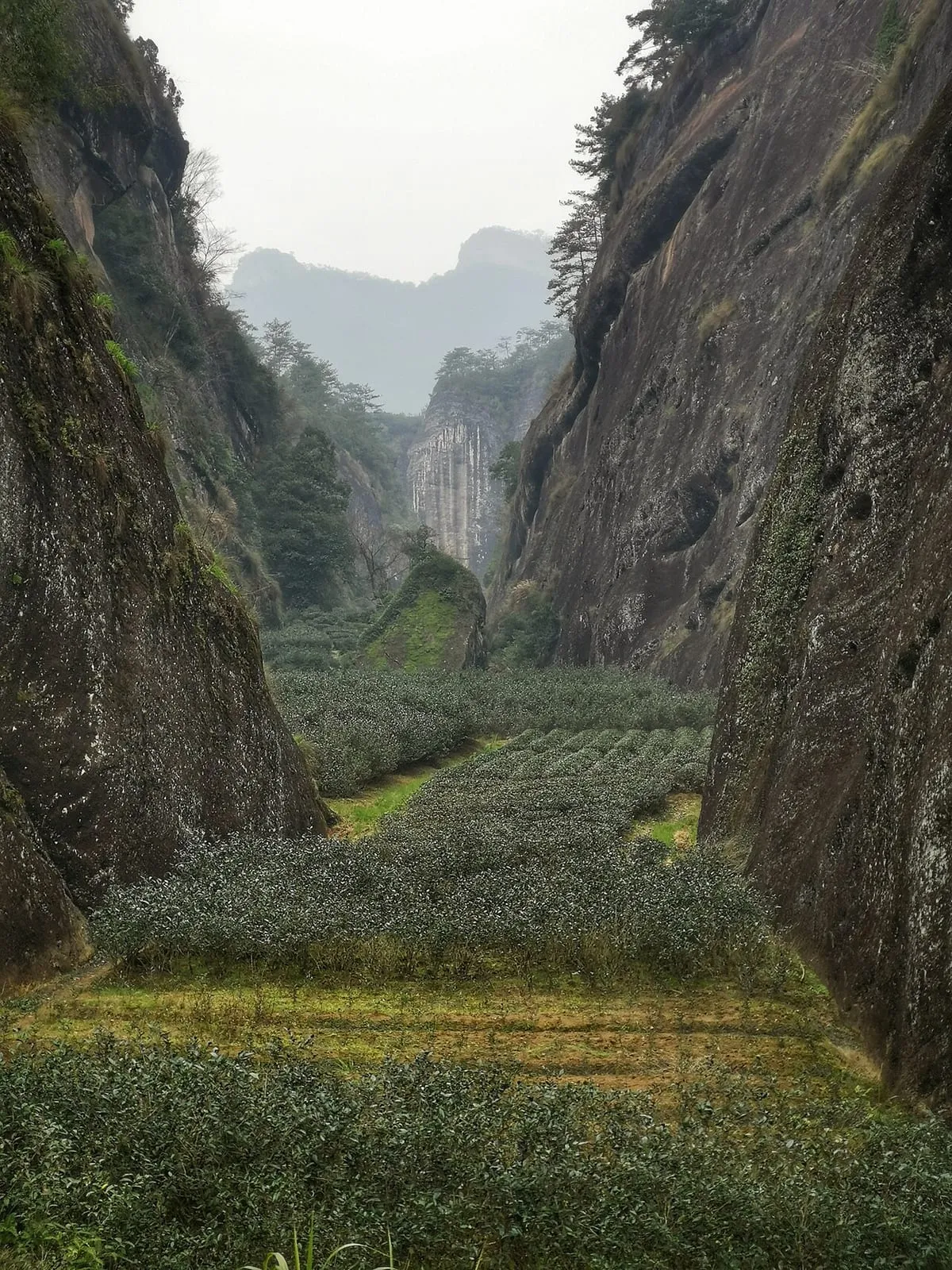
Cultivar and plucking also matter. The original “mother tree” Da Hong Pao — six ancient bushes in the Jiulongke cliff — was retired from harvesting in 2006 to protect it. Commercial Da Hong Pao is now made from blended or single-origin cultivars such as Rougui (Cassia), Shuixian (Narcissus), and Qidan, a vegetatively propagated descendant of the mother trees.
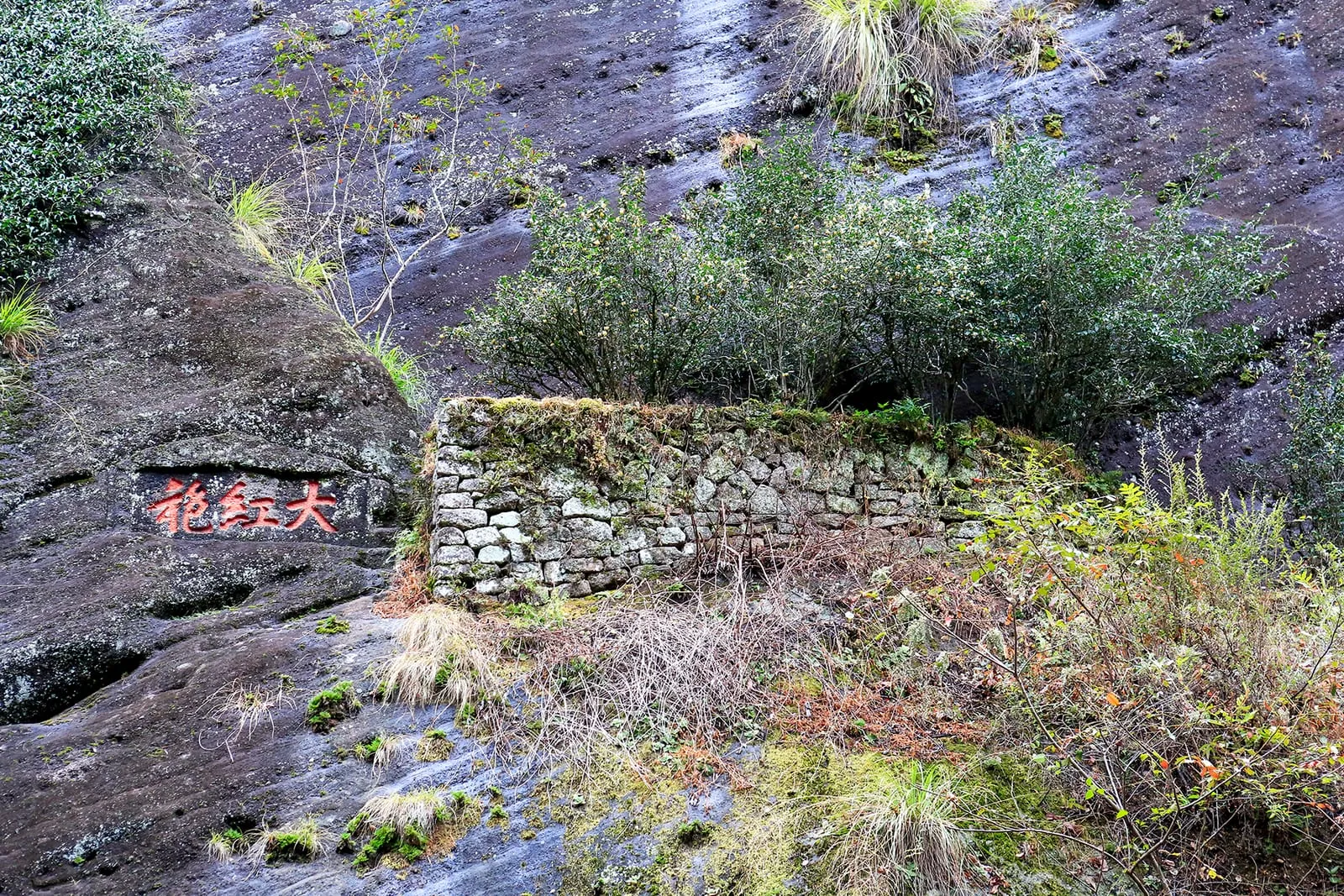
Plucking is done “open-face”: the shoot is allowed to fully open and form a terminal bud (zhu ya) before picking, usually taking three or four leaves. This more mature leaf has the structural strength and chemical depth needed to survive the long making-up and heavy roasting that follow[1].
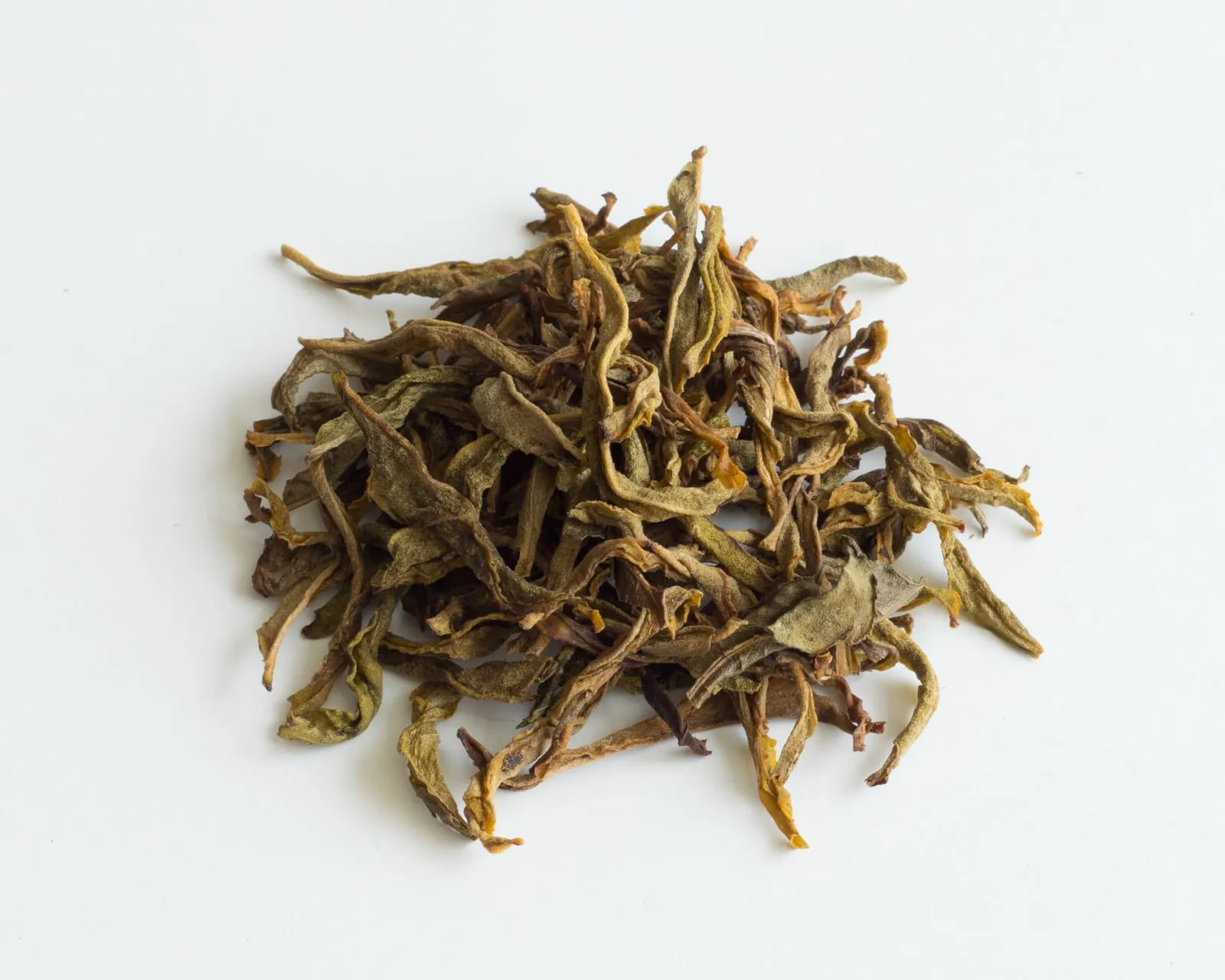
Full processing flow
Traditional Wuyi rock tea passes through roughly twelve steps[2]:
Of these, making-up, fixation, and roasting are the most quality-critical.
Making-up (zuoqing): bruising the leaf into fragrance
Making-up is the engine of rock-oolong flavour. After sun-withering (15–30 min in sunlight) and cooling (1–2 h indoors), the leaf is soft enough to enter the making-up room.
Green leaf, red edge, round by round
Switch rounds: rim and aroma.
Gentle shake: grassy notes leave first
- Leaf edges barely redden
- Loupe: margin cells mostly intact
- Low-boiling grassy volatiles escape
- Leaves soften; stomata open slightly
First shake: slow and brief, so tender stems are not bruised.
Round parameters & sources
- Shaking drum speed & time
- Speed 18–20 rpm, gentle 2–3 min
- Resting aeration duration
- Resting 1.5–2.0 h (Room temp 22–24 °C, RH 75%)
- Aroma volatile evolution phase
- Fresh green · grassy vapor dispersal
- Dominant aroma volatile profile
- cis-3-hexenol, trans-2-hexenal (low-boiling volatiles evaporate)
Surface water evaporates, leaves soften, stomata open slightly, fresh vegetative notes dissipate
The bamboo drum rotates slowly. Softened leaves gently tumble and slide across the drum walls, shedding surface moisture and activating margin cell respiration.
- Round 1: Gentle Shaking · Respiration Activation: Speed 18–20 rpm, gentle 2–3 min; Resting 1.5–2.0 h (Room temp 22–24 °C, RH 75%)
- Round 2: Transpiration · Turgidity Recovery: Speed 22–24 rpm, gentle 5–8 min; Resting 2.0–2.5 h (Thickness 2–3 cm)
- Round 3: Moderate Tumbling · Red Rim Emergence: Speed 26–28 rpm, moderate 10–15 min; Resting 2.5–3.0 h (Thickness 3–4 cm)
- Round 4: Robust Shaking · Intense Aroma Bloom: Speed 28–30 rpm, robust 18–22 min; Piled resting 2.5–3.5 h (Thickness 4–6 cm)
- Round 5: Peak Aroma · "Green Leaf with Red Edge": Speed 30–32 rpm, brisk 20–25 min; Final resting 1.5–2.0 h (Ready for fixation)
Mechanisms: Synthesised from Tea Processing (R-031) and oolong aroma research (R-013, R-029). Zuoqing controls gradual dehydration while utilizing mechanical bruising to trigger marginal enzymatic oxidation and glycosidic aroma cleavage.
Note: Masters dynamically fine-tune drum speeds, tossing duration, and resting thickness based on leaf flush tenderness, ambient temperature, humidity, and atmospheric pressure.
Schematic only; shaking strength and rest intervals vary with leaf maturity and weather.
Switch between rounds 1, 3 and 5 above to watch the leaf edge redden and aroma build through the shaking-and-resting cycles of zuoqing.
The room environment is tightly controlled: temperature 24–28 °C, relative humidity 70–80%[2]. Too cold and oxidation stalls; too hot and the leaf over-oxidises before the desired aroma develops.
The shaking-and-resting cycle
The heart of making-up is the alternation of shaking (yaoqing) and resting (liangqing), usually repeated 6–8 times (hand-made tea may go to 8–10 cycles) over a total of 6–12 hours[2][3].
| Cycle | Shaking time | Revolutions | Hand-patting | Resting time | Notes |
|---|---|---|---|---|---|
| 1 | 0.5 min | 10–15 | — | 30–35 min | Gentle wake-up |
| 2 | 1 min | 20–30 | — | 60–70 min | Gradually heavier |
| 3 | 1.5 min | 30–40 | — | 60–80 min | Edges begin to redden |
| 4 | 2 min | 40–50 | 6–7 pats | 60–90 min | Light hand-patting added |
| 5 | 2–3 min | 50–60 | 10–12 pats | 90–120 min | Red edges spread |
| 6 | 3–4 min | 50–60 | — | 90–120 min | Aroma develops |
| 7 | 3–4 min | 40–50 | 15–20 pats | 120–150 min | Floral-fruit peak |
| 8 | 2–3 min | 30–40 | 15–20 pats | 50–60 min | Ready for fixation |
Values are representative ranges; real workshops adjust for leaf condition, weather, equipment and the tea maker’s judgement. The traditional saying “look at the leaf, look at the sky” captures this adaptive craft[2].
Shaking bruises the leaf edges, breaking cell walls and allowing localised oxidation that turns the rim red. At the same time, moisture migrates from the stem toward the leaf edge — “water movement” (zoushui) — carrying soluble compounds with it. Resting lets the leaf recover, lose a little more moisture, and prepare for the next round. After many cycles, the leaf shows the classic oolong signature: green centre, red edges, and a curled, spoon-like back.
Research shows that the mechanical wounding during shaking activates the lipoxygenase (LOX) pathway and terpenoid biosynthesis, boosting methyl jasmonate, linalool and its oxides — the very compounds that give fine oolong its floral and fruity top notes[4]. Meanwhile, partial oxidation of catechins reduces astringency and builds the mellow base that supports the aroma.
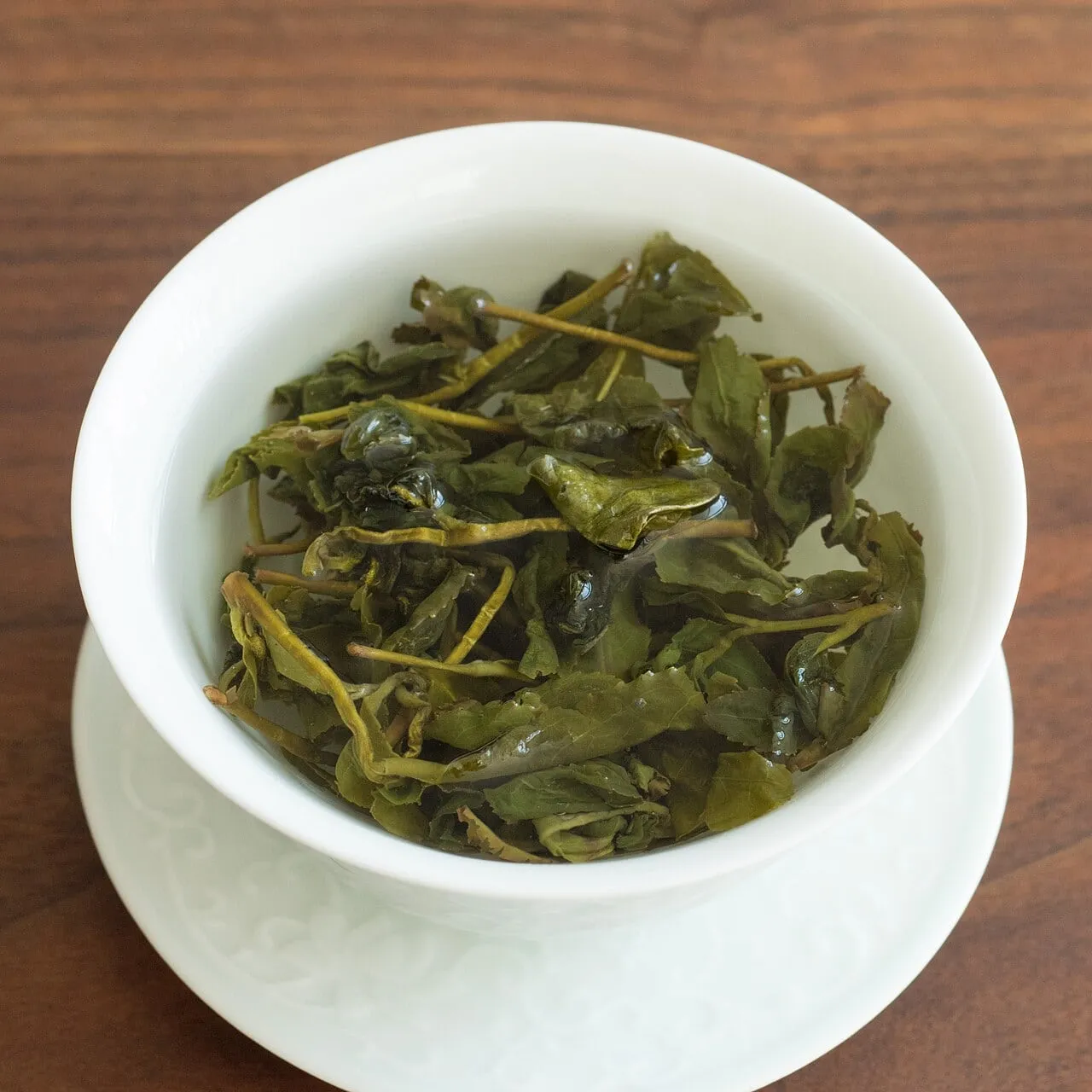
Judging readiness
The master watches three signals:
- Sight: red edges show the traditional “three-red, seven-green” pattern (roughly 30% reddened); the leaf back curls like a spoon;
- Smell: green harshness fades, replaced by a low, thick floral-fruity fragrance;
- Touch: the leaf is soft and pliable, forming a loose ball in the hand that does not spring apart.
Under-made tea tastes green and harsh; over-made tea turns too red, loses brightness, and flattens into a dull, dark liquor.
Fixation: locking the make-up in place
Once the make-up is judged perfect, the leaf must be kill-greened immediately. High heat deactivates polyphenol oxidase (PPO) and other enzymes, halting oxidation and fixing the colour, aroma and taste achieved during making-up.
Most workshops use a rotary drum fixation machine. The drum is pre-heated to 230–280 °C before leaf is fed in; actual leaf temperature rises rapidly, and the process takes 6–10 min[2]. Hand fixation is done in two stages: an initial fry at 220–260 °C (mainly covered, with little tossing) and a second fry at 180–200 °C, totalling 4–6 min.
Readiness signs: the leaf turns dark green, forms a soft ball in the hand with a sticky feel; green harshness is gone, replaced by a cooked aroma; the leaf edge shows tiny blisters; moisture content falls to about 55%[2].
Insufficient fixation leaves residual enzyme activity; oxidation continues and the finished tea turns muddy. Excessive fixation scorches the leaf, yellows the colour, and drives off too much aroma.
Rolling: shaping while hot
Fixation leaf is rolled while still hot. Machine rolling fills the barrel to about 90% capacity, runs for 8–10 min (older leaves up to 15–20 min), and follows a “light–heavy–light” pressure pattern with one or two pressure releases[2].
Rolling breaks cells, expresses tea juice, and twists the leaf into the tight, dark strips that unfurl during brewing into the “dragonfly head, frog-skin” shape prized in rock tea. Properly rolled leaf clings together when squeezed but separates when shaken; the hands feel sticky but no juice drips.
Roasting (beihuo): fire as a key flavour-shaping stage
Roasting is the final act — and for many drinkers, the defining one. Traditional Wuyi roasting has three stages: first firing (mao huo), full firing (zu huo), and slow stewing (dun huo / chi huo). Modern refining may add re-firing and touch-up firing.
Four fire levels: how roasting changes the leaf
Watch blisters rise in the loupe.
Low, even heat keeps florals
- Thick ash keeps the fire low and even
- Slow roasting, gentle flips
- Loupe: soft, no blisters
- Bright florals, golden liquor
Keeps the sharp floral lift and freshness; the liquor stays bright gold.
Duration, moisture, aroma scores & sources
- Slow Firing Duration
- 12–14 Hours (2–3 flips)
- Leaf Moisture Content
- 7.0%–7.5%
Preserves sharp floral volatiles and fresh briskness. Clear golden liquor, ideal for drinkers who love fresh orchid bloom.
Leaf bottom pliable, greenish-amber with vivid red edges; smooth cuticle without visible blisters
Relative aroma emphasis (editorial 0–100): Floral Bouquet (Linalool) 75; Ripe Fruity (Nerolidol) 55; Caramel Roast (Pyrazines/Furans) 25; Woody & Rock Mineral (Yan Yun) 10
Light Fire Control: Gentle heat and light turning prevent thermal stripping of delicate floral aroma precursors.
Mechanisms: Based on GB/T 18745-2006 and Yancha roasting research (R-076, R-080). Slow charcoal firing polymerizes polyphenols into theabrownins, drives Maillard synthesis of pyrazines, and causes moisture micro-explosions forming "Toad-Back" blisters.
Note: "Centuries of roasting simmer out true rock bone". High quality oak charcoal is covered with fine ash to regulate radiant heat; direct flame is strictly avoided.
Firing levels are schematic; makers read the heat rather than follow fixed temperatures.
Select a fire level above to see how temperature curves and aroma profiles shift from green-floral to roasted-woody as the roast deepens.
First firing (mao huo / initial roast)
First firing uses high heat to drive off water rapidly and set the shape. On a bamboo roaster, temperature is 100–140 °C with 0.5–0.75 kg of leaf per basket, turned every 4–5 min, until the leaf is about 70% dry (moisture ~30%)[2]. Machine dryers run hotter — 160–180 °C — but for a shorter time.
Full firing (zu huo / re-drying)
After a 1–2 h cooling rest, the leaf goes back for full firing. Temperature drops to 80–120 °C, lasting 1–2 h, bringing moisture down to 5–6%[2].
Slow stewing (dun huo / chi huo / charcoal finishing)
Even after full firing, the tea is drinkable, but top-grade rock tea receives a final, long, slow roast. Starting at 80–85 °C and gradually falling to 40–50 °C, the leaf sits over charcoal for 8–15 h or more[2][5].
This slow roast does three things:
- Drives off green harshness: residual grassy and low-boiling off-notes evaporate;
- Stabilises aroma: mid- and high-boiling aroma compounds settle and marry with the roast notes;
- Builds body: Maillard and caramelisation reactions generate furans, pyrazines and pyrroles, contributing caramel, roasted-nut and woody notes that thicken the mouthfeel[5].
Fire-level scale
Rock tea is sold by fire level, and the aroma and taste shift accordingly:
| Fire level | Temperature | Duration | Dry-leaf colour | Aroma | Liquor | Taste |
|---|---|---|---|---|---|---|
| Light | 100–120 °C | 12–15 h | Greenish-brown | High floral, cultivar notes | Pale orange | Brisk, slightly green |
| Medium | 120–135 °C | 10–12 h | Dark brown, oily | Balanced floral and roast | Orange | Mellow; body and aftertaste may become more apparent |
| Full | 135–145 °C | 8–10 h | Dark brown-black | Ripe fruit, caramel, wood | Orange-red | Thick, sweet aftertaste |
| Heavy | 160–170 °C | 6–8 h | Blackish-brown | Roast, charcoal, smoke | Deep red | Strong, slightly aggressive |
Values are representative ranges; real workshops vary by master style, cultivar character and market demand. Heavy-fired tea needs months of “resting from fire” before drinking, or the roast taste will be harsh and dry[5].
Research shows that as roasting temperature rises, catechins and amino acids decline, but soluble sugars and pyrazine / furan aroma compounds increase. The polyphenol-to-amino-acid ratio becomes more harmonious, reducing astringency and enhancing the mellow, thick body[5][6]. This chemical shift aligns with the traditional saying that rock tea “grows mellower with roasting”[2].
Flavour and quality formation
Rock tea offers a remarkably broad aroma spectrum, shifting with cultivar and fire level:
- Floral: light-fired Rougui often shows cassia-spice and sharp floral notes;
- Fruity: medium-fired Shuixian moves from orchid into ripe stone-fruit;
- Roasted: full-fired teas can show caramel, wood and other roast-associated notes;
- Aged: teas re-fired over years develop medicinal, camphor and aged-wood notes.
Wuyi Rock Tea
Oolong · Northern Fujian Charcoal-RoastedThe silhouette is relative; real cups vary by origin, cultivar, fire level, season and ageing.
Grades and brewing
Under GB/T 18745-2006, Wuyi rock tea (Da Hong Pao) is graded into Special, Grade 1 and Grade 2[1]. The standard evaluates sensory features including dry-leaf appearance, aroma, taste and leaf base. Yan yun is a locally used composite descriptor and should be interpreted through sensory assessment of a specific tea.
Brewing guide:
| Parameter | Recommendation |
|---|---|
| Water temperature | 95–100 °C (203–212 °F) |
| Leaf-to-water ratio | 7–8 g / 110–120 ml (gaiwan) |
| Vessel | White porcelain gaiwan or Yixing clay teapot |
| Pouring | High pour to agitate the leaf and release aroma |
| Steeping | First infusion 10–15 s to awaken; add 5–10 s each subsequent infusion |
| Infusions | 8–12; medium- and full-fired teas last longer |
Rock tea is brewed gongfu-style: small vessel, generous leaf, short steeps, many infusions. This method can reveal how aroma evolves from high floral notes in early steeps to deeper roast and sweet-aftertaste impressions later on. Freshly roasted tea may be rested for 2–3 months to “cool from fire”; roast and cultivar aromas can then integrate more smoothly.
Full process parameters
| Stage | Temperature | Time | Moisture change | Main purpose |
|---|---|---|---|---|
| Sun-withering | Sunlight, ambient | 15–30 min | ≈75% → ≈70% | Initial softening, enzyme activation |
| Cooling | Ambient | 1–2 h | ≈70% → ≈68% | Continued dehydration, leaf softening |
| Making-up | 24–28 °C | 6–12 h | Slow loss to ≈65% | Edge oxidation, floral-fruity aroma development |
| Fixation | Drum 230–280 °C | 6–10 min | ≈65% → ≈55% | Enzyme deactivation, colour and aroma fixation |
| Rolling | While hot | 8–10 min | — | Cell disruption, shaping, juice expression |
| First firing | 100–140 °C (basket) | 15–30 min | ≈55% → ≈30% | Rapid drying, shape and aroma fixation |
| Full firing | 80–120 °C | 1–2 h | ≈30% → 5–6% | Drying, quality stabilisation |
| Slow stewing | Start 80–85 °C, fall to 40–50 °C | 8–15 h | Hold at 5–6% | Flavour mellowing, green-harshness removal |
Values are representative; real workshops adjust for leaf condition, weather, equipment and the tea maker’s judgement (drawn from GB/T 18745-2006, processing literature and practice)[1][2][3][5].
Common Myths & Scientific Clarifications
Myth 1: Is ‘Da Hong Pao’ a single botanical cultivar or a blended category?
Scientific Clarification: The six historic ‘mother bushes’ on the Jiulongke cliff (comprising distinct ancient plants including Qidan) have been protected from harvesting since 2006. Today’s commercial Da Hong Pao falls into two categories: single-cultivar teas propagated vegetatively from the mother bushes (Qidan or Beidou), and traditional blended Da Hong Pao crafted under GB/T 18745-2006 by combining complementary cultivars such as Rougui (for brisk spice) and Shuixian (for thick liquor body)[1][2].
Myth 2: Does ‘rock rhyme’ (yan yun) come from rock minerals dissolving directly into the tea liquor?
Scientific Clarification: Yan yun is a composite sensory and cultural descriptor encompassing palate thickness, returning sweetness, structural minerality, and lingering aromatic depth—not a direct measure of dissolved rock ions. It arises from the synergy of Danxia ravine microclimates (diffuse light, diurnal swings, well-drained gravelly soils), open-face mature plucking, prolonged zuoqing bruising cycles, and multi-stage charcoal roasting[1][4][6].
Myth 3: Do more ‘toad-skin blisters’ (hama bei) on the leaf back prove authentic charcoal roasting?
Scientific Clarification: The small blister-like bulges on the underside of infused rock-tea leaves form primarily during high-temperature drum fixation (230–280 °C), when intracellular water vaporizes rapidly and expands against the lower epidermis, later setting during drying and roasting[2][5]. While influenced by leaf maturity and thorough firing, these blisters are not exclusive to charcoal stewing and cannot by themselves verify heat-source authenticity or Zhengyan origin[2][5].
Related Articles
- Mechanical Stress Signaling in Oolong Shaking — Lipoxygenase (LOX) and terpene synthase pathways triggered during zuoqing
- The Chemistry of Roasting: Maillard & Caramelization — Pyrazine and furan generation during slow charcoal firing and post-roast resting
- The Code of Tea Cultivars — Botanical and aromatic signatures of Rougui, Shuixian, and classic oolong cultivars
- Famous Tea Craft: Chaozhou Fenghuang Dancong — Comparing northern Fujian rock oolong with Guangdong high-aroma strip oolong
- China’s Six Tea Categories — Where Wuyi rock tea sits within the semi-oxidized oolong spectrum
References
- R-076 — GB/T 18745-2006.《地理标志产品 武夷岩茶》(Product of geographical indication—Wuyi rock tea). 国家质量监督检验检疫总局、国家标准化管理委员会.
- R-077 — 刘宝顺、刘仕章等.《武夷岩茶的品质及加工技术研究进展》. 《中国茶叶》, 2021. https://www.puercn.com/zhishi/jishu/153721.html
- R-078 — 茶叶初加工教材(PDF). 晒青、做青、杀青、揉捻、烘焙工艺参数汇总. http://www.sccs.cn/uploadfile/file/20201210/6374323789163862507067548.pdf
- R-004 — Zhu, X., et al. (2021). Architecture and Dynamics of the Wounding-Induced Gene Regulatory Network During the Oolong Tea Manufacturing Process (Camellia sinensis). Frontiers in Plant Science, 12, 788469. https://doi.org/10.3389/fpls.2021.788469
- R-079 — 武夷岩茶非遗传承人.《“蛤蟆背”与烘焙工艺及品质的关系》. 茶友网 / 福建茶叶. https://www.puercn.com/zhishi/jishu/73517.html
- R-080 — Liu, B., Liu, S., Li, J., Yang, Y., Wang, Y., Kim, E., Wu, Q., He, P., Li, Q., & Tu, Y. (2021). Chemical characterization of Wuyi rock tea with different roasting degrees and their discrimination based on volatile profiles. RSC Advances, 11(20), 12074–12085. https://doi.org/10.1039/d0ra09703a
Article Knowledge Network
Explore the connections between the teas, processes and flavours in this article.