
Start with the essentials
Phoenix Dancong is an oolong known for named aroma styles, such as honey-orchid or gardenia associations. Where do those impressions come from, and does a commercial “Dancong” always mean one tree? Plant lineage, single-tree traditions and product names need separate attention.
This article connects place and cultivars with aroma families, leaf working and roasting, then explores preparation in the Chaozhou tradition. The names become useful through actual sensory experience.
Three key points
- Aroma names guide descriptionSeveral compounds and processing choices create the experience.
- Tradition and product name differSelection and propagation continue traits, while a label alone cannot establish a single old-tree origin.
- Manufacture changes a named styleLeaf working, roasting, batch and storage influence expression.
What to notice when tasting
Begin with a broad aroma family you can recognise, then add impressions from hot, cooler and retronasal tasting. Allow uncertainty when comparing your notes with the label.
1. Growing area and “Shan Yun”
1.1 Growing area
The national standard GB/T 30357.6-2017 (Oolong tea, Part 6: Dancong) sets out terms, grades and quality requirements for Dancong tea[1]. Phoenix Dancong is mainly grown around Fenghuang town in Chao’an District, Chaozhou, Guangdong; Mount Wudong is the best-known area.
The gardens are on mountainsides at varying heights, often in mist. Tea drinkers often say higher gardens give finer aroma and a cleaner taste, and lower ones a stronger taste. That is experience; the sources cited here give no quantitative link between altitude and particular compounds.
1.2 Soil
Garden soils are mostly red and yellow soils from weathered rock, on the acidic side, which suits tea. One local yellow weathered soil is called “duck-shit soil”, said to be the source of the name Ya Shi Xiang. Direct evidence that a particular soil “creates” a particular aroma type is lacking.
1.3 What “Shan Yun” means
“Shan Yun” (mountain character) is a term Chaozhou tea people use for good Dancong, often set beside the “rock character” of Wuyi tea and the “Yin Yun” of Tieguanyin[6]. It has no single definition; it usually means several impressions together:
- A clear liquor with structure: clean in the mouth, with some astringency but not rough;
- Aroma in the liquor: floral and honey notes carried in the tea, not just sitting on the surface;
- Returning sweetness and throat feel: after swallowing, the mouth waters and a sweet aftertaste lasts.
These are sensory descriptions to learn by comparing teas; Shan Yun cannot be reduced to one compound.
- Mountain gardens, often in mist
- Weathered yellow soil; one type is locally called “duck-shit soil”
- Old single bushes, traditionally plucked and made bush by bush
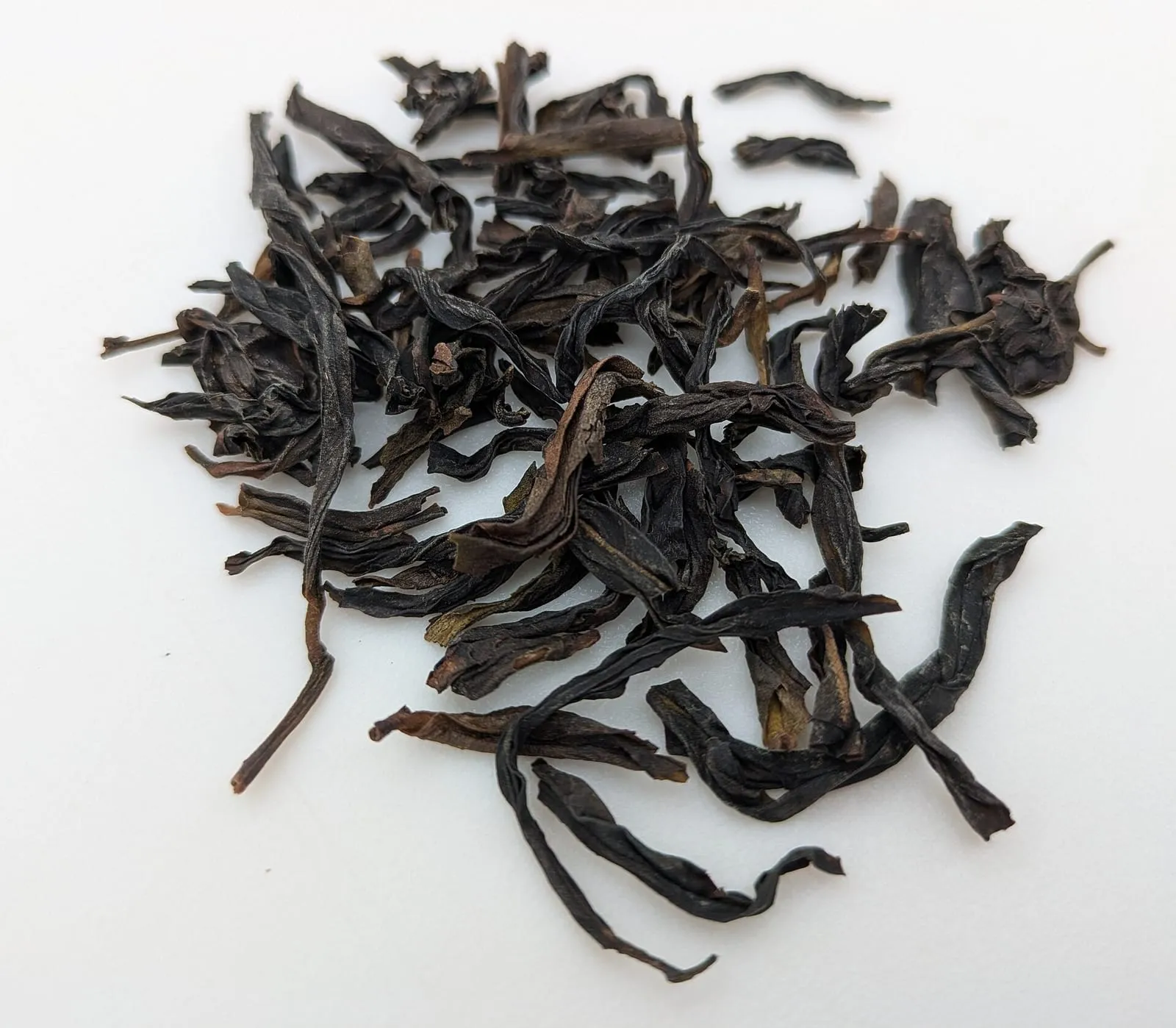
2. Cultivars and single-bush making
2.1 Fenghuang Shuixian and the “Song tea” legend
Phoenix Dancong comes from the local Fenghuang Shuixian population. Tea plants on Fenghuang Mountain are seed-grown, so individual bushes differ a lot; a study of spring shoots from different Fenghuang cultivars (lines) found clear differences in catechins, amino acids and other components[5].
A local story says that at the end of the Southern Song, a fleeing emperor passed Mount Wudong and drank the local tea to quench his thirst, after which it was called “Song tea”. This is folklore, not history. What is clear is that farmers long selected bushes with unusual aromas from the population and made their leaf separately, which is where the name “Dancong” (single bush) comes from.
2.2 Single-bush making
“Dancong” originally meant “single bush”. Traditionally, old bushes with outstanding aroma were picked, processed and finished separately, without mixing with other plants[1].
The reason is practical: in a seed-grown population each bush differs in budding time, leaf thickness and aroma. Bruised together, leaves lose water and oxidise at different rates, and no bush’s character comes through.
Later, farmers propagated good bushes by cuttings into whole gardens of lines such as Ya Shi Xiang and Mi Lan Xiang. Most “Dancong” sold today is tea from a given aroma line, not necessarily from one old bush.
3. Ten common aroma types
Phoenix Dancong is known for naming teas by aroma type. The names mostly borrow familiar smells, such as honey orchid, gardenia (Huang Zhi) and sesame, and people often speak of “ten aroma types”. One study analysed volatiles and odour-active compounds in ten main Dancong aroma types and found that their key aroma compounds differ and can be separated statistically[3]; another compared aroma components across several types and also found characteristic patterns[4].
The aromas come from the leaf itself; no flowers are used for scenting.
Ten Dancong aroma types: which compounds stand out?
Pick an aroma type; compare compounds by relative level.
Commonly reported compounds (relative level, qualitative)
- Linalool & oxides Higher
- Ocimene Medium
- Methyl salicylate Medium
- Indole Lower
Ya Shi Xiang (Duck Shit)
Honeysuckle-like florals, a milky note as the cup cools
High, honeysuckle-like florals; milky in the cooling cup.
Name origin, mother tree, roast & brewing
Legend says the original bush grew in yellow soil locally called "duck-shit soil", and the farmer gave it an unappealing name so others would not take cuttings. Some now call it Yinhua Xiang ("silver flower aroma").
- Original bush (by tradition)
- Said to be on Wudong Mountain, Fenghuang town
- Typical roast
- Mostly a light style, light or light-medium roast
- Brewing tip
- Use boiling water, pour off the first infusions quickly and notice the first aroma.
- Linalool & oxides:Bright floral
- Ocimene:Fresh, sweet floral-green
- Methyl salicylate:Cool, wintergreen-like
- Indole:Low level; supports white-flower notes
Sources: Qin et al. (2023) on volatiles and odour-active compounds in ten main Dancong aroma types (R-302), and Zheng et al. (2024) comparing aroma components of several types (R-303). Compounds and levels for each type summarise the direction of such studies qualitatively; they are not proportions measured for that type in any one study, and results vary between samples. Name stories and original bushes are mostly local tradition.
Levels are qualitative, not measured proportions; real batches vary with bush, place, season and roast.
The interactive shows each type’s name story, compounds that are commonly reported and typical roast. Compound “levels” are qualitative relative descriptions, not proportions measured in any one study.
| Aroma type | Other names / line | Common aroma description | Typical roast |
|---|---|---|---|
| Ya Shi Xiang | Da Wuye / Yinhua Xiang | Honeysuckle-like florals, milky in the cooling cup | Mostly light |
| Mi Lan Xiang | Baiye Dancong | Honey sweetness with orchid-like florals | Medium to full |
| Huang Zhi Xiang | Gardenia type | Gardenia-like florals | Light to light-medium |
| Yu Lan Xiang | White magnolia type | Magnolia-like florals | Light-medium |
| Rou Gui Xiang | Cassia type | Cassia-like spice | Medium or fuller |
| Xing Ren Xiang | Ju Duo Zai | Almond, nutty | Medium |
| Jiang Hua Xiang | Tong Tian Xiang | Ginger-lily-like florals, slightly crisp | Light-medium |
| Gui Hua Xiang | Osmanthus type | Sweet osmanthus-like aroma | Light-medium to medium |
| Zhi Ma Xiang | You Ma Xiang | Toasted sesame, nutty | Medium to full |
| Mo Li Xiang | Jasmine type | Fresh jasmine-like aroma | Light |
Aroma type names are sensory comparisons; teas of one type vary with bush, place, season and roast.
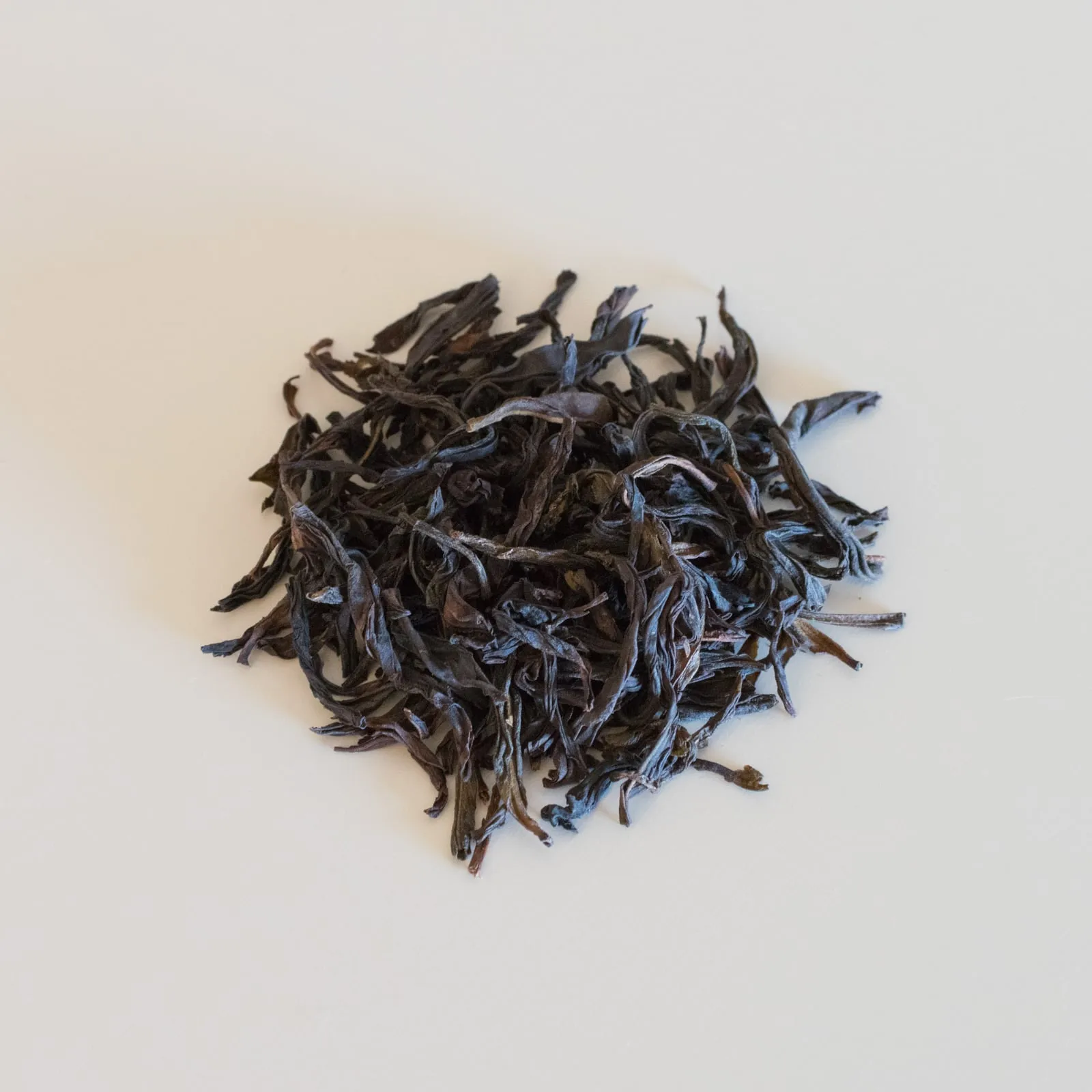
4. Processing
Primary processing of Phoenix Dancong can be summed up in six steps[1]:
Times and temperatures below give only the direction; tea makers adjust to the weather and the leaf.
4.1 Plucking
Tradition says no picking in rain, with dew or in harsh sun, and leaf is usually picked on fine afternoons[1]. Plucking is “open-face”: once the shoot tip stops growing, the two or three leaves below it are taken. Leaf that is too young tends to be “killed” in bruising (edges turn black, taste bitter); leaf that is too old gives a coarse aroma.
4.2 Sun and cool withering
- Sun withering: leaf is spread thinly on bamboo sieves in soft late-afternoon sun for a short time. When it loses its gloss, softens, droops and smells less grassy, it is brought inside.
- Cool withering: the leaf rests indoors and cools; water in the stems moves back into the leaf through the veins, and the drooping leaf firms up again (“returning to life”).
4.3 Bruising (zuoqing)
Bruising is the step that decides Dancong’s aroma[1][2]. The Chaozhou approach is “light bruising, thin layers, slow work”:
- Technique: the tea maker holds the sieve rim and turns it in circles (“wave tossing”), so leaves roll and their edges knock and rub together.
- Rhythm: bruising alternates with resting for several rounds, often through the night. Early rounds are light and short; later ones are firmer.
- Change: the leaf edge is lightly damaged and oxidises red while the centre stays green, “green belly, red edge”; the grassy smell fades and floral and honey notes appear.
Judging when bruising is done
- Shape: the leaf surface arches slightly like a spoon;
- Colour: an even red rim, with a green centre;
- Feel: the leaf is springy;
- Smell: the grassy smell has gone and clear floral or honey notes appear[1][2].
How does a green leaf get a red rim?
Four stages; watch the leaf edge in 04.
Pick dry, mid-open shoots
- Mid-open shoot, 2–3 leaves
- Fingers lift; no nail pinching
- Afternoon: no dew, no noon heat
- One bush, one basket
Afternoon leaves are dry on the surface, so withering stays even.
Conditions, techniques & sources
- Temperature
- Fine weather, avoiding morning dew and midday sun
- Duration
- Usually on a fine afternoon
- Moisture
- Fresh leaf
Tradition says: no picking in rain, with dew or in harsh sun. Lift with the fingers, never pinch with nails, to avoid bruising.
Picked "open-face": once the shoot tip stops growing, the two or three leaves below it are taken. Afternoon leaf is dry on the surface, so sun withering is more even.
Prized single bushes are traditionally picked and kept in their own baskets.
Sources: GB/T 30357.6-2017, Oolong tea Part 6: Dancong (R-300); a study of aroma formation during oolong bruising and withering (R-301); a study of wounding-induced gene expression in oolong processing (R-004).
Note: the conditions shown describe common practice; cultivars and weather differ, so makers adjust to the day and the leaf.
4.4 Fixing
Once bruising is done, the leaf is fixed at once, by hand in a tilted pan or in a drum[1]. The pan is very hot, and the rule is “toss more than cover”: lots of tossing lets steam out, with a little covering so the leaf heats through. Heat stops polyphenol oxidase and related enzymes, ending oxidation and fixing the aroma and red edges formed during bruising.
4.5 Rolling
The fixed leaf is rolled after cooling slightly. Unlike Tieguanyin, which is wrapped in cloth and rolled into balls, Dancong is pushed in one direction into long, straight strips[1]. Rolling breaks some cells, and juice coats the strip, giving a glossy dry leaf.
4.6 Roasting
Dancong is traditionally roasted over charcoal[1]:
- First bake: hotter, removing most water quickly, then the leaf comes off to cool;
- Cooling: water in the stems evens out;
- Final bake: cooler, slowly drying fully;
- Slow baking: some teas are baked again at low heat for a long time over ash-covered charcoal to adjust the roast.
Slow baking removes off-notes, and Maillard-type reactions add roasted aroma that blends with the cultivar’s floral and honey notes. How heavy the roast is decides whether the tea leans light and floral or full and roasted.
Fix, roll straight, bake slowly
Three stages; follow the heat downwards.
Fast tossing halts enzymes
- A very hot tilted iron pan
- Hands lift and toss, airing it
- Steam is driven off quickly
- Leaves turn soft and sticky
Heat stops the enzymes and locks in the aroma built so far.
Conditions, techniques & sources
- Temperature
- A very hot pan or drum
- Duration
- A few minutes, fast
- Moisture
- Some water lost; leaf softens
Toss more than cover: turn and lift quickly so steam escapes and the leaf does not stew.
High heat stops polyphenol oxidase and related enzymes, ending the oxidation from bruising and fixing the aroma and red edges formed so far.
Well fixed: no scorched edges, the leaf holds together when squeezed and springs back, and stems bend without snapping.
Sources: GB/T 30357.6-2017, Oolong tea Part 6: Dancong (R-300); a study of aroma formation during oolong bruising and withering (R-301); a study of wounding-induced gene expression in oolong processing (R-004).
Note: the conditions shown describe common practice; cultivars and weather differ, so makers adjust to the day and the leaf.
5. How the aroma forms
5.1 What happens during bruising
Bruising is not just drying; it is the leaf’s response to injury and water loss[2][7]:
- Bound aroma is released: many floral compounds, such as linalool, geraniol and phenethyl alcohol, are stored in the fresh leaf as non-volatile glycosides. During bruising, enzymes reach them and free part of them as compounds we can smell[2].
- Lipid oxidation: damage at the leaf edge activates the lipoxygenase pathway, giving grassy compounds, some of which turn into sweeter, fresher alcohols and esters during repeated rests[2].
- Gene expression changes: one study found that the mechanical damage of oolong shaking sets off a wide set of gene expression changes, including genes linked to terpene aroma synthesis[7].
5.2 Changes in taste
Catechins in fresh leaf are quite bitter and astringent. During bruising, polyphenols at the leaf edge oxidise moderately, forming the red rim, and the bitterness of the liquor softens[2]. This is one reason Dancong can taste strong without being too bitter.
6. Roast styles and storage
By roast, Dancong falls roughly into these styles[1]:
| Style | Roast | Dry leaf | Aroma and liquor | Who it suits |
|---|---|---|---|---|
| Light (qingxiang) | Light | Brown with some green | Pale bright yellow; prominent, fresh florals | Those who like florals |
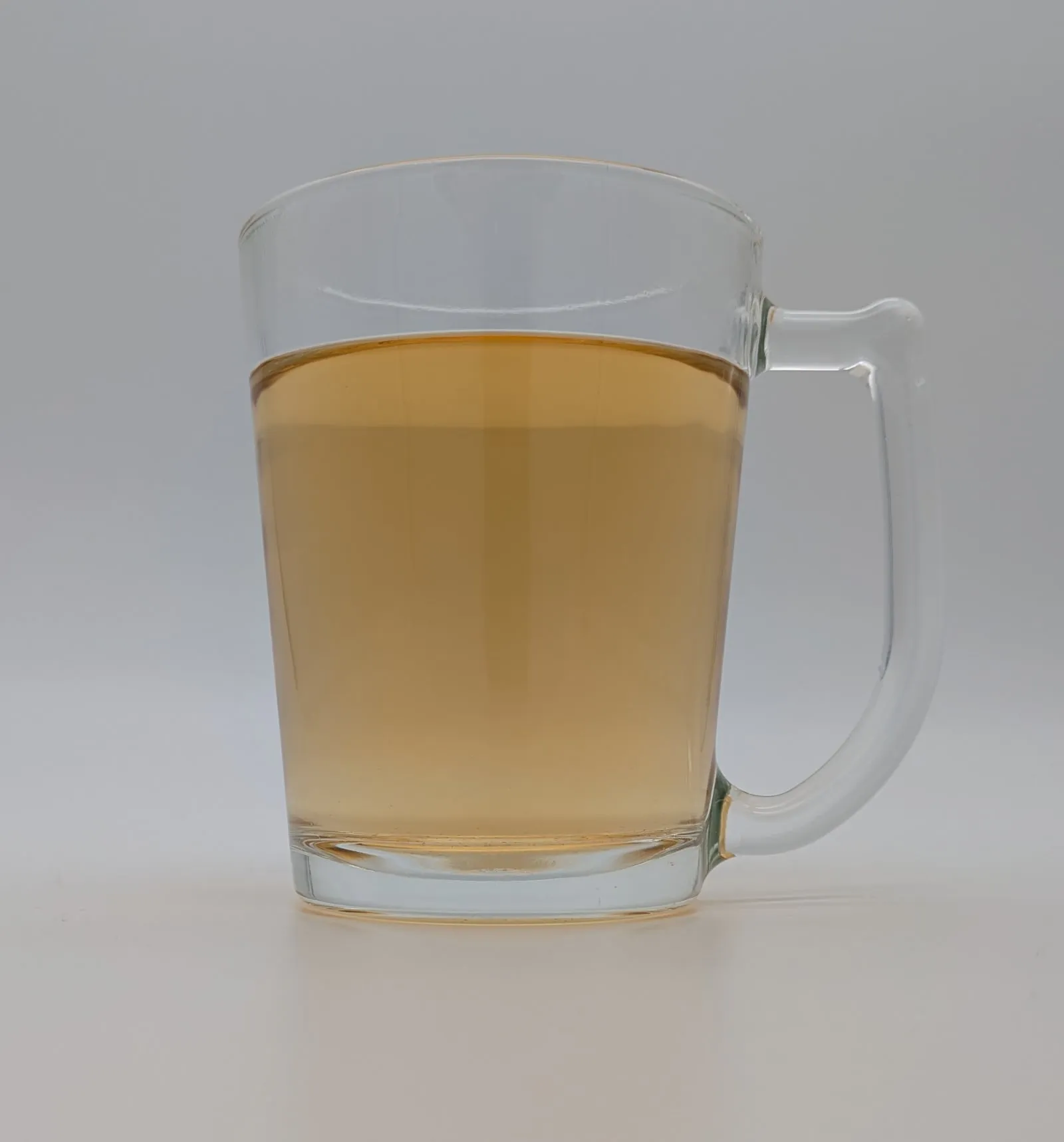
| Fuller (nongxiang) | Medium to full | Dark brown, glossy | Golden to orange; ripe fruit, honey and roast together, a rounder taste | Those used to traditional Chaozhou taste |
| Aged Dancong | Stored for years, often re-baked periodically | Darker | Darker liquor; calmer aged and woody aroma | Those who like aged tea |
Letting the “fire” settle: Dancong with a fuller roast often tastes of “fire” just after baking. Drinkers usually seal it and wait a while for this to fade. This is practice; how long depends on the tea.
Fenghuang Dancong
Oolong · Guangdong High-Aroma Single Bush7. Chaozhou gongfu tea and brewing
Phoenix Dancong is closely tied to the Chaozhou gongfu tea brewing tradition[6].
7.1 Chaozhou teaware
The items usually named are[6]:
- Red clay stove: burns charcoal to boil water;
- Yushu kettle: a thin earthenware kettle;
- Mengchen pot: a very small red-clay pot;
- Ruochen cups: thin white porcelain cups, often three, set in a 品 shape.
- Red-clay stove and Yushu kettle: charcoal-boiled water
- Mengchen red-clay pot: pour high, pour off fast
- Three Ruochen porcelain cups in a 品 shape
7.2 Brewing starting points
A white porcelain gaiwan at home works with the same approach. These are common practices; adjust to taste[6]:
| Item | Common practice | Notes |
|---|---|---|
| Leaf | More than for most oolongs; in a gaiwan start around 5 g to 100 mL | Chaozhou style uses lots of leaf and quick pours |
| Water | Boiling | Tight strips release aroma better in boiling water |
| Pouring in | From a height, down the side | The leaf moves and infuses evenly |
| Pouring off | Within a few seconds for early infusions | With lots of leaf, slow pours turn bitter |
| Serving | Pour low; “Guan Gong patrols the city”, “Han Xin counts his troops” | Pour close to the cups and in turns so all are equally strong |
| Re-infusing | Many infusions, gradually longer | Depends on the tea |
8. Common misconceptions
Myth 1: Ya Shi Xiang (“duck shit aroma”) is fertilised with duck droppings, or smells odd?
Neither. Ya Shi Xiang is known for honeysuckle-like florals and has no off smell. The most common story is that the original bush grew in yellow soil locally called “duck-shit soil”, and the farmer gave it an unappealing name so others would not take cuttings. It is also called Yinhua Xiang (“silver flower aroma”).
Myth 2: Every Dancong comes from a single tree?
No. Single-bush making is a historical tradition[1]. Most Dancong now comes from gardens of cutting-grown lines, and the name refers to the aroma type or line. True single-bush old-tree tea is scarce; check the product description.
Myth 3: The heavier the roast, the more authentic?
No. Roast should suit the leaf. Leaf with good aroma is usually roasted lightly to keep its florals; too much roast masks the cultivar aroma and can taste burnt[1]. Good roasting is “baked through but not burnt”.
9. Related Monographs
- Wuyi Rock Tea / Da Hong Pao — Another strip-style, more heavily roasted oolong
- Anxi Tieguanyin — An oolong rolled into balls
- The Science of Oolong Bruising — Enzyme and gene changes during bruising
- Overview of China’s Six Tea Categories — Where oolong sits among the six categories
- Teaware Materials — How small pots and porcelain cups affect brewing
10. Processing summary
| Step | What is done | How the leaf changes | Purpose |
|---|---|---|---|
| Plucking | Open-face picking on fine afternoons | Fresh leaf | No surface dew, suitable maturity |
| Sun withering | Thin layer in soft sun | Loses gloss, softens | Slight water loss, less grassy |
| Cool withering | Rest indoors | Leaf firms up again | Water balances between stem and leaf |
| Bruising | Rounds of bruising and rest | Green belly, red edge, florals appear | Forms aroma and red rim[2][7] |
| Fixing | Fast, hot pan | Darker, softer | Stops oxidation, fixes aroma |
| Rolling | Push in one direction | Tight, straight strips | Shapes the leaf; juice coats it |
| First & final bakes | Hotter, then cooler | Fully dry | Removes water, adds roasted aroma |
| Slow baking | Long, low heat over ash-covered charcoal | Darker | Adjusts roast, removes off-notes |
Note: times and temperatures for each step are judged by the tea maker from the weather and the leaf[1][2].
References
- R-300 — General Administration of Quality Supervision, Inspection and Quarantine, & Standardization Administration of China. (2017). GB/T 30357.6-2017 Oolong tea - Part 6: Dancong. National Standards of the People’s Republic of China. https://openstd.samr.gov.cn/bzgk/gb/newGbInfo?hcno=C0D6AF30D4D2C7972955DFA2E07281CD
- R-301 — Hu, C.-J., Li, D., Ma, Y.-X., Zhang, W., Zheng, P.-C., Liu, P.-P., & Ni, D.-J. (2018). Formation mechanism of the oolong tea characteristic aroma during bruising and withering treatment. Food Chemistry, 269, 202–211. https://doi.org/10.1016/j.foodchem.2018.07.016
- R-302 — Qin, D., Wang, Q., Jiang, X., Ni, E., Li, C., Wu, H., Chen, J., Miao, A., Sun, S., & Chen, D. (2023). Identification of key volatile and odor-active compounds in 10 main fragrance types of Fenghuang Dancong tea using HS-SPME/GC-MS combined with multivariate analysis. Food Research International, 173, 113356. https://doi.org/10.1016/j.foodres.2023.113356
- R-303 — Zheng, X.-T., Zeng, X.-Y., Lin, X.-L., Chen, D.-S., Lin, P.-L., Liu, Z.-C., Wen, Z.-H., & Guo, S.-J. (2024). Exploring aromatic components differences and composition regularity of 5 kinds of these 4 aroma types Phoenix Dancong tea based on GC–MS. Scientific Reports, 14, 3816. https://doi.org/10.1038/s41598-024-53307-6
- R-304 — Chen, L.-L., Guo, S.-J., Ma, R.-J., Zhang, L.-Z., & Zhuang, D.-H. (2013). Biochemical composition analysis of spring shoots of different Phoenix tea cultivars (strains). Guangdong Agricultural Sciences, 40(5), 23–26. https://gdnykx.gdaas.cn/cn/article/id/20130508
- R-305 — Chen, X.-B. (1998). Chinese Tea Culture. Taiyuan: Shanxi People’s Publishing House. ISBN: 978-7203037279.
- R-004 — Zhu, X., et al. (2021). Architecture and Dynamics of the Wounding-Induced Gene Regulatory Network During the Oolong Tea Manufacturing Process (Camellia sinensis). Frontiers in Plant Science, 12, 788469. https://doi.org/10.3389/fpls.2021.788469
Article Knowledge Network
Explore the connections between the teas, processes and flavours in this article.