
Start with the essentials
Raw pu-erh begins with sun-dried base tea and can undergo refining, steaming and pressing. Manufacturing establishes the new tea; later storage can continue changing its flavour. These are connected stages with different conditions.
This article follows Yunnan material through fixation, sun drying and shaping, then considers storage and the distinction from ripe pu-erh. Age tells how long has passed; material, records and current condition help explain what happened.
Three key points
- Sun-dried material is the starting threadRefining and pressing continue manufacture; forming a cake is not aging.
- Storage conditions shape changeMaterial, moisture, temperature, packaging and air interact.
- Raw and ripe follow different pathsLater storage differs from managed wet piling, beyond liquor colour.
What to notice when tasting
Track provenance, packaging, opening date and conditions for one tea, comparing aroma and taste over time. Stop using tea with suspicious dampness or mould; rinsing cannot restore safety.
1. Terroir & Cultivars: Yunnan Broad-Leaf (Camellia sinensis var. assamica)
1.1 Geographic Protected Regions & Ancient Forest Ecology
Under GB/T 22111-2008, the Pu-erh geographical-indication area covers designated parts of 11 Yunnan prefectures and cities (Pu’er, formerly Simao; Xishuangbanna; Lincang; Kunming; Dali; Baoshan; Dehong; Chuxiong; Honghe; Yuxi; Wenshan), centred on the middle and lower Lancang River basin[1]:
- Microclimate: Situated in a tropical-to-subtropical plateau monsoon zone with distinct wet and dry seasons, annual average temperatures of 17–22 °C, and 1,200–1,800 mm of annual rainfall. High-altitude peaks enjoy perennial mist and abundant diffused sunlight;
- Forest Coexistence: Revered ancient tea mountains (such as Yiwu, Banzhang, Bingdao, and Jingmai) maintain arbor-type tea trees growing semi-wild within natural forest canopies, accumulating dense micronutrients and complex aromatic secondary metabolites[1][4].
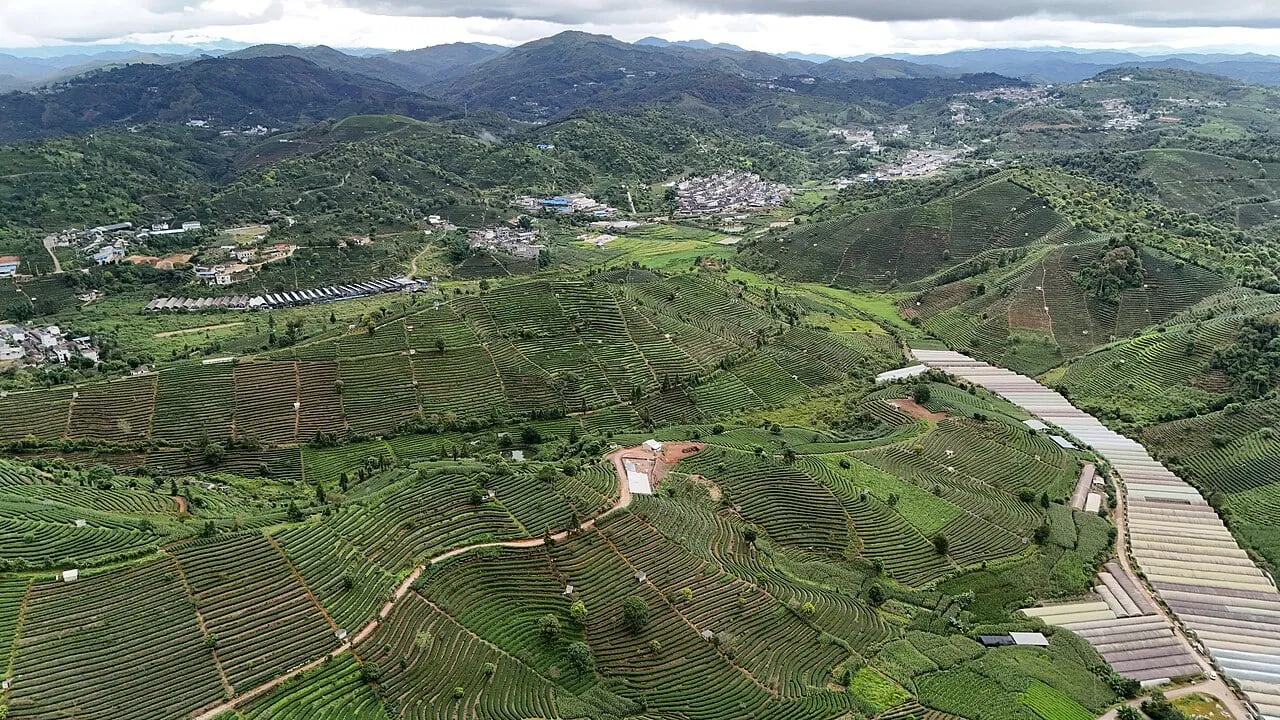
Yunnan tea gardens vary. This photograph shows a modern plantation near Yixiang, Pu’er; it is not the Jingmai ancient tea forest, and landscape alone cannot establish tree age.
1.2 Botanical Characteristics: Yunnan Broad-Leaf Variety
Raw Pu-erh strictly requires fresh leaves of Yunnan broad-leaf cultivars, which possess biochemical foundations that dwarf common small-to-medium leaf varieties[2][5]:
- Water Extractable Solids: Reaching 40%–48% (compared to 35%–40% in standard green tea), conferring intense density and remarkable endurance across 15 to 20+ steeps;
- Total Polyphenols: Measuring 30%–38% dry weight, with monomeric catechins reaching 16%–22% (predominantly astringent ester catechins EGCG and ECG);
- Caffeine & Amino Acids: Caffeine levels of 3.5%–5.0% and amino acids of 2.0%–4.0% create a powerful synergistic backbone, producing the young tea’s assertive astringency and subsequent explosive sweet salivation (huigan)[4][5].
Yunnan Broad-Leaf (Arbor Type)
30%–38% polyphenols, 45%+ water extractables; thick, leathery leaf cells capable of enduring decades of slow natural oxidation.
Small-Medium Leaf (Shrub Type)
18%–26% polyphenols, 35%–40% extractables; characterized by delicate sweetness and best consumed within 1–2 years.
Forest Co-growth Ecology
Deep root systems absorb rich trace minerals in symbiotic forest soil, giving authentic raw Pu-erh deep mountain resonance.
2. Phase 1: Sun-Dried Maocha (Dianqing) Primary Craft
Sun-dried green tea (“Dianqing Maocha”) is the foundational raw material for both raw and ripe Pu-erh. Primary processing follows five vital stages[2][3]:
2.1 Plucking & Indoor Withering
- Plucking Standard: Harvests one bud with two to three mature leaves. Delicate single buds lack the cuticle toughness and polysaccharide depth needed for long aging, while coarse leaves create excessive woody astringency;
- Withering: Fresh leaves are spread 3–5 cm deep over bamboo mats for 3–6 hours to lose 5%–8% moisture, softening leaf tissue and venting grassy volatiles.
2.2 Low-Temperature Cast-Iron Fixation (The Soul of Raw Pu-erh)
- Operation: Carried out in large cast-iron woks at pan temperatures of 180–220 °C with large batch loads (5–8 kg). Due to the massive thermal mass of the leaves, actual leaf temperature remains around 70–80 °C for 15–20 minutes;
- Crucial Distinction from Green Tea: Standard green tea employs intense heat (>260 °C pan, >85 °C leaf) to thoroughly suppress all enzyme systems; raw Pu-erh’s moderate pan-firing moderately suppresses enzyme activity and may leave a little enzyme activity; some researchers think residual enzymes contribute in the early years, though this is debated, while multi-decadal aging (10–30+ years) is predominantly driven by slow non-enzymatic autoxidation, polyphenol condensation, and synergistic micro-ecosystems under dry storage[3][6].
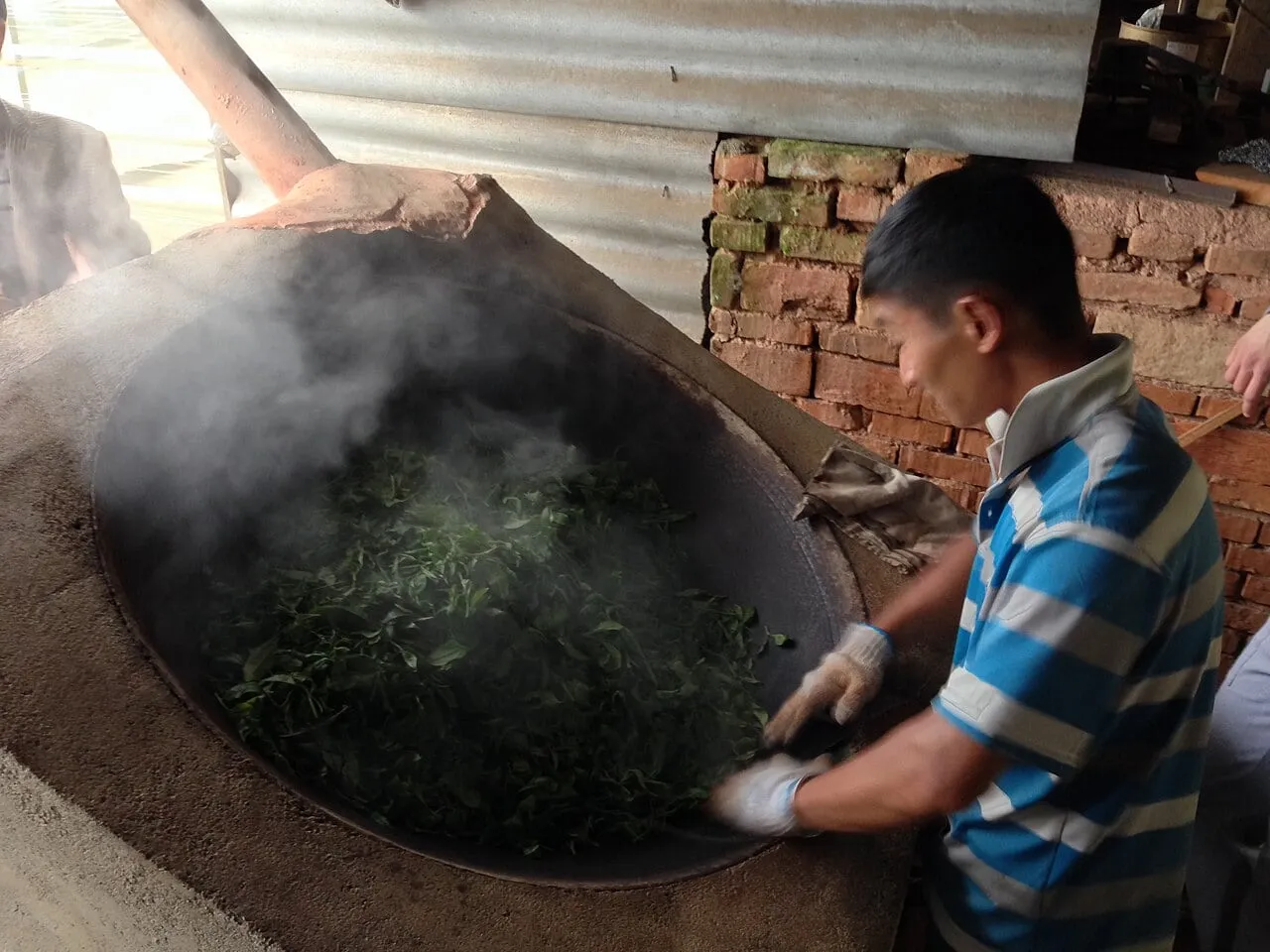
In the hand-wok scene, the broad curved pan holds open leaves while the maker turns and gathers them with both hands. Compare this with the rolling stage that follows: heating leaves in the pan and shaping them into strips are separate steps.
2.3 Hand Rolling (Rounian)
- Leaves are rolled and twisted clockwise on bamboo mats for 15–25 minutes. This achieves a 40%–55% cell rupture rate, squeezing rich polyphenol-polysaccharide sap to coat the outer leaf strips for rapid infusion.
2.4 Open-Air Sun-Drying (Shaiqing · Never Oven-Baked)
- Rolled leaves are evenly scattered under direct sunlight for 1–2 days until fully dry (usually around 10%, confirmed by measurement);
- Why Solar Drying is Mandatory: Ambient sun temperatures stay between 30–45 °C, where gentle sunlight and mild UV drive slight photo-oxidation while safeguarding heat-sensitive native compounds. If baked in commercial 80–120 °C ovens, native polyphenols suffer severe thermal degradation and caramelization, steering the profile toward ordinary baked green tea and stripping the active material basis essential for high-grade aging[1][3][6].
Sun-drying or hot-air drying?
Compare heat source and drying speed.
Sun and breeze dry gently
- Strong highland sunlight
- Raised bamboo trays let air through
- A breeze carries heat away
- Water leaves slowly over one to two days
Gentle drying leaves room for slow change over the years.
Conditions, chemistry & sources
- Conditions
- Ambient 25–35 °C, leaf temp 30–40 °C, full sunlight drying for 1–2 days
- Typical drying duration
- 1–2 days (sunlight dependent)
- Finished raw tea moisture
- 9.0–11.5%
- Residual endogenous enzyme status
- Gentle moisture loss; minor residual PPO/POD activity preserved
Yunnan highland UV radiation and natural breezes enable rolled leaves to dry gently at 30–40 °C. Mild temperatures prevent complete thermal destruction of substrates, laying a rich chemical foundation for decades of aging.
Mechanisms: Synthesised from Tea Processing (R-031) and chemical kinetics of Yunnan large-leaf raw pu-erh (R-008, R-009, R-268). Aging is driven by non-enzymatic autoxidation, hydrolysis and polymerization.
Note: Aging outcomes are governed by initial crafting, compression density, temperature, relative humidity, oxygen access and clean storage. This timeline represents standard dry storage conditions.
Directions of change only; no prediction of enzyme activity, value or a peak age.
3. Phase 2: Refining, Steaming & Stone-Mold Compression
Dry, loose sun-dried maocha is winnowed, sorted by grade, and compressed into classic 357 g “Seven Sons” cakes, tuochas, or bricks[1][2]:
1. Weighing & Neifei
Precisely weighing 357 g of maocha and insetting an embedded anti-counterfeit ticket (“Neifei”) into the center.
2. Flash Steam Softening (5–10s)
Boiling steam softens leaves rapidly and melts surface pectins, providing natural adhesive grip.
3. Stone-Mold Leverage Pressing
Knotted in a cotton cloth bag and leverage-pressed under a concave stone mold, creating firm edges and a breathable core.
4. Low-Heat Dehydration (35–45°C)
De-bagged and arranged on wooden racks inside drying rooms for 24–48 hours with dryness assessed against the applicable product specification and measured moisture.
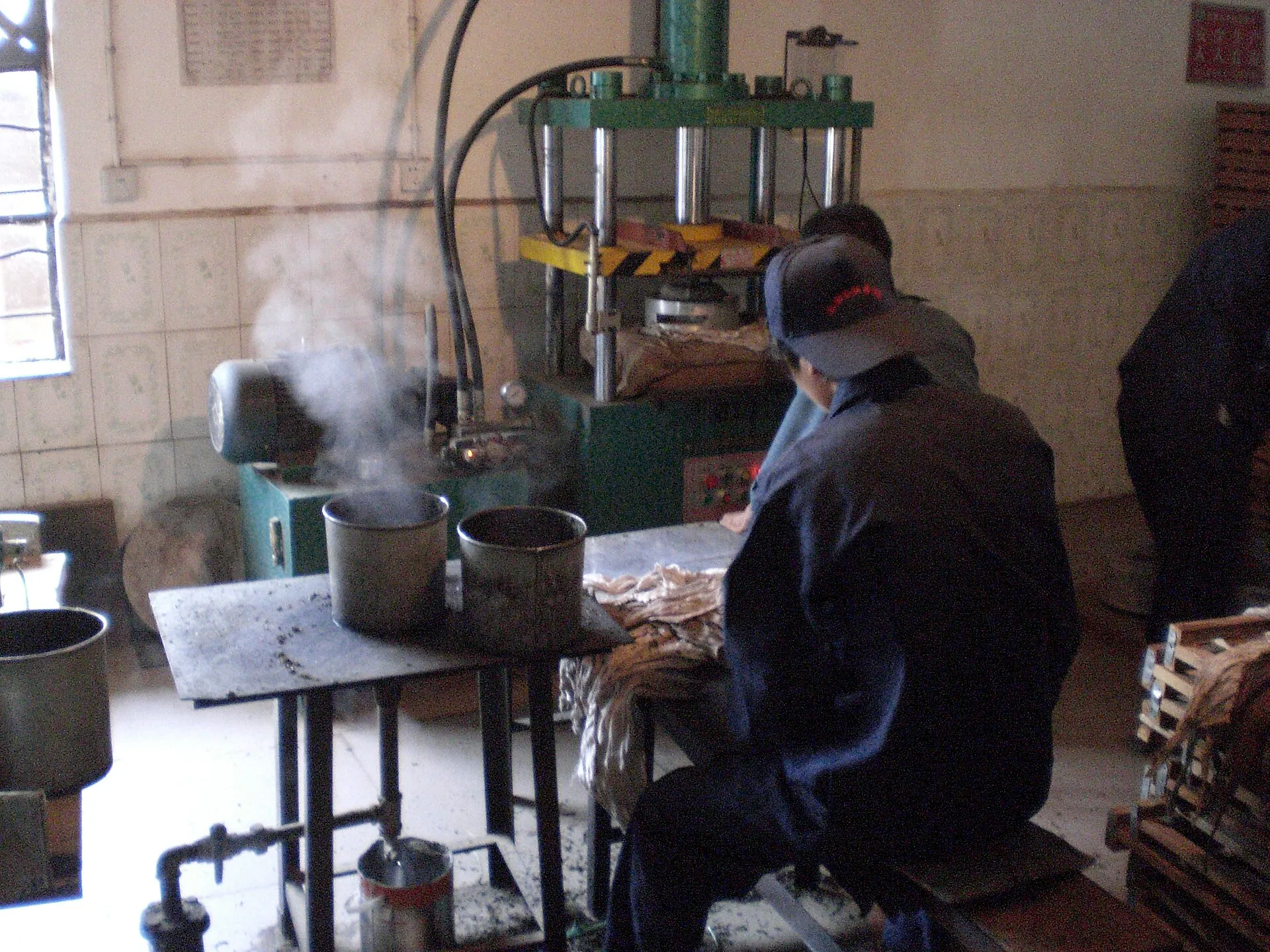
Compressed tea production brings heating, vessels and shaping equipment together. The workshop below provides context, but the image alone does not establish the precise operation or whether the batch was raw or ripe.
4. Raw vs Ripe Pu-erh: The Divergence Matrix
Both raw and ripe Pu-erh share sun-dried maocha as their identical starting material, but subsequent craft decisions chart completely different destinies[1][2]:
Camellia Tea Knowledge Base · by 茶食新知 | Updated 2026-08
| Dimension | Raw Pu-erh (Sheng Pu-erh) | Ripe Pu-erh (Shou Pu-erh) |
|---|---|---|
| Parent Material | Yunnan broad-leaf sun-dried maocha | Yunnan broad-leaf sun-dried maocha |
| Core Process | Steam compression ➔ Decades of natural dry aging | High-pile water addition ➔ 45–60 days microbial piling |
| Primary Driver | Time + Ambient O₂ + Moisture medium + Residual enzymes | Microbial extracellular enzymes (Aspergillus niger) + Moist heat |
| Young Liquor | Bright golden-green, translucent | Deep red-brown, dark ruby |
| Young Flavour | Floral, honeyed, assertive, tannic & bold | Ripe sweet, woody, glutinous rice, silky & mild |
| Pigment Profile | Monomeric catechins dominate; trace TF/TR/TB | Catechins <1%; Theabrownins (TB) reach 8%–15% |
| Drinking Readiness | Young tea can be enjoyed; storage outcomes depend on material, processing and conditions | Judge the actual tea and residual piling notes, rather than prescribing a universal waiting period |
5. Natural Dry Storage: The Biochemical Kinetics of Aging
Stored in clean, light-shielded dry warehouses at 20–28 °C and 50%–70% relative humidity, raw Pu-erh undergoes profound structural evolution over decades[5][6]:
What changes during dry storage?
Five stages; watch the liquor colour.
0 Years: the liquor deepens
- Cake surface darkens over the years
- Liquor: Bright yellowish green
- Aroma: Brisk clean fresh aroma
Bitter and brisk, with a quick, lasting sweet finish.
Conditions, chemistry & sources
- Storage stage
- 0 Years (Freshly Pressed Cake)
- Liquor colour
- Bright yellowish green / Light apricot gold
- Dominant aroma profile
- Brisk clean fresh aroma · vibrant floral notes · mild green nuance
Free and galloylated catechins (EGCG, ECG) predominate. Theabrownins are minimal. Polyphenols exist in their initial unoxidized state.
Mechanisms: Synthesised from Tea Processing (R-031) and chemical kinetics of Yunnan large-leaf raw pu-erh (R-008, R-009, R-268). Aging is driven by non-enzymatic autoxidation, hydrolysis and polymerization.
Note: Aging outcomes are governed by initial crafting, compression density, temperature, relative humidity, oxygen access and clean storage. This timeline represents standard dry storage conditions.
Directions of change only; no prediction of enzyme activity, value or a peak age.
- Slow Non-Enzymatic Catechin Polymerization: Harsh monomeric catechins (EGCG, ECG) slowly oxidize and polymerize with ambient oxygen, generating theaflavins (TF), thearubigins (TR), and ultimately theabrownins (TB). Colour and astringency may change, but raw materials and storage differ; fixed ages cannot predict liquor colour or guarantee loss of bitterness[4][6];
- Polysaccharide & Protein Hydrolysis: Structural polysaccharides break down into soluble reducing sugars, and insoluble proteins yield free amino acids, producing a velvety, thick soup-like mouthfeel;
- Volatile Spectrum Shift: Grassy aldehydes disappear, replaced by high-boiling linalool oxides, β-ionone, cedrol, and guaiacol, establishing the noble succession of “Floral ➔ Honeyed ➔ Camphor ➔ Antique Wood” aromas[5][6].
Raw Pu-erh (Sheng & Aging)
Sun-Dried · Natural Post-AgingThis flavour silhouette is an illustrative comparison, not a shared instrument scale or a measurement tied to a tea’s age. Samples and storage conditions may produce different results.
6. Sensory Milestones, Brewing & Storage
6.1 Observing Different Storage Situations
| Observation | Liquor Appearance | Dominant Bouquet | Mouthfeel & Taste | Infused Leaf |
|---|---|---|---|---|
| Young-tea observation | Note the actual colour | Record green, floral and fruity notes | Describe bitterness and astringency separately | Observe tenderness, integrity and colour |
| Tea with some storage | Compare with earlier records of the same batch | Note retained or newly appearing aromas | Record body, finish and astringency | Colour alone cannot establish age |
| Long-stored tea | Dark colour does not guarantee quality | Check changes and abnormal odours | Smoothness or absence of bitterness is not guaranteed | Stop using suspected mould damage; do not taste-test safety |
6.2 Brewing Parameters & Protocol
| Metric | Recommended Parameters | Key Notes & Instructions |
|---|---|---|
| Water Temp | 95–100 °C boiling | Broad-leaf cells and long-chain polysaccharides require high thermal energy |
| Tea-to-Water | 7–8 g / 130–150 ml (~1:20) | Yixing clay teapots (Zini, Duanni) or thick white gaiwans recommended |
| Pour Method | Gentle rim-pour for young tea; steady center-pour for old tea | Prevents sudden harshness in young teas while coaxing deep aromatics in aged cakes |
| Steep Time | 1st–3rd: 3–5s flash steeps; 4th–8th: 8–15s; 9th+: 20–40s | Premium ancient tree cakes effortlessly sustain 15 to 20+ sweet infusions |
| Storage | Clean, light-shielded, 20–28 °C, 50–70% RH | Allow micro-air circulation; strictly avoid vacuum bags, damp cellars, or odors |
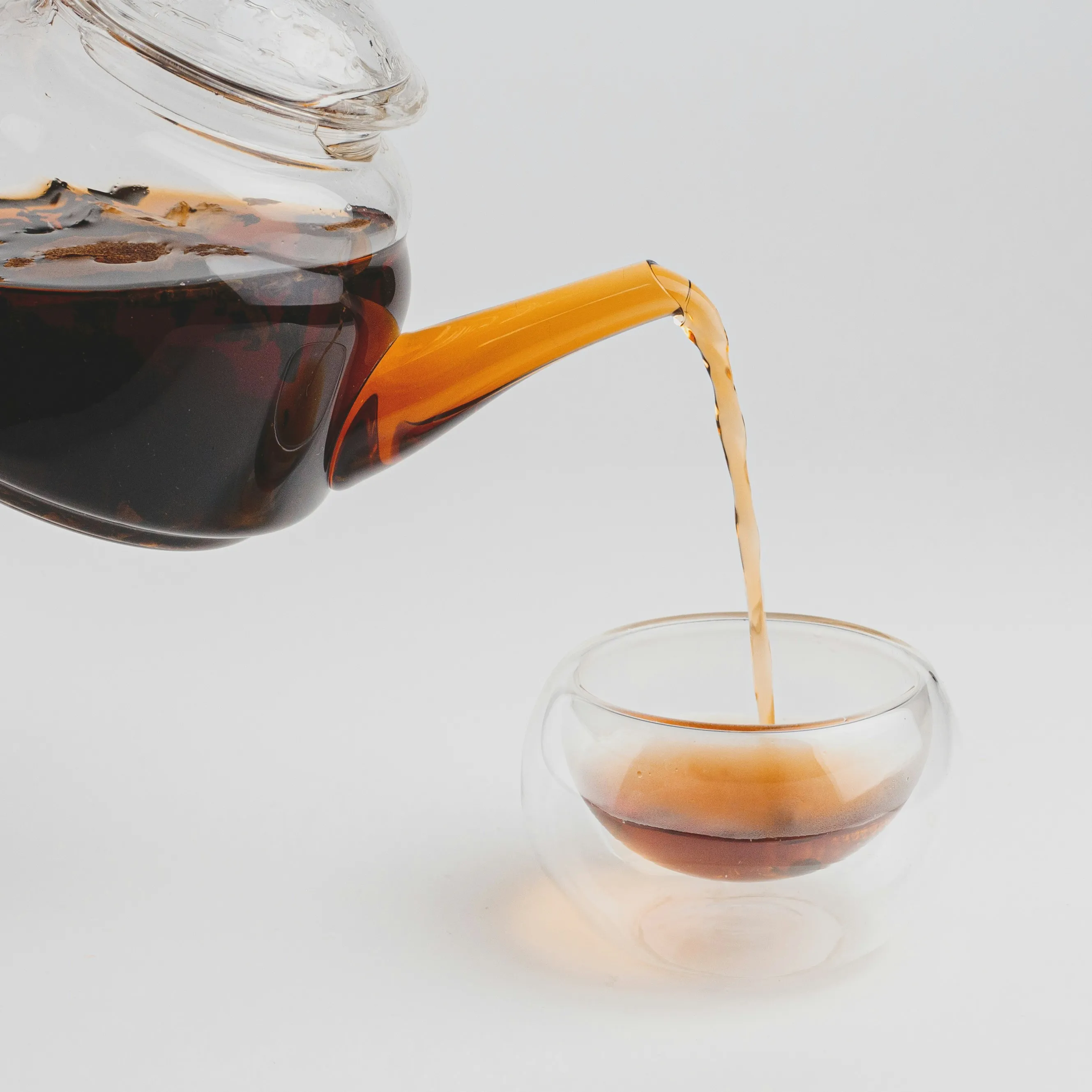
Record brewing conditions when comparing samples. Liquor colour alone cannot establish whether a pu-erh is raw or ripe, or how old it is; the photographer identified this tea only as pu-erh.
7. Common Myths & Scientific Clarifications
Myth 1: “Is raw Pu-erh merely crude, sun-dried green tea devoid of real craft?”
Scientific Clarification: Raw Pu-erh and green tea follow fundamentally divergent thermodynamic and biochemical trajectories[1][5]. While green tea utilizes intense heat to permanently denature all endogenous enzymes and fix a fresh emerald profile, raw Pu-erh employs a “heavy charge, low-temperature” pan-firing (70–80 °C leaf temperature) followed by gentle solar dehydration[2][5]. This thermal regime suppresses rapid enzymatic browning while deliberately preserving latent peroxidase and polyphenol oxidase traces. This residual enzymatic reservoir drives decades of non-enzymatic auto-oxidation and polyphenol condensation[6]. Well-made maocha displays dark olive-green glossy cords with intact silver trichomes rather than brittle, scorch-damaged leaf fragments.
Myth 2: “Does all Pu-erh improve indefinitely with age, regardless of storage conditions?”
Scientific Clarification: Aging can alter aroma, liquor color, and astringency, but poor conditions can easily dissipate volatiles or trigger moldy spoilage[1][5]. Maturation outcomes depend on the dynamic interaction of cultivar chemistry, pan-firing temperature, cake compression density, ambient temperature, relative humidity, and micro-oxygen exposure. This guide sets no universal “optimum age” or inverted-U drinking curve. Age alone never guarantees sensory quality or microbiological safety. Store cakes in a clean, odorless, light-protected space below 70% relative humidity, tracking specific batches over time with tasting logs. Discontinue consumption immediately if suspicious mold or sour off-flavors develop.
Myth 3: “Does assertive young bitterness indicate poor tea-tree quality or rough plucking?”
Scientific Clarification: Youthful astringency is a natural biochemical hallmark of the Yunnan broad-leaf variety (Camellia sinensis var. assamica)[1][4]. Uncooked Yunnan broad-leaf contains an immense 30%–38% total polyphenols, yielding potent concentrations of ester catechins and caffeine[4][5]. The vital sensory benchmark is the velocity of huigan (throat-salivation): low-grade or scorched tea produces a dry, clawing bitterness that coats the throat stubbornly, whereas premier spring flushes transform intense upfront bitterness into sweet, salivating resonance within seconds. This massive phenolic reservoir forms the indispensable chemical scaffold required for decadal maturation into smooth vintage tea[6].
8. Related Articles
- Ripe Pu-erh (Wodui Fermentation) Processing — Comparing natural dry aging against microbial pile fermentation
- The Science of Dark Tea Wodui — Aspergillus niger and extracellular enzyme kinetics
- Overview of the Six Tea Categories — Taxonomic placement of Pu-erh and post-fermented teas
- Famous Tea Processing · Anxi Tieguanyin — Southern Fujian oolong cloth-ball rolling
9. Complete Craft Parameters
| Stage | Equipment | Temperature / Humidity | Duration | Moisture Flux | Biochemical & Physical Goal |
|---|---|---|---|---|---|
| Withering | Bamboo mats | Ambient 20–25 °C, 60–70% RH | 3–6 h | ≈75% → ≈68% | Vents grassy aroma, evaporates water, softens leaves |
| Pan Fixation | Wok (5–8 kg batch) | Pan 180–220 °C, Leaf 70–80 °C | 15–20 min | ≈68% → ≈55% | Substantially suppresses enzymes, dispels grassy volatiles, preserves active transformation substrates |
| Hand Rolling | Bamboo trays | Ambient temperature | 15–25 min | ≈55% → ≈50% | Ruptures 45–55% of cells; coats leaf strips with cell sap |
| Sun Drying | Sun-drying yard | Solar warmth 30–45 °C | 1–2 days | Until dry (about 10%) | Photo-catalytic mild oxidation; yields Dianqing maocha |
| Weighing & Neifei | Balance scale | Ambient environment | Instant | — | Measures 357 g standard cake; embeds identification ticket |
| Steam Softening | Steam cylinder | 100 °C boiling steam | 5–10 s | Moisture softens | Steam melts surface pectins, providing natural adhesive grip |
| Stone Pressing | Stone mold (25–40 kg) | Manual leverage pressing | 2–3 min | Compresses cake | Forms firm rim with breathable, porous cake core |
| Low-Heat Drying | Dehumidifying room | Room temp 35–45 °C | 24–48 h | Below the standard limit | Slow drying; GB/T 22111 caps raw pu-erh at 13.0% moisture, a pass/fail line rather than a target[1] |
Parameters are representative industry standards. Craftsmen flexibly adjust parameters according to fresh leaf maturity, weather, and mountain terroir[1][2][5].
References
- R-086 — GB/T 22111-2008.《地理标志产品 普洱茶》(Product of geographical indication—Pu-erh tea). 国家质量监督检验检疫总局、国家标准化管理委员会.
- R-031 — 施兆鹏, 夏涛 主编 (2016).《茶叶加工学》(第3版). 中国农业出版社. ISBN: 978-7109214347.
- R-030 — 陈宗懋 主编 (2000).《中国茶叶大辞典》. 中国轻工业出版社. ISBN: 978-7501925094.
- R-029 — 宛晓春 主编 (2003).《茶叶生物化学》(第3版). 中国农业出版社. ISBN: 978-7109066274.
- R-292 — Lv, H. P., Zhang, Y. J., Lin, Z., & Liang, Y. R. (2013). Processing and chemical constituents of Pu-erh tea: A review. Food Research International, 53(2), 608–618. https://doi.org/10.1016/j.foodres.2013.02.043
- R-291 — Zhang, W., et al. (2025). Non-volatile metabolite profiles and taste quality of Pu-erh raw tea on different storage years by metabolomics and 1H qNMR. Food Research International, 116967. https://doi.org/10.1016/j.foodres.2025.116967
Article Knowledge Network
Explore the connections between the teas, processes and flavours in this article.