
Start with the essentials
Wet piling allows microbes to participate in leaf transformation under managed moisture, temperature and ventilation. Heat accumulates, and the centre and surface can differ; turning and ventilation help manage that environment.
This article connects pile conditions with microbes, enzymes and compounds, then considers colour, body, production control and later storage. Understanding the environment also separates controlled manufacture from accidental mould at home.
Three key points
- Conditions vary within a pileHeat, water and oxygen distribution require monitoring and handling.
- Microbes work with the materialCommunities, enzymes and products depend on actual conditions.
- Manufacturing connects with storageDrying, packaging and preservation continue managing the product.
Connect the process with the tea
Check manufacturing information separately from the sample’s storage condition, then describe colour, aroma and texture. Tasting cannot identify microbes or prove safety; stop using suspected mouldy tea.
The dark-tea process
Biochemistry
The core flow of wodui can be summarised as “water → pile → turn → dry”. After sun-dried maocha has been kill-greened, rolled and dried, its own enzyme activity has already been sharply reduced by the high heat. Wodui deliberately adds water and maintains warmth and humidity so that a microbial community can establish itself. Microbial metabolism generates heat, raising the core temperature; oxygen at the pile surface supports aerobic microbes. Turning serves to cool, add oxygen, even out the fermentation and prevent local overheating (“pile-burning”) [1][2][3].
If black-tea fermentation is “the leaf’s own enzymes performing”, wodui is “inviting a whole microbial band” — Aspergillus niger is the lead singer, bacteria and yeasts are the accompaniment, and moist heat is the stage lighting.
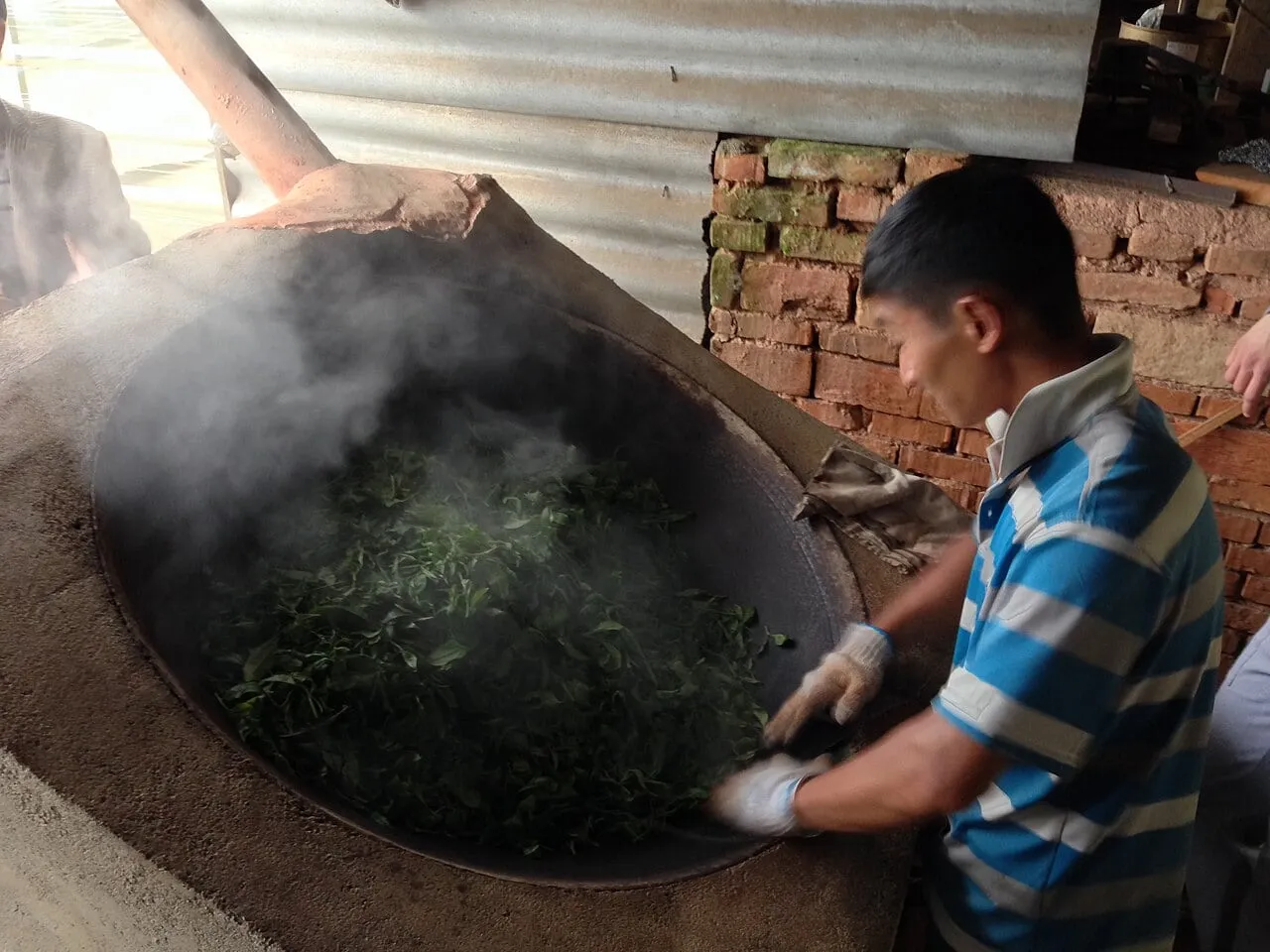
Before piling, the tea material goes through primary processing. This photograph documents a wok operation in pu-erh making; the photographer did not record whether the tea was later piled.
Microbial succession during wodui
Wodui is not the work of a single species; it is a dynamic succession of a microbial community. Zhang et al. (2024), reviewing omics studies, describe a clear succession over the first 45 days of piling: bacteria and yeasts are active early, Aspergillus niger dominates the middle phase, and fungal diversity declines as the pile matures [1].
Wet piling: a microbial relay inside the heap
Switch stages; watch heat and microbes.
Wet, pile, wake the microbes
- Leaf watered, piled, covered
- Loupe: bacteria, yeasts first
- Their metabolism heats the pile core
Water and a warm pile wake microbes; their heat drives the rest.
Conditions, microbes & sources
- Setting
- 5–20 metric tons, 25–35% water addition, 4–6 manual turnings, 40–55 day duration
- Core pile temperature
- 38–48 °C
- Accumulated fermentation time
- 0–10 days (before 1st turn)
- Pile moisture (wet basis)
- 28–34%
- Dominant microbial taxa
- Yeasts & Bacillus active first; Aspergillus niger begins colonization
- Tasting bowl liquor appearance
- Amber Orange
Moistened sun-dried raw tea heaped and covered; bacteria and yeasts awake rapidly as core temp surges
Sun-dried raw tea is watered (~28–32% moisture) and piled into trapezoidal heaps. Abundant water and initial oxygen awaken microbes; bacteria and yeasts metabolize sugars and release heat.
Workshop Ground Heap Piling (Ripe Pu-erh / Traditional Liubao): Fermentation floor with trapezoidal heaps (0.8–1.2 m high) covered with linen cloth for heat-moisture retention
Mechanisms: Synthesised from Tea Processing (R-031) and Chen et al. (2024) metagenomic studies on dark tea (R-008, R-009, R-267). Wodui is a post-fermentation process driven by extracellular microbial enzymes and coupled hydrothermal heat.
Note: Parameters (water ratio, heap height, turning frequency, duration) vary across dark teas (Ripe Pu-erh, Liubao, Anhua dark tea); this model illustrates representative hydrothermal and biochemical succession.
Microbes, pile heat and duration vary widely; stages are not a recipe.
Early stage (about 0–7 days). The leaves have just been watered and piled. Water is abundant and oxygen relatively available, so bacteria and yeasts multiply first. They break down simple sugars, produce organic acids and lower local pH, creating conditions for fungal growth; their metabolism also begins to raise pile temperature. Common early bacteria such as Bacillus can use tea polyphenols and amino acids, while yeasts contribute alcohol and ester aroma precursors [1][3].
Middle stage (about 7–30 days). As temperature rises and oxygen is consumed, Aspergillus niger gradually becomes the dominant fungus, often accounting for 60–95% of the fungal community by abundance [1][2]. A. niger secretes large amounts of extracellular enzymes — polyphenol oxidase, laccase, tannase, pectinase, cellulase and others — driving catechin oxidation/polymerisation and cell-wall degradation.
Late stage (about 30–45 days or more). Easily degradable substrates dwindle, pile temperature falls back, and some heat-tolerant fungi and bacteria continue to act while overall diversity drops. By now theabrownins have accumulated strongly and the pile enters a “finishing” phase that is terminated by turning and drying [1][3].
In Fuzhuan brick tea the situation differs slightly: after wodui the tea enters a controlled “flowering” step that encourages Eurotium cristatum to grow, producing the visible yellow cleistothecia known as “golden flowers”. This fungus breaks down polyphenols and produces various volatile compounds, giving Fuzhuan its distinctive fungal-floral aroma [3].
Enzyme systems and biochemical reactions
The defining feature of wodui is microbial pile-fermentation, not simple oxidation [1][2]. After fixation, the leaf’s own enzymes are largely inactive; the real drivers are the extracellular enzymes secreted by colonising microbes together with moist heat inside the pile.
The main enzyme systems include:
- Polyphenol oxidase and laccase — oxidise and condense catechins, generating theaflavins, thearubigins and eventually theabrownins;
- Tannase — hydrolyses ester catechins such as EGCG and ECG, reducing astringency;
- Pectinase, cellulase and protease — degrade cell walls, pectin, fibre and protein, softening the leaf and increasing soluble material;
- Glycoside hydrolases — hydrolyse glycosidically bound aroma precursors, releasing free aromatic compounds;
- Microbial metabolism itself — produces organic acids, alcohols, esters and other metabolites that contribute aged aroma and mellowness.
These enzymatic reactions work together with high-temperature, high-humidity non-enzymatic reactions (Maillard reactions, caramelisation) to drive tea polyphenols down, theabrownins up, soluble sugars up and caffeine partly down, producing dark tea’s “red, thick, brown-bright and mellow-smooth” quality [1][2][3].
It is worth noting that enzyme sources are not single: fungi such as A. niger secrete extracellular enzymes into the leaf tissue; intracellular enzymes released when microbes die and lyse continue to act; and the high temperature and humidity themselves can activate some heat-tolerant enzymes or promote non-enzymatic browning. Thus wodui’s “transformative power” is a systems engineering outcome of microbial metabolism, enzymatic reactions and moist-heat chemistry, not a one-enzyme show [1][3].
Pathways of theabrownin and other key products
The transformation of polyphenols during wodui follows roughly this path [1][2]:
- Catechin oxidation. PPO/laccase oxidise catechins to o-quinones.
- Condensation to theaflavins and thearubigins. Similar to black-tea fermentation, but in wodui microbial action is more sustained and deeper.
- Further polymerisation to theabrownins. Thearubigins and catechin derivatives continue to oxidise and polymerise into theabrownins — large, dark-brown molecules that dominate dark-tea colour and mellowness.
- Direct microbial transformation. Some microbes can metabolise catechins directly, contributing to theabrownin and other metabolites.
Other components also change significantly:
- Protein / cellulose — partly degraded into amino acids and soluble sugars, improving mellowness and smoothness;
- Starch and pectin — hydrolysed into soluble sugars, adding sweetness;
- Caffeine — partly degraded or transformed by microbes, lowering stimulation;
- Aroma compounds — glycoside release, microbial metabolism and thermal reactions together produce aged, woody, fungal-floral and other notes.
Key compound dynamics
| Compound | Before piling | Change during wodui | Quality significance |
|---|---|---|---|
| Catechins (EGCG, ECG, etc.) | High | Fall sharply through oxidation, polymerisation and hydrolysis | Lower astringency; precursors of theabrownins |
| Theabrownins | Very low | Rise steadily and become the main pigment | Red-brown liquor, mellow taste |
| Theaflavins / thearubigins | Low | Form briefly, then transform further | Influence brightness and colour layers |
| Soluble sugars | Medium | Increase | Sweetness, thickness |
| Protein / cellulose | High | Partly degraded | Less harshness, smoother mouthfeel |
| Caffeine | Medium | Partly degraded | Lower stimulating edge [2] |
| Aroma volatiles | Low | Glycoside release + microbial metabolism | Aged, woody, fungal-floral notes |
Wang et al. (2024) reinforced the role of Aspergillus niger by inoculating it into the pile, which increased theabrownin production, improved microbial-community structure and lowered caffeine content — confirming that A. niger plays a central role in ripe pu-erh quality formation [2].
Parameters and quality defects
Tank fermentation: the relay, controlled
Switch stages; watch heat and microbes.
Even start in a controlled tank
- Tank loaded; gentle draft below
- Sensors log heat and humidity
- Loupe: yeasts and Aspergillus
- Tank held at 42–50 °C
Forced air removes cold corners, so the tank starts evenly.
Conditions, microbes & sources
- Setting
- Vat depth 1.5 m, precise temp control 50–58 °C, forced intermittent aeration, 25–35 day duration
- Core pile temperature
- 42–50 °C (regulated)
- Accumulated fermentation time
- 0–7 days
- Pile moisture (wet basis)
- 28–32%
- Dominant microbial taxa
- Synchronized Aspergillus niger and yeast activation
- Tasting bowl liquor appearance
- Amber Orange
Precisely watered tea loaded into sealed vat; warm aeration initiates synchronous microbial growth
Perforated bottom ventilation grid provides continuous mild aeration and 85% RH, preventing edge cold pockets and ensuring homogeneous start.
Smart Fermentation Tank / Vat (Controlled Environment): Stainless steel vat with perforated bottom aeration grid, automated turner and multi-point sensor network
Mechanisms: Synthesised from Tea Processing (R-031) and Chen et al. (2024) metagenomic studies on dark tea (R-008, R-009, R-267). Wodui is a post-fermentation process driven by extracellular microbial enzymes and coupled hydrothermal heat.
Note: Parameters (water ratio, heap height, turning frequency, duration) vary across dark teas (Ripe Pu-erh, Liubao, Anhua dark tea); this model illustrates representative hydrothermal and biochemical succession.
Microbes, pile heat and duration vary widely; stages are not a recipe.
| Item | Typical range | Role |
|---|---|---|
| Watering | ~25–30% of leaf weight for high-grade material, ~30–35% for lower grades [3][4] | Water supply and moist-heat conditions for microbes |
| Pile temperature | Rises to ~50–65 °C [1][3] | Heat released by microbial metabolism |
| Turning | About every 5–7 days, 4–5 times per batch [3][4] | Cool, oxygenate, even out, prevent pile-burning |
| Pile height | ~0.5–1 m, adjusted to batch size and season [3] | Balance heat/moisture retention with airflow |
| Duration | ~45–60 days [3] | Complete deep post-fermentation |
| Drying | To ≤12.0% moisture for loose ripe tea [5] | Halt fermentation, fix quality |
Parameters vary widely with leaf grade, season and batch size, and small laboratory piles do not simply scale to factory piles — a simulated pile-fermentation study in the food-science literature tested 30–45% watering levels and its sensory panel preferred the 45% treatment, above the watering range commonly used in production [4]. The table above gives typical ranges from textbooks and studies, not a single “standard recipe.”
In practice, tea makers judge temperature and humidity by hand, inserting a hand into the pile and adjusting turning frequency according to air temperature and raw-leaf moisture. Spring leaf is tender, lower in fibre, heats quickly but may peak lower; summer leaf is coarser, richer in carbohydrates, heats more aggressively and reaches higher peaks, needing closer monitoring. Above 65 °C microbial activity is inhibited or even killed, and scorched notes may appear; turning not only cools the pile but also moves surface-oxidised leaves to the centre and centre-heated leaves to the surface, evening out the whole batch [3].
Under-fermentation means microbial enzyme activity and moist-heat action remain incomplete. Theabrownin production is low, the leaf base stays greenish-brown, the liquor is pale, and grassy notes and astringency linger — lacking the aged aroma and mellow body expected of a finished dark tea [1].
Over-fermentation or poor temperature control creates quality defects. Excessive pile heat causes “pile-burning”: the leaf base scorches black and the liquor turns muddy. Too much moisture with poor ventilation encourages unwanted microbes, producing musty, sour or off odours [1][3]. Careful turning and water management keep the pile temperature in a safe range; a well-controlled post-fermentation actually reduces microbial risk [1].
Ripe pu-erh safety: the aflatoxin evidence
In 2017, claims that “pu-erh causes cancer” circulated widely, pointing at aflatoxins. The evidence-based conclusion: properly made ripe pu-erh carries very low risk — the real risk lies in improper storage.
- The toxin producers are not the pile’s dominant microbes. Aflatoxins are produced by a few species such as Aspergillus flavus and A. parasiticus. The dominant fungus in wodui, Aspergillus niger, does not produce aflatoxins, and the pile’s hot, moist 50–65 °C interior is unfavourable to aflatoxin production [3].
- Properly sampled surveys find very low detection rates. The Guangdong CDC tested 148 market pu-erh teas (aged 1–30 years): aflatoxin B1 was detected in only 2.03% (3 samples, at most 0.56 μg/kg); among 432 samples collected by the Guangzhou CDC in 2013–2015, none contained detectable AFB1 [6].
- Aged stored teas measure even lower. Chau et al. (2023) analysed 31 stored pu-erh teas from 1900–2021 by mass spectrometry: in teas aged over 30 years, aflatoxins were all below 1 μg/kg, far under the 5 μg/kg reference limit used in the study; deoxynivalenol (DON) peaked below 70 μg/kg (reference limit 1000 μg/kg) [7].
- Early “widespread detection” was largely an artefact. Older surveys mostly used ELISA, which tea polyphenols interfere with; with the more reliable mass-spectrometry methods, detection rates dropped sharply [6][7].
For scale, the Chinese national standard GB 2761-2017 sets the aflatoxin B1 limit at 20 μg/kg for foods such as peanut oil and 0.5 μg/kg for infant formula — the pu-erh values above sit at very low levels [8]. So normal production and normal storage raise no aflatoxin concern for ripe pu-erh. What deserves attention instead is mouldy stored tea: if a tea has gone mouldy in damp conditions, stop drinking it. Keep stored tea dry and ventilated.
Representative styles
| Style | Microbial character | Process highlights | Flavour direction |
|---|---|---|---|
| Ripe Pu-erh | Aspergillus niger-dominated, rich community [1][2] | Yunnan sun-dried maocha, wodui 40–60 days [3] | Bright red, aged aroma, mellow and smooth |
| Fuzhuan brick | Eurotium cristatum “golden flowers” [3] | Controlled humidity/temperature to encourage golden flowers | Fungal-floral aroma, mellow, orange-red liquor |
| Liubao tea | Mixed fungi, yeasts and bacteria [3] | Wuzhou, Guangxi material; often aged in cellars after wodui | Betel-nut aroma, red, aged, sweet finish |
| Ya’an Tibetan tea / Kangzhuan | Complex microbial community, long wodui cycle | Ya’an, Sichuan raw material; usually steamed and pressed into bricks | Aged, woody, mellow and full-bodied |
Different dark-tea categories emphasise different microbial communities and parameters. Ripe pu-erh highlights Aspergillus niger-dominated deep transformation; Fuzhuan foregrounds controlled “flowering” and Eurotium cristatum; Liubao is often combined with cellar ageing to develop its betel-nut aroma and cooling sensation.
Ripe pu-erh uses Yunnan large-leaf sun-dried maocha, high pile temperature and a long cycle, accumulating abundant theabrownins. The liquor is red and thick, with aged, woody and glutinous aromas. High-grade ripe pu-erh is prized for being slippery, mellow, sweet and clean, without pile odour or off-notes.
Fuzhuan brick tea goes through a separate “flowering” step after wodui, controlling temperature at 25–30 °C and relative humidity at 60–75% to encourage uniform golden flowers inside the brick. The amount and distribution of golden flowers are important quality markers; their metabolites give Fuzhuan its characteristic fungal-floral aroma [3].
Liubao tea from Wuzhou, Guangxi, traditionally follows “wodui → steaming → pressing → cellar ageing”. After wodui it is often stored in air-raid shelters or dedicated cellars for long-term ageing, where continued microbial action under relatively high humidity gradually develops its “red, thick, aged and mellow” character with betel-nut aroma.
Ya’an Tibetan tea / Kangzhuan represents Sichuan border tea. The raw material is relatively coarse and mature, the wodui cycle is long and the microbial community is complex; the finished tea is steamed and pressed into bricks or strip tea, mainly supplied to Tibetan areas. Its taste is mellow and full-bodied, resistant to boiling, with woody and aged notes.
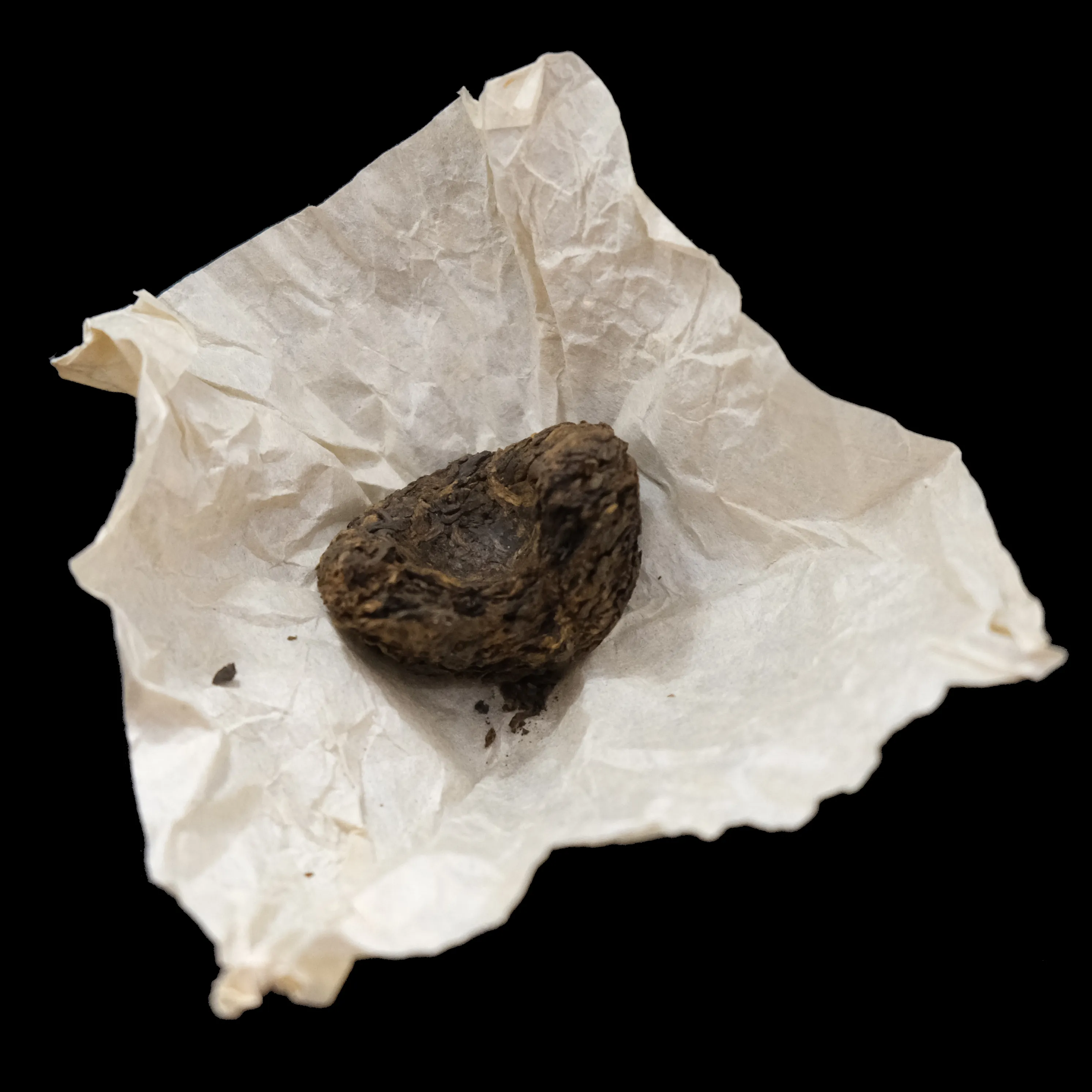
Ripe pu-erh is one example of tea produced with wet piling. The photograph shows a compressed finished sample, not the fermentation pile.
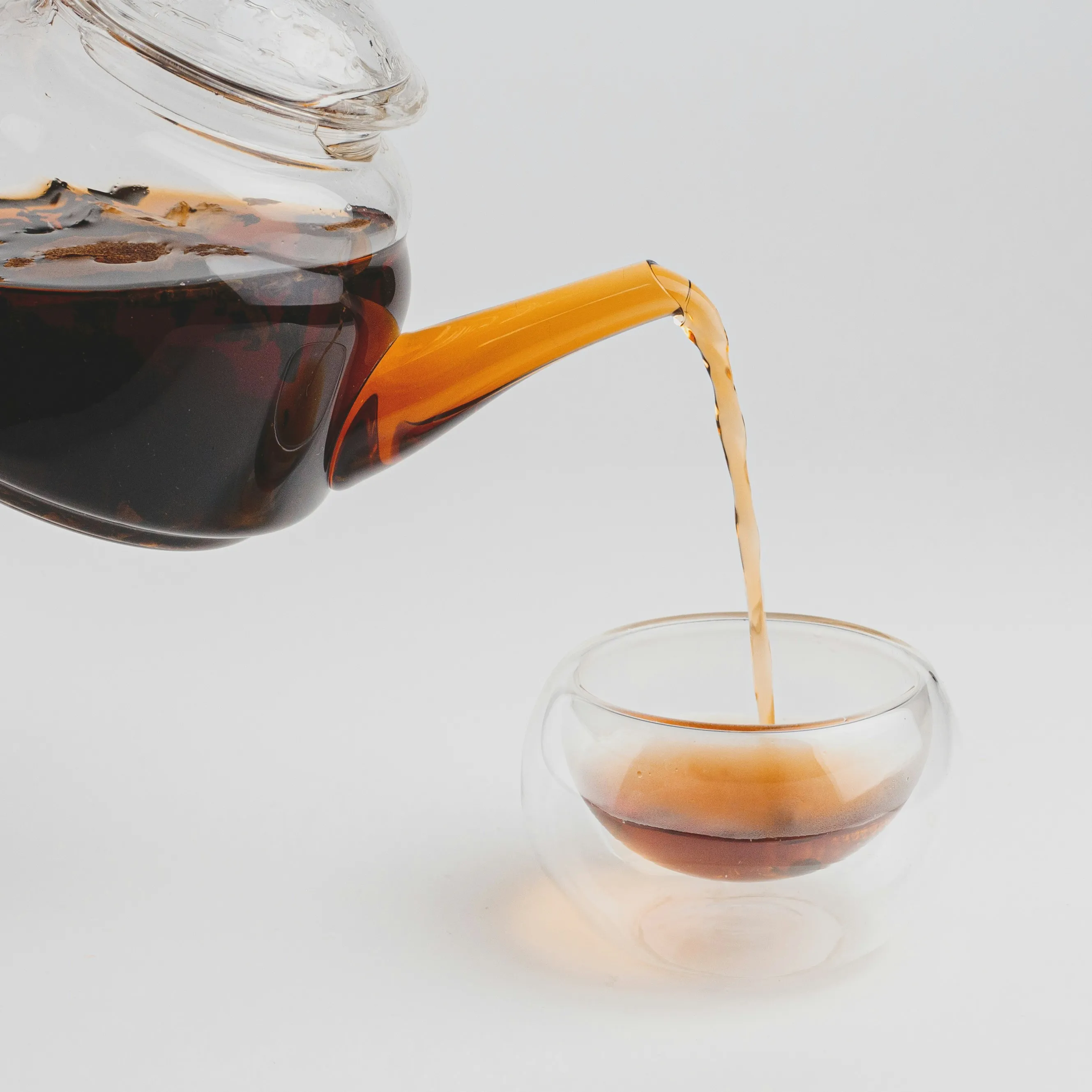
Liquor colour depends on both the tea and brewing conditions. It cannot by itself establish the extent of wet piling or the safety of a tea.
Common Myths & Scientific Clarifications
Myth 1: “Is dark tea wodui simply letting tea leaves get damp and rot naturally?”
Scientific Clarification: Dark tea wodui is a directed solid-state bioprocess fundamentally distinct from random environmental mold. Regulated wetting (25%–35% leaf moisture), thermal pile accumulation (50–65 °C), and polyphenol-rich niches selectively cultivate beneficial fungi including Aspergillus niger, yeasts, and Aspergillus cristatus [1][2]. These microorganisms secrete extracellular enzymes (tannase, cellulase, and polyphenol oxidases) that break down harsh catechins into smooth theabrownins and soluble pectin [3][4]. Uncontrolled dampness fosters stray molds such as Penicillium under ambient temperatures, creating foul odours and food-safety hazards.
Myth 2: “Do dark tea and ripe pu-erh inevitably contain aflatoxins due to prolonged piling?”
Scientific Clarification: Under standard processing and dry storage, dark tea does not support aflatoxin biosynthesis. Research demonstrates that dominant Aspergillus niger and yeast populations exert intense competitive inhibition against toxigenic Aspergillus flavus strains [1][3][6]. Peer-reviewed mass-spectrometry surveys and CDC monitoring confirm aflatoxin B1 detection rates in certified ripe pu-erh are negligible and well below national food safety thresholds [6][7][8]. Toxins appear only when poorly stored tea experiences extreme secondary dampness.
Myth 3: “Does a longer wodui piling time and higher heat always produce smoother, more fragrant tea?”
Scientific Clarification: Piling fermentation has precise biochemical endpoints; over-fermenting destroys tea structure. If pile turns are delayed and core temperatures exceed 65–70 °C, microbial succession collapses into “pile-scorching” or “sludge breakdown.” Excessive enzymatic cleavage destroys structural cellulose and hemicellulose, turning leaves mushy [3][4]. Amino acids and aromatics are heavily depleted while theabrownin fractions become disproportionate, yielding a flat, thin, muddy-dark liquor tainted with decomposing humus and compost odours. High-grade ripe teas require calibrated fermentation to retain lively sweetness.
Myth 4: “Will raw pu-erh naturally transform into ripe pu-erh if aged for several decades?”
Scientific Clarification: Dry-aged raw pu-erh and wet-piled ripe pu-erh represent two independent biochemical pathways. Raw pu-erh matures slowly at ambient room temperatures and low moisture (≤10%) primarily through gentle non-enzymatic auto-oxidation, retaining its structural backbone and bright orange-amber vibrancy over decades [5]. Ripe pu-erh, conversely, is forged through intense moist-heat (50–65 °C, 25%–35% moisture) and microbial extracellular enzymatic digestion across 40–60 days, yielding unique high-molecular-weight theabrownins [1][4][9]. No amount of time transforms dry-stored raw pu-erh into the distinct microbial profile of ripe pu-erh.
See also
- Black-tea oxidation — enzymatic oxidation, for contrast with microbial fermentation
- Ripe pu-erh craft — the practical steps from maocha to ripe tea
- Yellow-tea yellowing — another non-microbial transformation after fixation
Both ripe and raw pu-erh evolve over time, but they take two completely different chemical routes:
| Dimension | Wodui (Ripe Tea) | Ageing (Raw Tea) |
|---|---|---|
| Path | Watered, piled hot and moist; intense microbial solid-state post-fermentation | Sun-dried maocha pressed, stored dry and cool |
| Time scale | ~45–60 days [3] | Years to decades |
| Dominant force | Extracellular microbial enzymes + moist heat | Slow non-enzymatic auto-oxidation + minor ambient microbes |
| Chemistry | Catechins degrade drastically; theabrownins accumulate heavily (>10%) | Catechins oxidise and condense very slowly; minimal theabrownins |
| Category Classification | Dark tea (hei cha) (via artificial wet piling) [5] | Sun-dried green tea base (unpiled, natural aging) [5] |
Modern artificial wodui was standardized around 1973. It is crucial to understand that wodui is NOT merely an “accelerated version” of raw pu-erh aging; it is an entirely distinct biochemical remodeling driven by fungal extracellular enzymes and moist-heat reactions: catechins are deeply converted into theabrownins, creating a signature reddish-brown liquor and earthy mellow smoothness. Raw pu-erh in dry storage, conversely, retains high catechin vitality and mountain character through slow non-enzymatic auto-oxidation accompanied by dry-storage microflora. Their metabolic pathways and end-products diverge completely. National standard GB/T 22111 strictly distinguishes raw from ripe pu-erh based on whether post-fermentation wet-piling has occurred [5].
Theabrownins and metabolic regulation: landmark findings
Folk beliefs often tout ripe pu-erh as an agent to “melt away dietary fat”. In 2019, Prof. Wei Jia’s group at Shanghai Jiao Tong University published a study in Nature Communications, mainly in mice (with supporting human gut-microbiota data), proposing a possible gut-liver axis mechanism [9]:
- High molecular weight remains in the gut: Theabrownins, the bulky polymerized pigments formed during wodui, are barely absorbed into the bloodstream. Instead, they act locally within the ileum and colon;
- Selective suppression of bile salt hydrolase microbes: Theabrownins selectively inhibit gut bacteria possessing bile salt hydrolase (BSH) activity (such as certain Lactobacillus and Bacteroides species);
- Hepatic cholesterol catabolism activation: Decreased BSH activity leads to the accumulation of conjugated bile acids (e.g., T-β-MCA) in the ileum. This suppresses intestinal farnesoid X receptor (FXR) and fibroblast growth factor 15 (FGF15) signaling, releasing feedback inhibition on the hepatic rate-limiting enzyme cholesterol 7α-hydroxylase (CYP7A1);
- Accelerated cholesterol conversion and fecal excretion: The alternative hepatic bile acid synthesis pathway is upregulated, converting excess endogenous cholesterol into bile acids for fecal elimination, thereby significantly ameliorating hypercholesterolemia in the model [9].
This evidence comes mainly from animal models. It does not show that drinking ripe pu-erh lowers blood lipids in everyday use, and it is no substitute for treatment.
Flavour sketch
Ripe Pu-erh (Shou)
Dark · Pile-Fermented Pu-erhTea Science · core comparison
| Dimension | Dark tea (pile-fermentation) | Black tea (fermentation) | Yellow tea (men huang) |
|---|---|---|---|
| Fermentation type | Microbial post-fermentation | Enzymatic oxidation (non-microbial) | Non-enzymatic moist-heat action |
| Dominant force | Aspergillus niger etc. microbial enzymes + moist heat | Leaf’s own PPO/POD enzymes | Moist-heat action (enzymes deactivated after fixation) |
| Core products | Theabrownins, soluble sugars | Theaflavins, thearubigins | Pheophytin, yellowing products |
| Liquor colour base | Red-brown bright | Bright red | Apricot-yellow bright |
For the full six-tea-class comparison, see The Science of Tea: From Leaf to Six Tea Types.
References
- R-008 — Zhang, W., et al. (2024). Pile-fermentation mechanism of ripened Pu-erh tea: Omics approach, chemical variation and microbial effect. Trends in Food Science & Technology, 146, 104379. https://doi.org/10.1016/j.tifs.2024.104379
- R-009 — Wang, Y., et al. (2024). Enhanced Fermentation of Pu-Erh Tea with Aspergillus niger: Quality and Microbial Community Analysis. Molecules, 29(23), 5647. https://doi.org/10.3390/molecules29235647
- R-031 — 施兆鹏, 夏涛 主编 (2016).《茶叶加工学》(第3版). 中国农业出版社. ISBN: 978-7109214347.
- R-267 — 冯超浩, 刘通讯 (2013).《不同潮水量条件下普洱茶渥堆过程化学成分的变化》. 食品科学, 34(7), 135–139. https://doi.org/10.7506/spkx1002-6630-201307028
- R-086 — GB/T 22111-2008.《地理标志产品 普洱茶》(Product of geographical indication—Pu-erh tea). 国家质量监督检验检疫总局、国家标准化管理委员会.
- R-268 — 广东省疾病预防控制中心 (2018).《消费者报道》专访张永慧:“普洱茶致癌说”不成立. https://cdcp.gd.gov.cn/ywdt/mtbd/content/mpost_3444485.html
- R-269 — Chau, S. L., Zhao, A., Jia, W., & Wang, L. (2023). Simultaneous determination of pesticide residues and mycotoxins in storage Pu-erh tea using ultra-high-performance liquid chromatography coupled with tandem mass spectrometry. Molecules, 28(19), 6883. https://doi.org/10.3390/molecules28196883
- R-270 — GB 2761-2017.《食品安全国家标准 食品中真菌毒素限量》. 国家卫生和计划生育委员会、国家食品药品监督管理总局.
- R-299 — Huang, F., Zheng, X., Ma, X., Xiang, H., Zhou, P., Zhao, A., … & Jia, W. (2019). Theabrownin from Pu-erh tea attenuates hypercholesterolemia via modulation of gut microbiota and bile acid metabolism. Nature Communications, 10(1), 4971. https://doi.org/10.1038/s41467-019-12896-x
Article Knowledge Network
Explore the connections between the teas, processes and flavours in this article.