
Start with the essentials
Dongting Biluochun is a green tea known for fine curled leaves and visible down, associated with the Dongting hills around Taihu Lake. Material selection, pan work, rolling and pelleting build its shape while heat and movement also influence flavour.
This article connects the local environment and fruit–tea intercropping with traditional manufacture, then explores leaf composition, tasting and brewing approaches. Floral and fruity associations need to be understood through material and processing together.
Three key points
- Tender material supplies the starting formBud size, maturity and down influence appearance.
- Pelleting joins shaping with dryingMovement must suit heat and moisture as curls develop.
- Aroma has several contributorsCultivar, environment and manufacture matter; intercropping does not mean leaves directly absorb fruit scent.
What to notice when tasting
Inspect curl, down and leaf integrity, then compare infused shoots and aromas at different temperatures. Begin at moderate strength and adjust duration rather than scoring quality by down alone.
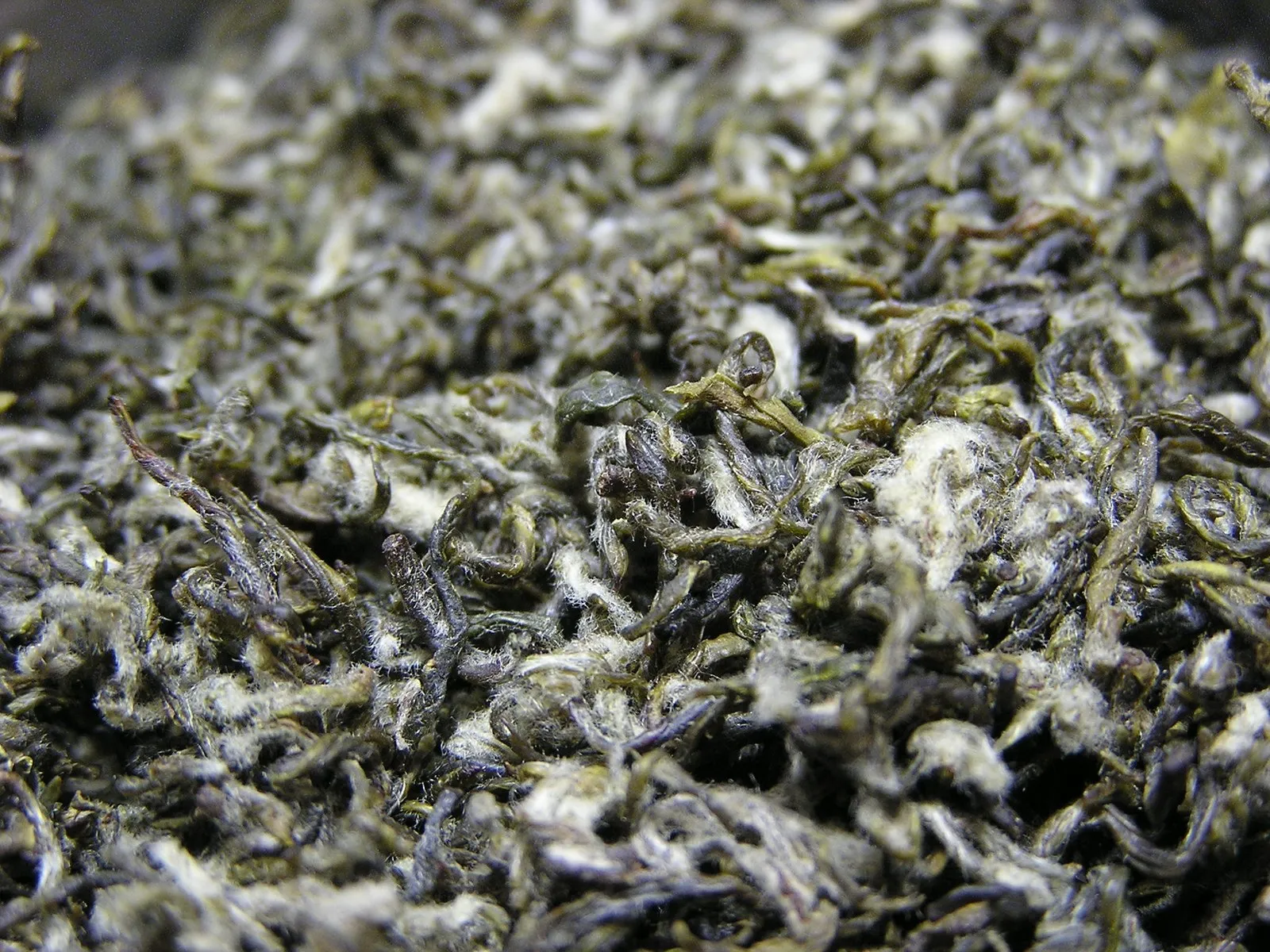
Dongting Biluochun is a curled, pan-fired green tea from the Dongting hills in Lake Tai, Suzhou, Jiangsu. It is fine and tight, curled into small spirals, with visible white down[1]. According to the Qing-dynasty Xu Cha Jing, quoting the Sui Jian Lu, it was once called “Xiashaxiren Xiang” (“scarily fragrant”) and was renamed Biluochun during the Kangxi Emperor’s southern tour in 1699[5]. The sections below cover the growing area, the four hand-made stages, what research says about down and aroma, and how to brew it.
1. Where it grows: the Dongting hills and fruit-tea intercropping
1.1 The protected area
The national standard GB/T 18957-2008, Product of Geographical Indication – Dongting (shan) Biluochun Tea, limits the origin to Dongting East Hill and Dongting West Hill (now Jinting Town) in Lake Tai, Wuzhong District, Suzhou, and sets requirements for raw leaf, processing, grades and sensory quality[1]. For a tea sold as Dongting (shan) Biluochun, first check whether it states that it follows this standard.
1.2 A lakeside climate
East Hill is a peninsula reaching into the lake and West Hill is an island, so the tea gardens are surrounded by water. A large body of water makes nearby temperatures change more gently than inland, and the lake area is often misty and humid in spring; locals commonly give these as reasons for the tender shoots. However, the sources cited here give no measurements of the lake’s effect on garden temperature, humidity or light, so no figures are given here, and the idea that “lake mist adds a certain kind of light, which raises a certain compound” is not treated as established.
1.3 Fruit-tea intercropping
On the Dongting hills, tea is traditionally grown among loquat, bayberry, citrus, peach and chestnut trees. This mix is part of the local farming landscape and of the product’s sense of place[4]. Fruit trees give the tea some shade, which helps tender spring shoots.
A common saying is that “the leaves absorb the fruit scent, so the tea smells of fruit and flowers.” This is closer to folk explanation: the studies cited here did not measure fruit-tree volatiles being taken up by tea buds. Biluochun’s aroma comes mainly from changes in the leaf’s own compounds after picking and during pan work (see section 3)[2][3].
1.4 Cultivar
The traditional raw material is the local Dongting small-leaf population of tea plants, with small shoots and plenty of down. This is the basis for Biluochun’s small curls and visible white hairs[1].
How Lake Tai and Fruit Trees Shape Biluochun Shoots
Three layers: lake mist, shade, aroma.
Gardens surrounded by Lake Tai
- East Hill is a peninsula, West Hill an island in Lake Tai
- Morning mist often rises over the hillsides in spring
- A large lake makes nearby temperatures change more gently
Locals credit the humid lakeside air for tender shoots; the cited sources give no measurements.
2. “One wok to the end”: four hand-made stages
Traditional hand-made Biluochun is done in one wok to the end, hands never leaving the tea and tea never leaving the wok: fixation, rolling, pelleting and drying all happen in the same pan, and the maker judges leaf temperature and moisture by touch, adjusting heat and handling as they go[1].
2.1 Fresh leaf
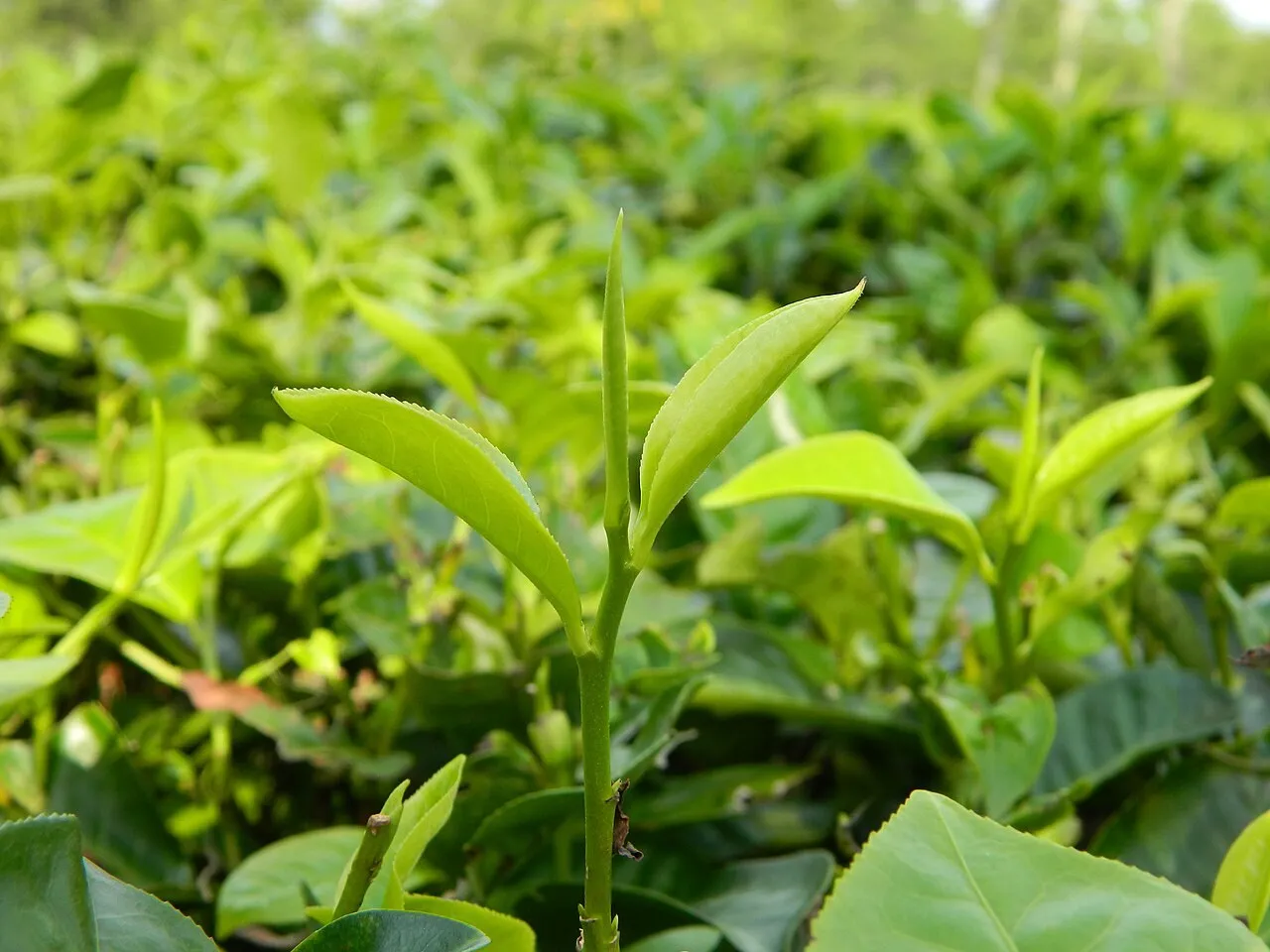
Biluochun is picked very tender, and the standard grades raw leaf by tenderness, with one bud and one just-opening leaf for the higher grades[1]. Locals say “a jin (500 g) of dry tea takes tens of thousands of shoots” to convey how small the material is; the actual number varies widely with grade and shoot size. Picked leaf is sorted promptly to remove fish leaves, scales and damaged pieces so that each batch is even.
The photo below is a general bud-and-two-leaves example; its location and cultivar have no recorded link to Dongting Biluochun.
2.2 Fixation
The wok is very hot. The leaves are tossed and scattered quickly by hand so they heat evenly and steam escapes. As with any green tea, the heat inactivates polyphenol oxidase and related enzymes so the leaf does not oxidise and redden like black tea; it also drives off grassy notes and softens the leaf for rolling (see The Science of Fixation). Uneven frying causes scorched edges or patches that turn yellow.
2.3 Hot rolling
With the heat lowered, the leaves stay in the wok and are rolled while being fried, pushed around the pan wall by hand. Rolling breaks some cells so juice comes to the surface, and the leaves gradually twist into thin strips. Many green teas are rolled cold after leaving the wok; Biluochun is rolled hot in the pan, part of the one-wok method[1].
2.4 Pelleting
This is the most distinctive step. The heat drops further; the maker gathers the strips between the palms, rubs them into a small ball, shakes it open after a few turns, then rubs and shakes again, many times. Rubbing curls the strips into spirals; as the leaf dries, the down is smoothed and exposed on the surface, giving the “covered in down” look[1]. The balls must be opened promptly, or trapped heat will yellow the leaf.
2.5 Gentle drying
Finally, over a low fire, the tea is turned lightly by hand, no longer rubbed, so the down does not come off, until the leaf is fully dry and crumbles between the fingers. The finished tea shows green beneath white down, described in the standard as “silver-green with hidden emerald”[1].
One Tilted Wok, Four Continuous Hand-Craft Stages
Four stages in one wok; watch 03, pelleting.
Toss fast in a hot wok
- Tilted iron wok at its hottest
- Palms scoop and toss fast
- Steam carries off grassy notes
- Tender shoots soften, lose water
Heat stops the enzymes so the leaf stays green, without scorching.
Heat, handling & source
- Wok heat
- Highest of the four stages
- Duration
- A few minutes
- Leaf moisture
- Fresh leaf → softened
- Leaf state
- Soft, grassy notes gone
Fast tossing and scattering by hand so the leaf heats evenly without scorching
Heat inactivates polyphenol oxidase and related enzymes so the leaf stops oxidising and stays green; steam and grassy notes escape.
Stage names and the one-wok method follow GB/T 18957-2008 (Geographical Indication Dongting (shan) Biluochun Tea); wok heat and timing are given only in relative terms and common ranges.
Heat and timing change with shoot tenderness, batch size and weather, and makers differ; progress shown is schematic.
3. What research tells us
3.1 Processing mainly shapes aroma
A study comparing Jiangsu Biluochun, Yunnan Biluochun and other ordinary green teas found that processing clearly affected aroma but had little effect on taste[2]. The same group also sampled Yunnan Biluochun step by step during manufacture, tracking volatiles from fresh leaf to finished tea; the aroma profile changed at fixation, rolling and drying[3]. Together these suggest that much of Biluochun’s aroma is made in the wok, not simply given by the place. Note that Yunnan Biluochun uses different raw material and processing from Dongting, so the results do not transfer directly to every Dongting tea.
3.2 What is in the aroma
Work using aroma extract dilution analysis on Chinese green tea infusions identified a set of compounds that contribute strongly to aroma, including floral terpene alcohols such as linalool and sweet, roasted compounds formed by heat[6]. The “floral-fruity” note often used for Biluochun is best understood as these floral and sweet compounds together, not as a single “fruit molecule”.
3.3 What the down is, and how much it adds to taste
The white down is the hairs on the underside of young leaves and buds, each a single elongated cell. The younger the shoot, the denser the hairs, so plenty of down is commonly read as a sign of tender material[1].
A common claim is that “the down is rich in amino acids, which makes Biluochun brisk and savoury.” A study that removed the hairs from tender tea shoots and analysed them separately does not support this: catechins, caffeine, amino acids and most aroma compounds were mostly lower in the hairs than in the leaves[7]. Biluochun’s fresh, savoury taste comes mainly from the tender shoots themselves; the down mainly affects appearance and the fine hairs floating in the cup.
Dongting Biluochun
Green · Curled Pan-Fired4. The four stages at a glance
The table summarises what happens at each stage and how to tell when it is done. Wok heat is given only in relative terms: makers differ, and the cited sources do not give parameters that can be copied directly[1].
| Stage | Wok heat | Main handling | Signs it is done |
|---|---|---|---|
| Fixation | Highest | Fast tossing and scattering by hand | Leaves soft and darker green, grassy smell gone, no scorched edges |
| Hot rolling | Lowered | Rolling and pushing in the wok | Leaves in thin strips, slightly sticky with juice |
| Pelleting | Lower again | Rub into balls, shake apart, repeat | Tight spirals, visible down, no yellowing |
| Gentle drying | Low fire | Light turning, no pressure | Brittle, crumbles between fingers, down stays on |
Note: batch size, shoot tenderness and the day’s temperature and humidity all change the heat and timing of each step.
5. Brewing: why the top-drop method is common
5.1 Top-drop
Because Biluochun is tender, tightly curled and covered in down, it is often brewed by the top-drop method: pour hot water into a glass first, then scatter the tea on the surface. The tight curls absorb water, sink gradually and open in the glass, with the down spreading through the water, a scene often described for this tea. Pouring water first keeps a hot stream from hitting the tender shoots, and the water cools slightly once poured.
Teas and personal tastes vary a lot; the figures below are common practice, to be used as a starting point.
Why Is Biluochun Often Brewed Top-Drop?
Three steps: water first, then tea, then unfurling.
Water first, at about 80–85 °C
- Fill a clear glass about two-thirds with soft water
- The water cools a little once poured
- Leave the glass uncovered so tender tea does not stew
Water first, so a hot stream does not hit the tender shoots.
5.2 A starting point
| Item | Common starting point | Notes |
|---|---|---|
| Vessel | Clear glass or white porcelain gaiwan | Glass lets you watch the shoots sink and open |
| Water | Soft or purified water | Hard water tends to dull colour and aroma |
| Ratio | About 3 g to 150 mL | For more strength add tea or time rather than hotter water |
| Temperature | About 80–85 °C | Too hot can “cook” the shoots and give a stewed note; too cool keeps aroma back |
| Order | Water first, then tea (top-drop) | Or pour some water, add tea, then top up (middle-drop) |
| Time | Start tasting at about 1 minute | Leave about a third in the glass before topping up; lengthen later infusions |
5.3 Sensory profile
GB/T 18957 describes appearance, liquor colour, aroma, taste and infused leaf for each grade[1]. Higher grades are roughly:
- Appearance: fine strips, curled into spirals, covered in down, silver-green with hidden emerald;
- Liquor: tender green and clear, often with fine hairs suspended;
- Aroma: fresh and tender, often with floral-fruity notes;
- Taste: fresh and mellow, with a sweet return;
- Infused leaf: fine, soft and intact.
6. Common misconceptions
Misconception 1: “The greener, the more authentic; a whitish look means old or coarse tea.”
The standard describes Dongting Biluochun as “silver-green with hidden emerald”: dense down covers the strips so the green shows through faintly[1]. Plenty of down does not mean old or coarse tea. Conversely, a tea that is bright green all over with almost no down may be from more mature leaf, or the down may have been rubbed off in processing; colour alone cannot show whether a tea is genuine, let alone prove it was dyed.
Misconception 2: “Any tea with a strong fruity aroma and curled leaves is Dongting Biluochun.”
Curled shapes and floral-fruity aromas can be produced in other regions from other leaf, and research shows processing strongly affects Biluochun’s aroma[2][3]. Origin is judged by whether the product states it follows GB/T 18957 and comes from the protected area[1]. If the aroma is sharp, sits on top of the tea and vanishes after one or two infusions, it is worth asking whether flavouring was added.
Misconception 3: “All tender green teas should have boiling water poured onto the leaves.”
For a tender, downy green tea like Biluochun, boiling water poured straight onto the leaves can cook the shoots, yellow the liquor and leave a stewed note. A common approach is water at about 80–85 °C, poured before the tea (top-drop) or partly before (middle-drop). This is practice, not the only correct way; adjust to taste.
7. Related Articles
- Famous Tea Craft: West Lake Longjing — handling techniques for a flat pan-fired green tea
- Famous Tea Craft: Xinyang Maojian — shaping a needle-shaped pan-fired green tea
- Famous Tea Craft: Huangshan Maofeng — how a baked green tea is made
- The Science of Fixation — why heat keeps green tea green
- Botanical Anatomy of a Tea Shoot — shoot structure and main compounds
- Water Quality and Brewing — how water hardness affects tender green teas
References
- R-310 — General Administration of Quality Supervision, Inspection and Quarantine; Standardization Administration of China (2008). Product of Geographical Indication – Dongting (shan) Biluochun Tea (GB/T 18957-2008). https://openstd.samr.gov.cn/bzgk/gb/newGbInfo?hcno=94F89BC97FEA1BD1AA203799632DC250
- R-311 — Han, Z., Rong, Y., Aldrich, H. T., et al. (2017). Processing technologies affect the aroma but not the taste of teas: A study of Yunnan Biluochun, Jiangsu Biluochun, and other regular green teas. International Journal of Food Properties, 20(8), 1856–1869. https://doi.org/10.1080/10942912.2016.1210637
- R-312 — Han, Z., Aldrich, H. T., Rong, Y., et al. (2016). Study of aroma formation and transformation during the manufacturing process of Biluochun green tea in Yunnan Province. Journal of the Science of Food and Agriculture, 96(13), 4488–4494. https://doi.org/10.1002/jsfa.7663
- R-314 — Zhou, S., & Zhang, J. (2015). The influence of locality on monopoly profits of geographical indication products: the case of Suzhou Dongting Biluochun [in Chinese]. Scientia Geographica Sinica, 35(11), 1357–1363. https://doi.org/10.13249/j.cnki.sgs.2015.011.1357
- R-315 — Lu Tingcan (Qing, 1734). Xu Cha Jing (Sequel to the Classic of Tea), final volume, quoting the Sui Jian Lu.
- R-383 — Baba, R., & Kumazawa, K. (2014). Characterization of the Potent Odorants Contributing to the Characteristic Aroma of Chinese Green Tea Infusions by Aroma Extract Dilution Analysis. Journal of Agricultural and Food Chemistry, 62(33), 8308–8313. https://doi.org/10.1021/jf502308a
- R-384 — Cao, H., Li, J., Ye, Y., Lin, H., Hao, Z., Ye, N., & Yue, C. (2020). Integrative Transcriptomic and Metabolic Analyses Provide Insights into the Role of Trichomes in Tea Plant (Camellia Sinensis). Biomolecules, 10(2), 311. https://doi.org/10.3390/biom10020311
Article Knowledge Network
Explore the connections between the teas, processes and flavours in this article.