
Start with the essentials
Why can the same tea and recipe change when you change the water? Water extracts compounds, while mineral composition and alkalinity can also affect the liquor. A TDS reading supplies only part of the information.
This article separates hardness, alkalinity, pH and major ions, connects them with clarity and flavour, and uses a water-only comparison to make the parameters tangible. Begin with water suitable for drinking.
Three key points
- TDS summarises overall contentEqual readings can conceal different ions and alkalinity.
- Hardness and alkalinity differMineral content and acid–base buffering provide separate clues.
- Keep preparation consistentOther changes can obscure the effect of water.
A simple way to try it
Use two drinkable waters with identical leaf, volume, temperature and time. Record colour, clarity, aroma and astringency alongside package information, then identify what helps explain the difference.
1. The role of water in tea
Brewing water is not just a “solvent”. It simultaneously serves four functions: extraction, dissolution, complexation and pH buffering:
- Extraction: water dissolves soluble substances from the leaf and transfers them into the liquor;
- Dissolution: oxygen, carbon dioxide and minerals affect the solvent power and redox state of the water;
- Complexation: cations such as calcium and magnesium can form complexes with polyphenols and organic acids, changing liquor turbidity and mouthfeel;
- pH buffering: alkalinity (mainly bicarbonate) sets the pH of the brewing water, which in turn affects polyphenol stability and liquor colour[1][2][3].
A good cup is essentially a “match” between leaf composition and brewing water at a given temperature and time. The wrong water fails to realise the leaf’s potential; the right water amplifies it.
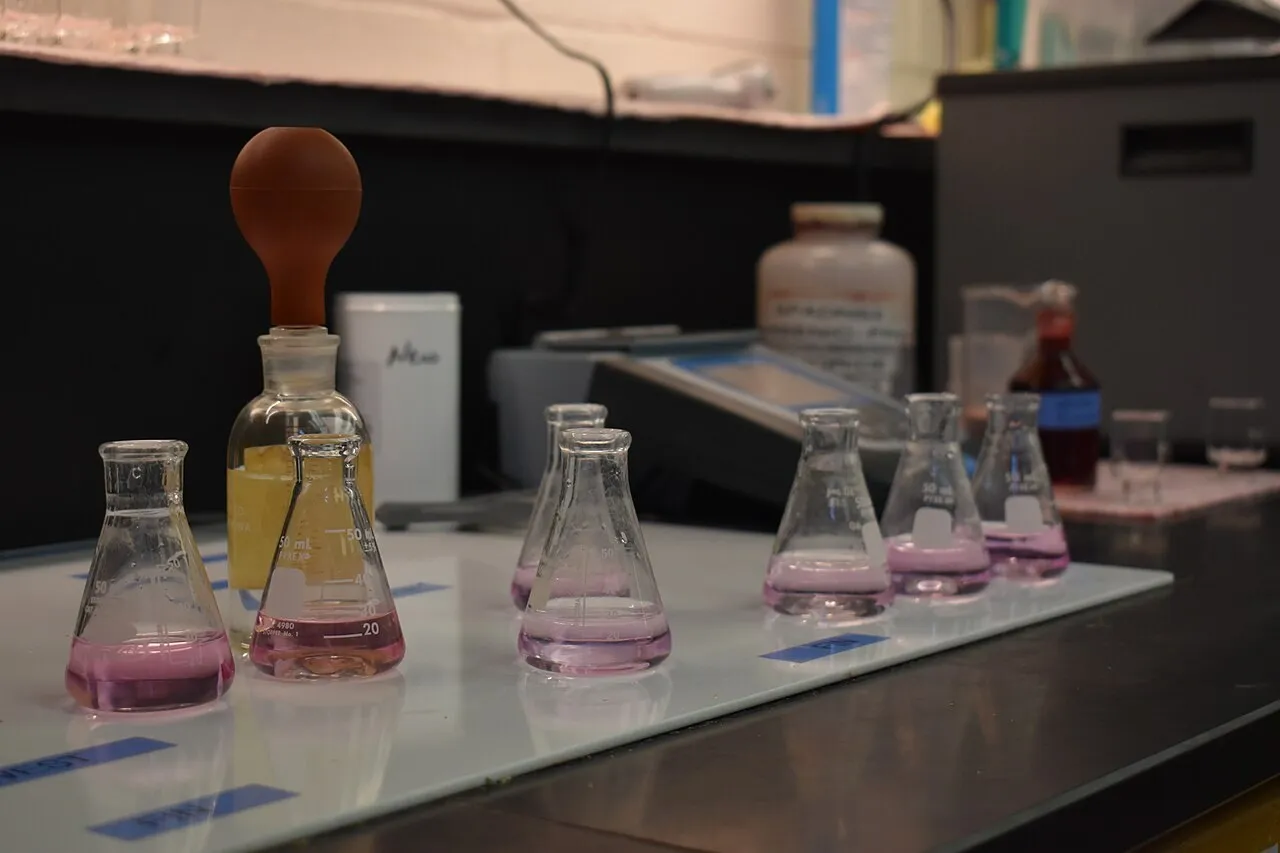
Water hardness and alkalinity are not apparent from appearance alone. Distinguish a testing setup from its results when reading the parameters below.
2. Key parameters explained
TDS: total dissolved solids
One green tea, four waters
Switch water; watch colour, film and sediment.
No minerals: clean and bright
- Bright, fresh green liquor
- Clean surface, no film
- No sediment
- Almost no Ca or Mg ions
Clean and bright, but with no mineral backbone some teas taste thin.
Example samples & sources
- Example sample
- Hardness 2 · alkalinity 2 (as CaCO₃) · TDS 8 mg/L
- Often suits
- Green, white, light oolong
Hardness, alkalinity and TDS are this site’s example samples, matched to the typical pH ranges in the article table. Tap water varies widely; check a local report or test. Hardness and alkalinity act through complexation and pH buffering [2][3][5].
Directions of change for one green tea, not measured colour or a score.
TDS is the total amount of dissolved minerals in water, expressed in mg/L. It gives a composite measure of the water’s ionic “concentration”.
- TDS below 30 mg/L (near-pure water): very few minerals; can yield a bright, clear liquor, but may feel “thin”, lacking structure and body.
- TDS 50–150 mg/L: generally considered a favourable range for tea brewing — enough to support body without over-interfering with the tea itself.
- TDS above 300 mg/L: high mineral content tends to complex with polyphenols, making the liquor dull, astringent, cloudy and water-dominated[3][6].
TDS is a composite index and cannot alone determine suitability: a high-TDS water with a sensible ion profile (moderate calcium and magnesium, low sodium, moderate alkalinity) may be better than a low-TDS water with very high sodium.
For example, a mineral water with TDS 200 mg/L, Ca 80 mg/L, Mg 20 mg/L, Na 5 mg/L and HCO₃⁻ 150 mg/L is high-hardness, high-alkalinity water that will easily dull green tea. Another spring water with TDS 120 mg/L, Ca 25 mg/L, Mg 8 mg/L, Na 3 mg/L and HCO₃⁻ 40 mg/L is more suitable for most tea categories. Read the label for ion composition, not just “rich in minerals”[3][6].
Hardness: how Ca²⁺ and Mg²⁺ tug on polyphenols
Total hardness is the combined concentration of calcium (Ca²⁺) and magnesium (Mg²⁺), expressed as mg/L CaCO₃. It affects tea mainly through two mechanisms:
- Complexation with polyphenols: Ca²⁺ and Mg²⁺ can form complexes with galloylated catechins such as EGCG and ECG, lowering the concentration of free catechins and so reducing bitterness and astringency; but excessive complexation can make the liquor feel thin and “muffled”[2][3].
- Tea-cream formation and haze: In hard water, Ca²⁺ combines with organic acids and polyphenols to precipitate out as tea cream — especially noticeable in black tea after cooling — which affects both appearance and mouthfeel clarity[4].
Experimental work shows that brewing green tea with very hard water (~260 mg/L CaCO₃) can reduce total catechin content by roughly 2.4 times compared with soft water, with EGCG and EGC falling most sharply; the liquor also shifts from yellow-green to dull brown[2]. So green and white teas, which prize freshness and clarity, prefer low to moderate hardness; darker, roasted or post-oxidized teas may tolerate slightly harder water for extra structure.
Alkalinity and pH: the fate of polyphenols
Alkalinity is dominated by bicarbonate (HCO₃⁻), also expressed as mg/L CaCO₃. It determines the brewing water’s pH, and pH directly controls the stability of tea polyphenols.
Under acidic to neutral conditions (pH ~5.5–6.5), the epicatechins in green tea (EGCG, EGC) remain relatively stable, giving a bright yellow-green liquor. As pH rises above 7, alkaline conditions accelerate non-enzymatic autoxidation and polymerisation of catechins, producing brown pigments that darken and cloud the liquor while flattening the aroma[2][5].
This explains why some high-alkalinity tap waters produce a dull, yellow-brown green tea even when the water itself is clean. Black tea, already fully oxidised, is far less sensitive to alkaline pH; ripe pu-erh and dark teas are also visually robust, though very alkaline water may make them taste heavier and less lively.
| Water type | Typical pH | Green tea colour | Black tea mouthfeel | Suggested tea types |
|---|---|---|---|---|
| Distilled / pure water | 5.5–6.5 | Bright, greenish | May feel thin | Green, white, light oolong |
| Soft spring water | 6.5–7.2 | Clear, yellow-green | Smooth | Most teas |
| Typical tap water | 7.0–8.0 | Acceptable, yellowish | Normal | Black, dark, roasted oolong |
| High-alkalinity hard water | 8.0+ | Yellow-brown, cloudy | Heavy but flat | Heavy roasted oolong, dark tea |
The table gives empirical reference ranges; actual tap water varies widely. Brewing the same green tea with hard, alkaline northern water and soft southern water often produces visibly different results.
3. Specific effects of major ions
Beyond composite indices such as TDS, hardness and alkalinity, individual ions also produce recognisable effects[1][3][4]:
- Ca²⁺: strongly complexes with tea polyphenols, reducing bitterness and astringency, but at high levels causes haze and tea cream; it significantly promotes black-tea creaming. Empirically, green-tea colour begins to dull noticeably when Ca²⁺ exceeds 50–80 mg/L.
- Mg²⁺: similar to Ca²⁺ but with weaker complexing power; moderate amounts can round the mouthfeel, while excess brings bitterness. Mg²⁺ has a lower bitterness threshold than Ca²⁺, so high-magnesium water can add an unpleasant bitter note.
- Na⁺: mainly from softening resins, some mineral waters or sodium-rich groundwater. Effects are limited below ~20 mg/L, but at 50–100 mg/L it can add a faint saltiness and suppress sweetness and freshness. Sensory studies show that very high total mineral content compresses the perceived layering of the tea and makes the water itself more noticeable[3].
- K⁺: small amounts may influence roundness and sweetness, but it is usually not the main variable to adjust for brewing.
- HCO₃⁻ (bicarbonate): raises pH and alkalinity, accelerating catechin oxidation and polymerisation — one of the drivers behind dull green-tea colour. When HCO₃⁻ exceeds ~100 mg/L, most green teas will shift markedly toward yellow-brown.
- Cl⁻ / SO₄²⁻: high concentrations can bring off-tastes or reduce purity; residual chlorine (Cl₂ / ClO⁻) in some tap water directly damages aroma, so let boiled water stand or use activated-carbon filtration.
Ions can also interact synergistically or antagonistically: Ca²⁺ and HCO₃⁻ together amplify haze and dulling, while moderate Mg²⁺ with low HCO₃⁻ may give a rounder cup.
What do the ions in water do?
Switch ions; see what they bind and change.
Ca/Mg bind catechins, drop out
- Calcium and magnesium ions
- They bind EGCG and other catechins
- Complexes clump; liquor clouds
- Fewer free catechins: less bite
Some adds body; too much clouds and flattens, and cream-down rises.
Thresholds & sources
Thresholds follow the article’s empirical figures: above about 50–80 mg/L Ca²⁺ green tea starts to darken; above about 100 mg/L HCO₃⁻ most greens turn yellow-brown; from about 50–100 mg/L Na⁺ saltiness can be noticed. Ions interact: high Ca²⁺ with high HCO₃⁻ darkens and clouds more [1][3][4][5].
Molecules show binding directions; counts and sizes are not concentrations.
4. How water changes extraction and sensory perception
Water quality ultimately works by altering extraction kinetics and the physical state of flavour-active compounds:
- High hardness: Ca²⁺/Mg²⁺ complex with tea polyphenols, lowering free-catechin extraction and making the cup less bitter and astringent but possibly thinner and duller.
- High alkalinity: higher pH promotes catechin oxidation and polymerisation, darkening the liquor and affecting the release of volatile aroma compounds.
- High ionic strength: changes the colloidal state of the liquor, influencing perceptions of body and smoothness.
- Tea-cream formation: when black tea or strong infusions cool, theaflavins/thearubigins complex with Ca²⁺ and precipitate as a milky haze that redissolves on reheating[4].
These effects stack with tea category, leaf grade and brewing parameters. The same hard water may obviously dull a tender green tea but only increase creaming in black tea; the same alkaline water may flatten a light oolong’s aroma more than a ripe pu-erh’s.
From a sensory-threshold perspective, individuals vary, but most people can detect a “hardness taste” from Ca²⁺ around 30–50 mg/L, a salty note from Na⁺ around 50 mg/L, and the visual effect of pH is even more obvious — the same green tea can look visibly different in water at pH 6.0 and pH 8.0[5]. Water adjustment is therefore one of the most direct and perceivable brewing variables. But it should not become anxiety: start with clean, odourless, moderately soft water, then fine-tune based on the cup.
5. Water strategies by tea type
| Tea category | Recommended water direction | Reason |
|---|---|---|
| Green, yellow | Soft, low-alkalinity, slightly acidic | Preserves catechin stability, keeps the liquor bright green and fresh |
| White | Soft to moderately hard, neutral to slightly acidic | Silver Needle and White Peony need soft water for downy sweetness; aged white can take slightly more minerals |
| Light oolong | Moderate hardness, neutral to slightly acidic | Helps floral notes lift and freshness last |
| Roasted oolong, dark tea | Can tolerate slightly higher hardness and alkalinity | Minerals add structure and body, and partly mask roasted notes |
| Black | Relatively forgiving | Hard water deepens creaming; control hardness if a bright liquor is the goal |
Practical examples: brewing West Lake Longjing with hard water at TDS ~300 mg/L will visibly yellow and cloud the liquor, smothering its freshness; switching to soft spring water at TDS ~80 mg/L will reveal a clear yellow-green liquor and delicate chestnut aroma. For Dianhong congou, slightly harder water can add thickness and sweetness, but if hardness exceeds ~200 mg/L the cooled liquor will show obvious tea cream[2][4].
If you can only use one water, soft spring or filtered water with TDS 50–150 mg/L, hardness 30–80 mg/L CaCO₃ and pH 6.5–7.5 is usually a good compromise for most teas.
6. Cupping water: why the standard is so strict
The national standard GB/T 23776-2018 Methodology of sensory evaluation of tea requires cupping water to meet GB 5749 (Standards for Drinking Water Quality), with the same water used throughout a batch[7]. Keeping the water constant strips out water variables so that the evaluation reflects the tea itself.
This means cupping water contains almost no calcium or magnesium to complex with polyphenols, and no high pH to oxidise catechins. Tea brewed this way truthfully shows its own bitterness, freshness, aroma and colour. You do not need to replicate cupping water at home, but understanding that boundary matters: if a hard water makes a tea taste harsh, the problem may not be the tea but the interaction between water and polyphenols. Try the same tea in soft water and the judgment may change.
7. Testing and tuning water at home
Start with the local water utility report and check hardness and alkalinity separately. A TDS meter estimates dissolved solids from conductivity; it does not directly measure hardness, alkalinity or drinking-water safety[8].
For a home comparison, choose two potable waters with known sources and record their labels or water reports. Brew the same tea with equal leaf and water quantities, temperature and time, and label the cups. Taste at similar drinking temperatures and record aroma, bitterness, astringency and body; repeat if useful. The result describes this tea and these conditions, not the complete mineral composition inferred from liquor colour or TDS alone.
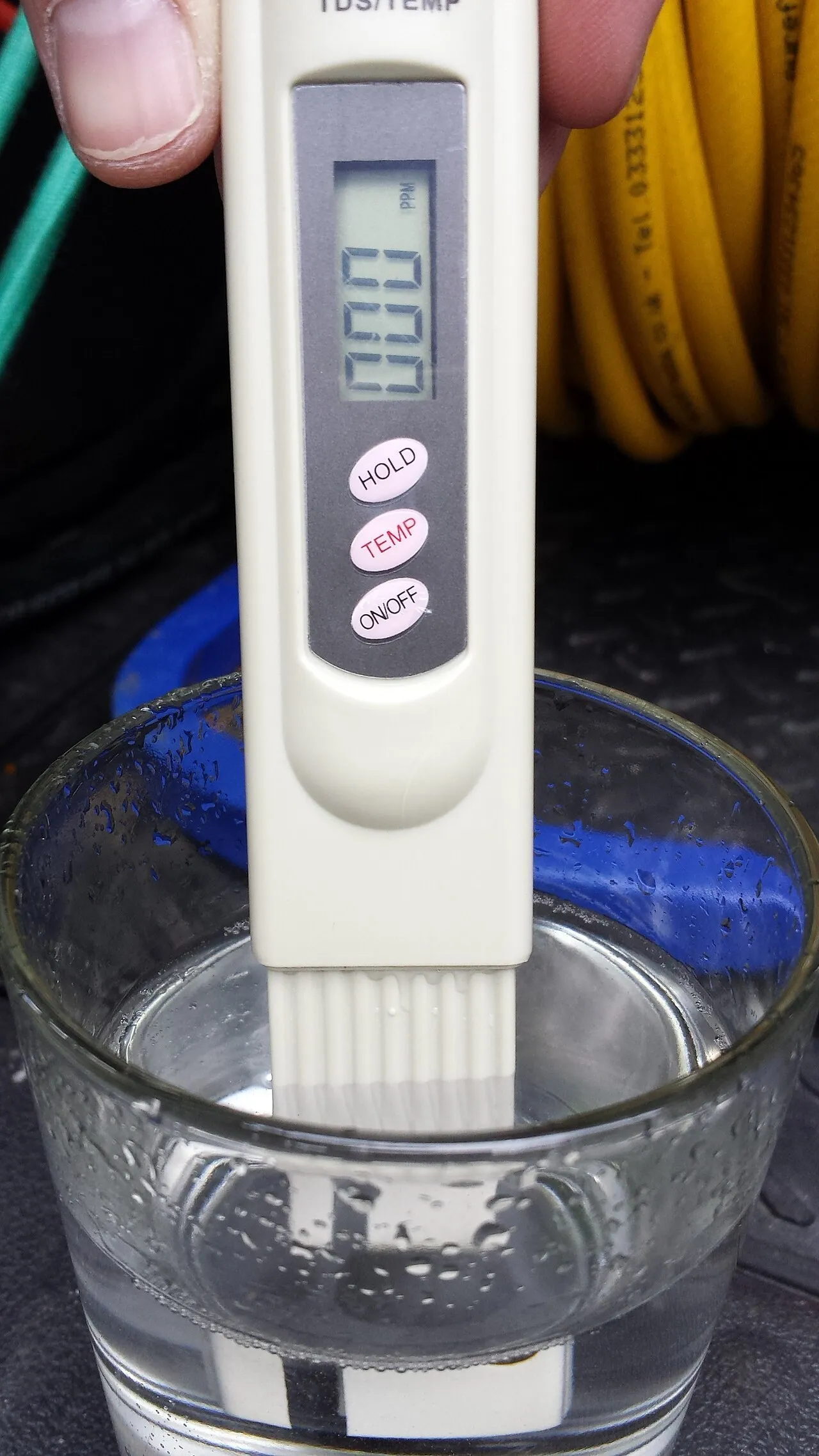
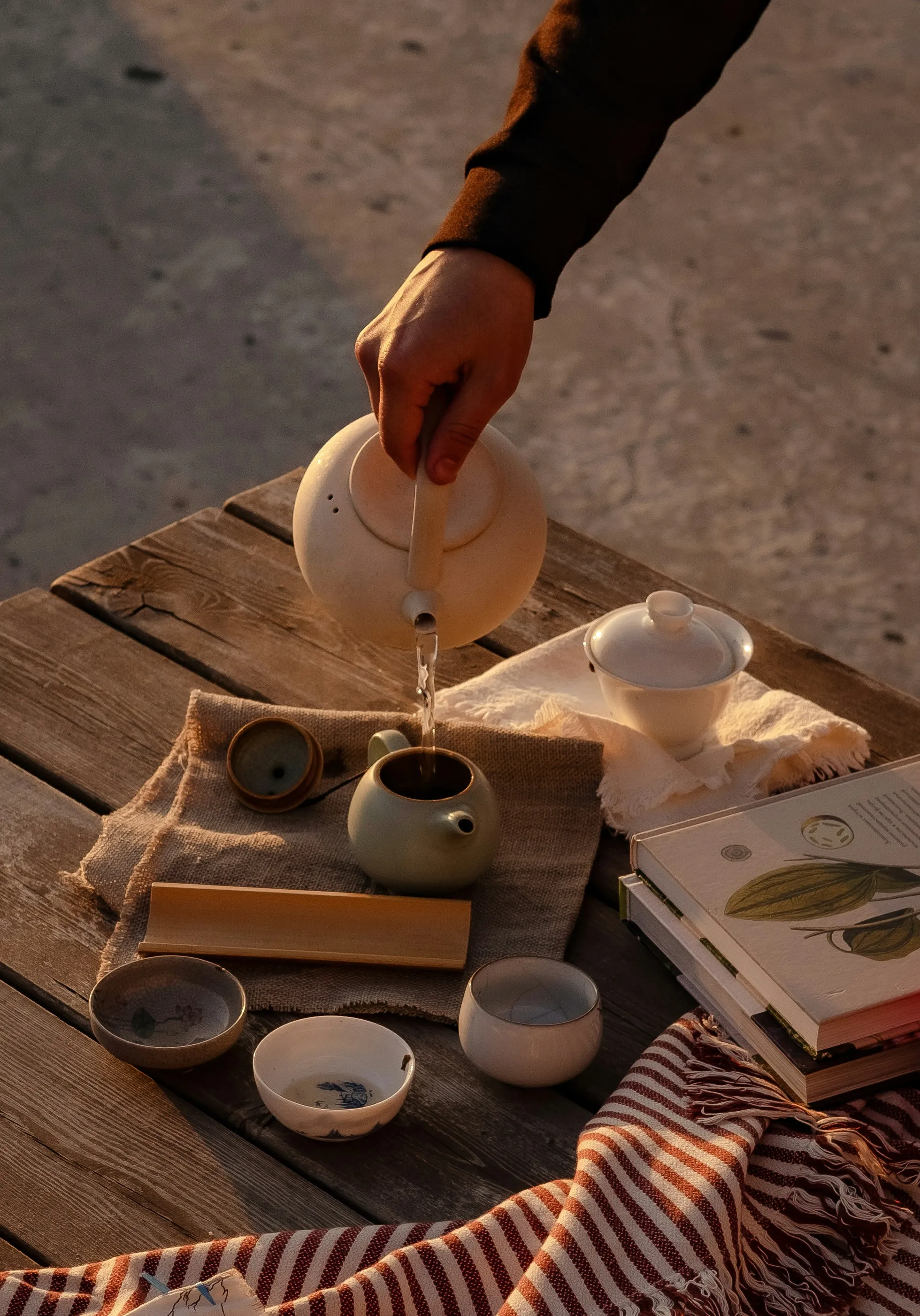
The photograph below shows water being poured into a pot. For the comparison described above, record the water and brewing conditions as well; the photograph cannot reveal mineral composition.
8. Common Myths & Scientific Clarifications
Myth 1: “Does the purest water possible (e.g., ultra-pure or distilled water, TDS ≈ 0) brew the best tea?”
Scientific Clarification: Not necessarily. Pure water with zero dissolved ions exhibits high solvent aggressiveness, accelerating total extraction and producing luminous liquor clarity, but completely lacking divalent cations (Ca²⁺, Mg²⁺) results in a thin, hollow, and sharp mouthfeel that lacks tactile weight and lingering throat depth[1][3]. Water chemistry research demonstrates that moderately soft water with a low mineral TDS of about 50–150 mg/L and near-neutral pH (6.5–7.5) provides optimal sensory balance—preserving delicate volatile aromas and crisp umami while providing rounded textural body[1][6].
Myth 2: “Is premium natural mineral water always superior to filtered tap water for all teas?”
Scientific Clarification: Scientifically incorrect. Premium bottled mineral waters frequently feature elevated mineral hardness and high bicarbonate (HCO₃⁻) alkalinity (pH > 7.5)[1][2]. Alkaline water acts as a chemical buffer, triggering rapid, non-enzymatic auto-oxidation and polyphenol condensation of tender catechins (EGCG) and theaflavins[2][5]. This turns vibrant green tea infusions dull brownish-yellow within minutes and destroys brisk freshness. High-quality municipal tap water purified via active carbon filtration and ion softening to strip chlorine and excess hardness often dramatically outperforms high-alkalinity spring water[1][3].
Myth 3: “Does black tea turning cloudy upon cooling (‘cream down’) indicate dirty water or mineral scale?”
Scientific Clarification: A confusion between colloidal physics and contamination. Mineral scale consists of irreversible calcium carbonate precipitates; conversely, “cream down” in fine orthodox black tea is a reversible colloidal phenomenon where theaflavins, thearubigins, and caffeine assemble via hydrophobic and hydrogen bonding below 40 °C into light-scattering micro-aggregates[1][4]. Reheating above 60 °C promptly dissociates the complex, restoring brilliant transparency. Creaming down is recognized as a hallmark of robust polyphenol-caffeine density, though excessively hard water containing high Ca²⁺ will exacerbate irreversible muddiness[2][4].
Myth 4: “Can expensive, pristine water transform low-grade or stale tea leaves into a premium brew?”
Scientific Clarification: Water is a flavor amplifier and developer, not an alchemist[1][3]. Highly pure, low-mineral soft water possesses exceptional solvent power and cellular penetration. While it faithfully unfolds the nuanced linalool florals and theanine sweetness of premier harvests, it equally magnifies flaws without forgiveness: harsh summer-crop bitterness, scorch notes, sour microbial fermentation, and damp storage taints are laid completely bare[1][2]. Excellent water honors exceptional leaf, but ruthlessly exposes defective material[1][3].
Related entries
- Brewing basics & quick reference — the four variables of temperature, leaf amount, time and vessel
- Flavor wheel — the sensory targets brewing should release
- Song whisked tea — historical Chinese attention to water quality: mountain water best, river water middling, well water least
References
- R-240 — Franks, M., Lawrence, P., Abbaspourrad, A., & Dando, R. (2019). The influence of water composition on flavor and nutrient extraction in green and black tea. Nutrients, 11(1), 80. https://doi.org/10.3390/nu11010080
- R-241 — Cabrera, M., Taher, F., Llantada, A., Do, Q., Sapp, T., & Sommerhalter, M. (2021). Effect of water hardness on catechin and caffeine content in green tea infusions. Molecules, 26(12), 3485. https://doi.org/10.3390/molecules26123485
- R-242 — Xu, Y. Q., et al. (2017). Effect of the type of brewing water on the chemical composition, sensory quality and antioxidant capacity of Chinese teas. Food Chemistry, 236, 142–151. https://doi.org/10.1016/j.foodchem.2016.11.110
- R-243 — Yin, J. F., et al. (2013). The impact of Ca2+ combination with organic acids on green tea infusions. Food Chemistry, 145, 1060–1066. https://doi.org/10.1016/j.foodchem.2013.01.025
- R-238 — Li, N., Taylor, L. S., Ferruzzi, M. G., & Mauer, L. J. (2012). Kinetic Study of Catechin Stability: Effects of pH, Concentration, and Temperature. Journal of Agricultural and Food Chemistry, 60(51), 12531–12539. https://doi.org/10.1021/jf304116s
- R-239 — Xu, Y., et al. (2025). The Impact of Brewing Water pH on Green Tea Infusion Flavor Quality: A Microstructural Perspective of Tea Leaves. Journal of Food Science, 90(1), 101–114. https://doi.org/10.1111/1750-3841.70717
- R-161 — GB/T 23776-2018.《茶叶感官审评方法》(Methodology for sensory evaluation of tea). 全国茶叶标准化技术委员会(SAC/TC339).
- R-382 — U.S. Geological Survey. USGS Water Definitions: Specific Conductance. https://mi.water.usgs.gov/splan5/sp09500/defs.php — Conductivity and approximate dissolved-solids content.
Article Knowledge Network
Explore the connections between the teas, processes and flavours in this article.