
Start with the essentials
Mengding Huangya is a yellow tea made from tender buds. Wrapping and baking after fixation allow further changes under moist heat. It shares yellowing with Junshan Yinzhen, while material, handling and rhythm differ.
This article follows the growing setting, selection and traditional stages to explain repeated wrapping and drying, then connects moisture and heat with colour, taste, brewing and storage. Each treatment prepares conditions for the next.
Three key points
- Tender buds need even handlingMaterial condition affects heating, moisture loss and wrapping.
- Moist heat shapes the styleManaging moisture and temperature after fixation explains the main changes.
- Repeated stages build a rhythmEach drying stage alters what follows, so yellow teas need individual manufacturing accounts.
What to notice when tasting
Compare its sequence with Junshan Yinzhen, then taste samples and record freshness, mellowness and astringency. Combine colour with manufacture and cup sensations to understand their differences.
1. Terroir & Genetics: The Natural Foundations of Mount Meng
1.1 Mountain Ecology & Microclimate
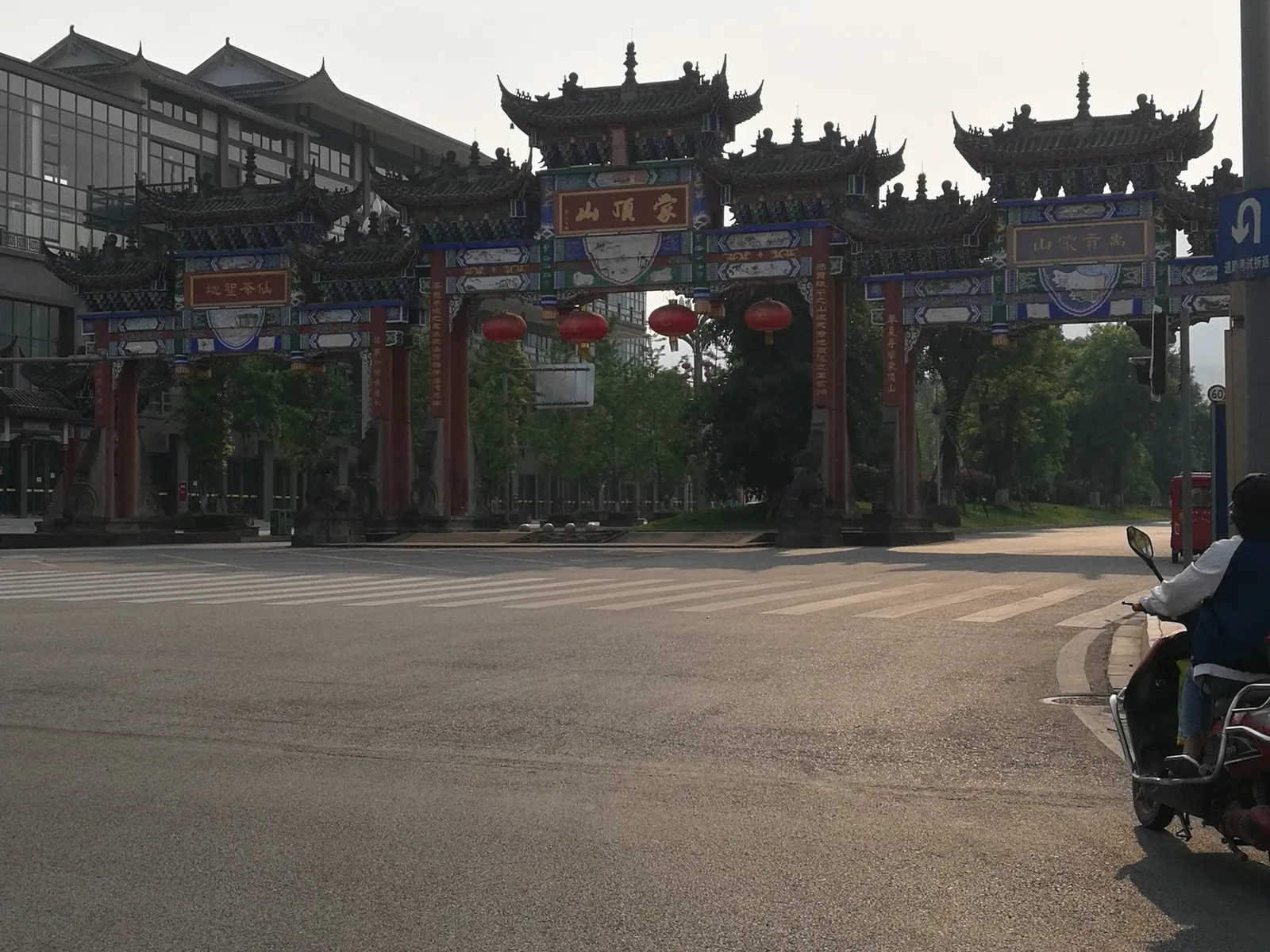
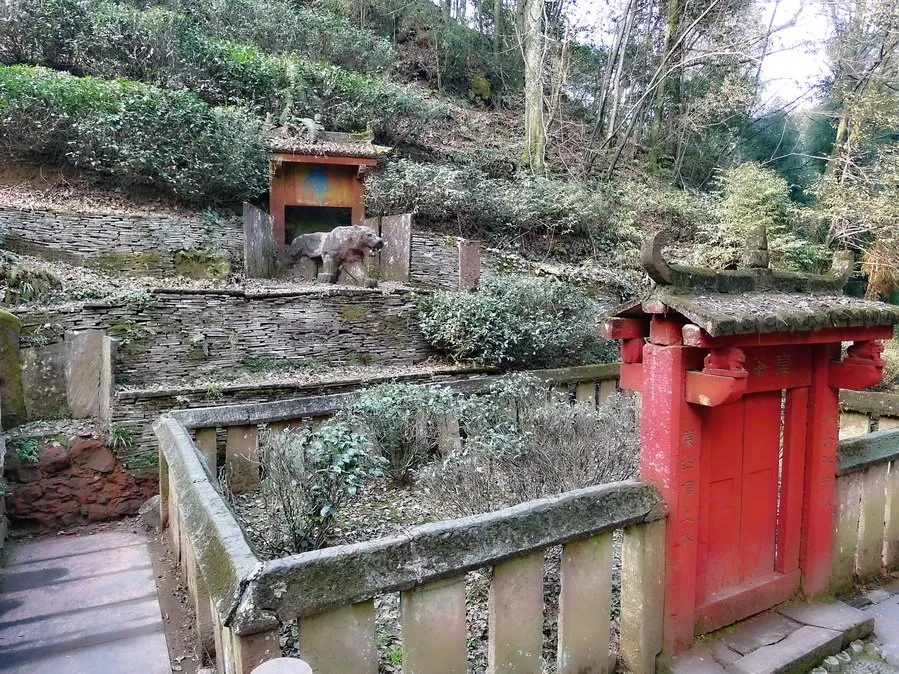
Under GB/T 18665-2008 (Product of geographical indication—Mengshan tea), authentic Mengding Huangya is harvested exclusively within the high-elevation zones (800–1,450 meters) of Mount Meng in Mingshan District, Ya’an, Sichuan[1]:
- “West China Rain Screen” Microclimate: Situated at the transitional convergence zone between the Qinghai-Tibet Plateau and the Sichuan Basin, Mount Meng experiences over 2,000 mm of annual rainfall and more than 200 foggy/rainy days per year. Perennial diffused ultraviolet and blue-violet light strongly favors L-theanine accumulation while suppressing bitter polyphenols;
- Slightly Acidic Purple Soil: Weathered from Jurassic parent rocks, the deep, fertile purple soils have organic matter exceeding 3.5% and are rich in bioavailable zinc and selenium[1][2].
1.2 Botanical Cultivar: Mengding Landrace
Mengding Huangya is crafted from the indigenous Mengding Landrace (蒙顶群体种)[2][4]:
- Botanical Traits: A medium-leaf shrub cultivar with early spring sprouting, plump, upright bud tips, and dense fine trichomes;
- Biochemical Signature: Free amino acids measure 5.0%–6.5%, water extractable substances exceed 43%, and the polyphenol-to-amino-acid ratio (TP/AA) rests at an optimal 3.5–4.5 window, providing high natural sweetness with ideal hydrothermal reaction stability[4][5].
High-Altitude Diffused Light
Over 200 foggy days per year ensure steady diffused lighting that supercharges L-theanine synthesis, giving the fresh leaf a sweet foundation.
Indigenous Mengding Cultivar
Dense, plump buds with delicate pekoe hairs that withstand intense pan-firing and multiple rounds of warm piling without scorching or breaking.
Optimal Phenol-Amino Ratio
A balanced TP/AA ratio of 3.5–4.5 provides a silky, rounded mouthfeel with low astringency, yielding pleasant sweetness.
2. Plucking Standards: Spring Equinox Harvest
Harvesting Mengding Huangya requires precise timing, beginning around the Spring Equinox (Chunfen)[1][2]:
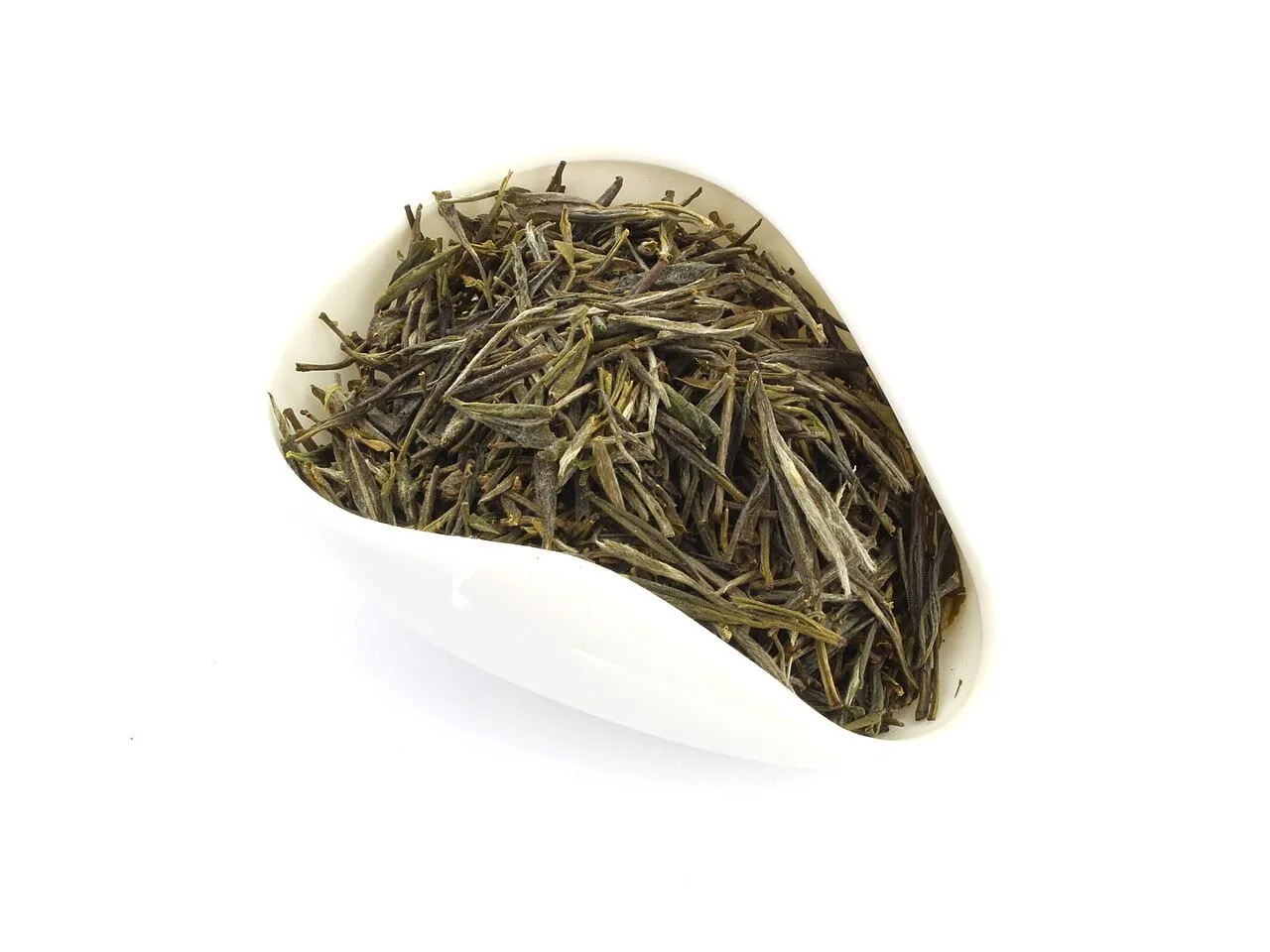
- Plucking Standard: Harvests single plump buds or one bud with one emerging leaf. Buds must be solid, straight, and approximately 1.5–2.0 cm long;
- Strict Exclusions: Excludes “rain-soaked buds, insect-bitten buds, frost-bitten buds, opened leaves, and purple-tinged buds”;
- Indoor Withering: Harvested buds are spread 2–3 cm deep on bamboo sieves for 2–4 hours to lose 3%–5% moisture, softening the tissue for even heat conduction[2]. Producing 500 grams of finished prime Huangya requires 40,000 to 50,000 pristine single buds.
3. Artisanal Craft: “Three Bakes & Three Pilings”
Unlike the prolonged 72-hour paper piling of Junshan Yinzhen, Mengding Huangya uses a rapid, iterative sequence[2][3]:
3.1 High-Heat Fixation (Pan Temperature 130–150 °C)
- Operation: In a flat iron pan at 130–150 °C with batches of 200–300 g. Fast, sweeping hand tosses disperse moisture over 3–4 minutes;
- Biochemical Goal: Rapid heat permanently halts polyphenol oxidase (PPO) and peroxidase (POD), eliminating grassy cis-3-hexenol and bringing moisture to ~60%–65%[3][5].
3.2 1st Piling (Chubao · 1–1.5 Hours)
- Operation: Freshly fixed leaves are wrapped while warm (45–50 °C) into 0.5–1 kg square bundles using unbleached kraft paper;
- Environment: Placed beside the warm tea stove (ambient temperature 35–40 °C) for 1–1.5 hours to initiate chlorophyll degradation.
3.3 Primary Baking & 2nd Piling (2–3 Hours)
- Primary Baking: Bundles are unwrapped and dried on charcoal baskets at 70–80 °C for 10–15 minutes until moisture drops to 50%–55%;
- 2nd Piling: Re-wrapped into paper while warm and piled for 2–3 hours at 38–42 °C. Magnesium ions in chlorophyll detach rapidly, shifting leaves from dark green to glowing yellow-green[2][6].
3.4 Secondary Baking, 3rd Piling & Final Drying
- Secondary Baking: Baked at 60–70 °C down to ~30%–35% moisture; craftsmen gently roll and straighten buds on bamboo trays;
- 3rd Piling: Re-wrapped for ~1 hour to equalize moisture from bud core to surface, cementing the sweet roasted chestnut fragrance;
- Final Firing: Dried over gentle 50–55 °C charcoal embers for over an hour until moisture reaches 5%–6%. The finished tea is straight, golden-green, and coated in fine trichomes[1][2].
Three wraps, three bakes
Three actions repeat; watch the bud yellow.
Wrapped hot on the warm stove
- Stove heat keeps the parcel warm
- 0.5–1.0 kg per paper parcel
- Inside, the buds turn yellow
- Moist heat mellows the leaf
Chlorophyll yellows; corn and chestnut notes appear.
All seven steps, conditions & sources
- Process Leaf Temperature
- 45–50 · 38–42 · 36–40
- Duration
- 1.0–1.5 h · 2.0–3.0 h · 1.0 h
- Bud Moisture Content
- 58%–62% → 45%–48% → 22%–25%
Golden Metamorphosis: Leaves transform to yellow with sweet corn aroma.
- Pan Fixation 130–150 °C (3–4 min) · 3–4 min · 60%–65%
- 1st Piling 45–50 °C (stove-side warm resting) · 1.0–1.5 h · 58%–62%
- Primary Bake 70–80 °C (10–15 min quick dry) · 10–15 min · 50%–55%
- 2nd Piling 38–42 °C (isothermal resting) · 2.0–3.0 h · 45%–48%
- Secondary Bake 60–70 °C (shaping on bamboo trays) · 15–20 min · 30%–35%
- 3rd Piling 36–40 °C (gentle resting) · 1.0 h · 22%–25%
- Final Firing 50–55 °C (slow dry for 1h+) · 60–80 min · 5%–6%
Mechanisms: Synthesised from Tea Processing (R-031) and Mengding Huangya National Standard. Mengding Huangya employs small (0.5–1kg) kraft paper parcels and rapid alternating cycles.
Note: Cycle timings are fine-tuned by masters based on leaf temperature, moisture touch, and olfactory sweetness.
Schematic; playback speed is not processing time.
About this diagram & its limits
Mengding Huangya process illustration · Shows one traditional process account; bake/pile cycles, time, temperature and moisture require verification against leaf and production protocol.
4. Biochemical Mechanisms: Hydrothermal Chemistry
The sensory perfection of Mengding Huangya stems from non-enzymatic hydrothermal reactions[5][6]:
1. Chlorophyll Demetallation
Under 38–45 °C warm, moist conditions, chlorophyll’s central Mg²⁺ is displaced by organic acid H⁺ ions, yielding olive-brown pheophytin and eliminating raw grassy tones.
2. Catechin Isomerization & Cleavage
Astringent ester catechins (EGCG, ECG) non-enzymatically hydrolyze into free gallic acid (GA) and simple catechins, reducing harsh bitterness and smoothing the palate.
3. Roasted Chestnut Volatiles
Grassy cis-3-hexenol evaporates, while dimethyl sulfide (DMS), alkylpyrazines, and β-ionone accumulate to produce the signature sweet chestnut bouquet.
Same process, different leaf
Compare the liquor and aroma of two leaves.
High-altitude Mengding single buds
- Spring highland buds: rich theanine, moderate catechins
- Golden liquor with a jade tint
- Pronounced sweet, chestnut-like aroma
The leaf itself gives the wrap-and-bake cycles a sweet, smooth base.
Reference values & limits
- Free amino acids
- 5.0–6.5%
- Polyphenol/amino-acid ratio
- 3.5–4.5
Aroma arises from raw material plus repeated hydrothermal piling; no single compound dictates overall score.
A qualitative comparison, not a batch measurement.
About this diagram & its limits
Mengding Huangya process illustration · Shows one traditional process account; bake/pile cycles, time, temperature and moisture require verification against leaf and production protocol.
5. Flavour Profile & Flavour Silhouette
Mengding Huangya
Yellow · Paper-Wrapped YellowingFlavour silhouette is a schematic comparison; actual profile varies with harvest batch, tenderness grade and water temperature.
6. Sensory Evaluation, Brewing & Storage
6.1 Sensory Standards (GB/T 18665)
| Factor | Grade Standard | Defect Identification |
|---|---|---|
| Appearance | Flat, straight, plump single buds, golden-green, tender pekoe | Dark black, broken fragments, coarse leaves |
| Liquor | Luminous bright yellow with jade-like clarity | Dull reddish-brown, muddy, cloudy |
| Aroma | Sweet floral honey with high roasted chestnut note | Grassy raw smell (under-yellowed), sour damp smell (over-piled) |
| Taste | Refreshingly sweet, silky, pleasant sweet salivation | Harsh, bitter astringency, stale sourness |
| Infused Leaf | Tender yellow, uniform plump buds, supple & elastic | Scorched black tips, uneven mottled brown |
6.2 Brewing Parameters & Protocol
| Metric | Recommended Parameters | Key Notes & Instructions |
|---|---|---|
| Water Temp | 85–90 °C | Avoid 100 °C boiling water to prevent scalding delicate single buds |
| Tea-to-Water | 3 g / 150 ml (~1:50) | Pure water or soft mountain spring water (TDS < 100 mg/L) recommended |
| Teaware | Borosilicate glass cylinder or white gaiwan | Glass allows visual appreciation of upright dancing buds; gaiwan captures aroma |
| Pour Method | Middle-pour method | Pour 1/3 water, moisten buds for 20s, then fill smoothly along the rim |
| Steep Time | 1st: 60s, 2nd: 45s, 3rd: 60s, 4th: 90s | High-grade Huangya yields 4–5 sweet, lingering infusions |
| Storage | Sealed, light-shielded, moisture-proof, 0–5 °C | Store in airtight tin canisters inside refrigerator to preserve sweetness |
7. Common Myths & Scientific Clarifications
Myth 1: “Is yellow tea merely damp, stale green tea that has degraded over time?”
Scientific Clarification: Yellow tea shares no biological or sensory lineage with spoiled green tea[2][4]. Damp green tea turns yellowish through uncontrolled fungal contamination and lipid auto-oxidation, producing flat, sour, stale off-notes. In contrast, Mengding Huangya’s signature sealed yellowing (men-huang) is a rigorously controlled hydrothermal process executed immediately after pan fixation, where warmth (40–50 °C) and residual moisture drive non-enzymatic isomerization[4][6]. Chlorophyll safely demetalates into pheophytin, while bitter ester catechins hydrolyze into mellow non-gallated forms, synthesizing sweet, corn-like volatiles[6][7]. Authentic yellow tea yields a sparkling golden liquor with pristine, clean sweetness rather than sour degradation.
Myth 2: “Must genuine Mengding Huangya be completely golden-yellow with no jade or green hues?”
Scientific Clarification: Classical sensory standards for Mengding Huangya specifically mandate a visual harmony described as “yellow glowing with jade”[1][4]. Grown in foggy, high-altitude microclimates, the early-spring single buds are exceptionally dense with tender chlorophyll and amino acids. Mengding’s unique “three bakes and three pilings” regime consists of rapid, controlled yellowing bursts designed to eliminate green astringency without scorching the leaf tissue[1][6]. Piling tea until it turns uniformly dull brown or black indicates severe thermal damage and a defective batch[7]. When inspecting dry leaf, look for fat golden buds wrapped in silvery down with faint jade undertones.
Myth 3: “Should delicate yellow buds be steeped with rolling boiling water in a covered vessel?”
Scientific Clarification: Boiling water (100 °C) in an enclosed pot scalds delicate Huangya single buds and degrades heat-sensitive compounds[1][5]. Premium buds are exceptionally rich in free amino acids, more than half of which is theanine and volatile floral-sweet aldehydes. Sealed brewing at 100 °C accelerates non-enzymatic thermal degradation of residual chlorophyll, generating undesirable cooked-cabbage notes and flattening freshness. The optimal extraction protocol calls for 85–90 °C water in an open high-borosilicate glass vessel using the middle-drop infusion technique. This preserves tender sweet-corn and roasted nut aromatics while allowing the drinker to admire the enchanting vertical dancing of the buds.
8. Related Articles
- The Science of Yellow Tea Men-huang — Hydrothermal physical field & chlorophyll conversion kinetics
- Overview of the Six Tea Categories — The taxonomic position of yellow tea
- Famous Tea Processing · Anxi Tieguanyin — Southern Fujian oolong cloth-ball rolling
- Raw Pu-erh: From Sun-Dried Maocha to Compressed Cakes — Yunnan broad-leaf low-temperature craft
9. Complete Craft Parameters
| Stage | Equipment | Temperature / Humidity | Duration | Moisture Flux | Biochemical & Physical Goal |
|---|---|---|---|---|---|
| Withering | Bamboo mats | Ambient (18–22 °C), 65–75% RH | 2–4 h | ≈75% → ≈70% | Dissipates field heat, softens tissue, vents water |
| Fixation | Flat cast-iron pan | Pan temp 130–150 °C | 3–4 min | ≈70% → ≈60% | Denatures PPO/POD enzymes; eliminates grassy volatiles |
| 1st Piling | Kraft paper / stove-side | Leaf temp 45–50 °C, Stove 35–40 °C | 1.0–1.5 h | ≈60% → ≈58% | Moist heat loosens chlorophyll magnesium ions |
| Primary Bake | Charcoal basket | Baking temp 70–80 °C | 10–15 min | ≈58% → 50–55% | Fast dehydration to enter optimal yellowing moisture zone |
| 2nd Piling | Kraft paper bundles | Bundle core 38–42 °C | 2.0–3.0 h | 50–55% → ≈48% | Major yellowing phase; chlorophyll converts to pheophytin |
| Secondary Bake | Charcoal basket | Baking temp 60–70 °C | 15–20 min | ≈48% → 30–35% | Hand-straightens buds into flat, elegant spears |
| 3rd Piling | Insulated paper boxes | Box temp 35–38 °C | 1.0 h | 30–35% → ≈25% | Equalizes moisture; fixes sweet roasted chestnut DMS aroma |
| Final Firing | Low-heat charcoal basket | Firing temp 50–55 °C | 60–90 min | ≈25% → 5–6% | Low-heat drying; locks shape and moisture for storage |
Parameters are representative ranges and should be adjusted based on fresh leaf tenderness, weather, and craftsman intuition[1][2][5].
References
- R-287 — GB/T 18665-2008.《地理标志产品 蒙山茶》(Product of geographical indication—Mengshan tea). 国家质量监督检验检疫总局、国家标准化管理委员会.
- R-286 — GB/T 21726-2018.《黄茶》(Yellow tea). 全国茶叶标准化技术委员会(SAC/TC339).
- R-030 — 陈宗懋 主编 (2000).《中国茶叶大辞典》. 中国轻工业出版社. ISBN: 978-7501925094.
- R-031 — 施兆鹏 主编 (2016).《茶叶加工学》(第3版). 中国农业出版社. ISBN: 978-7109214347.
- R-029 — 宛晓春 主编 (2003).《茶叶生物化学》(第3版). 中国农业出版社. ISBN: 978-7109066274.
- R-209 — Ning, J. M., et al. (2021). The profile of dynamic changes in yellow tea quality and chemical composition during yellowing process. LWT - Food Science and Technology, 141, 110792. https://doi.org/10.1016/j.lwt.2020.110792
- R-013 — Wei, K., et al. (2022). Effect of Yellowing Duration on the Chemical Profile of Yellow Tea and the Associations with Sensory Traits. Molecules, 27(3), 940. https://doi.org/10.3390/molecules27030940
Article Knowledge Network
Explore the connections between the teas, processes and flavours in this article.