
Start with the essentials
When tea tastes wrong, first name the problem: bitterness is a taste, astringency a drying sensation, weakness a strength issue, and muted aroma another observation. “Too strong” can hide several causes.
This article checks water volume, timing and drainage before choosing an adjustment and comparing two cups. Leaf condition, water and storage come into the investigation where needed, giving each change an observable result.
Three key points
- A clear description guides adjustmentSeparate taste, mouthfeel, strength and aroma.
- Check actual handlingVolume, timing and complete drainage affect contact.
- Material adds other conditionsForm, compression, storage and water deserve systematic attention.
A simple way to try it
Keep one reference cup and change only duration in the next. Compare before adjusting quantity, temperature or water, and record what worked. Stop tasting suspected mould or contamination.
Describe the problem first
Bitterness is a taste; astringency is a drying or contracting sensation. Weak can mean low overall strength or muted aroma. Dull needs further description before you attribute it to water or storage.
Temperature, particle size and manufacture affect extraction[1][2], so equal parameters need not suit two teas. Check handling, then change one variable.
Three easily missed details
- Actual water: Vessel capacity does not equal the volume added.
- Timing: Filling, waiting and pouring all take time.
- Drainage: Residual liquor continues contacting the leaves between infusions.
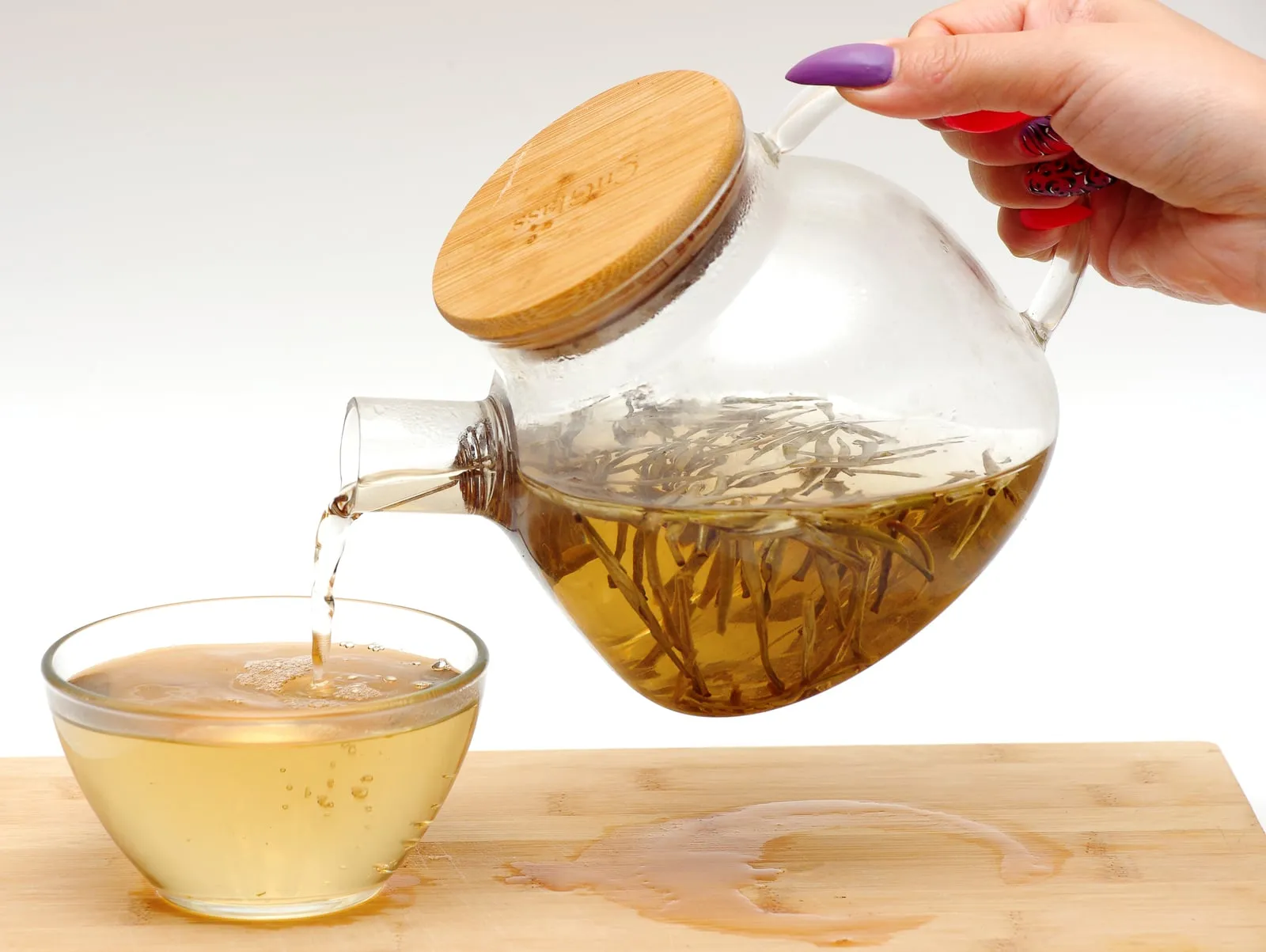
Separating liquor from the leaves reduces further contact after pouring. Check for retained liquor and use a consistent pour on the next infusion so comparisons are more meaningful.
Choose the next adjustment
| Observation | Check | Change only this next |
|---|---|---|
| Bitter or drying | Long contact, slow pouring or broken material | Shorten contact |
| Aroma present but generally weak | Low leaf-to-water ratio | Add a little leaf |
| Tight leaves still closed and first cup weak | Short first contact or low temperature | Extend the first steep modestly |
| Adequate strength but muted aroma | Vessel odour and storage | Use a clean odour-free vessel |
| Colour and taste changed after moving | Different water | Compare two potable waters |
| Suspected mould or contamination | Material and storage | Stop tasting; ask the producer or discard |
These are starting checks, not guaranteed fixes. If shorter time does not help, investigate quantity, temperature and leaf condition in turn rather than changing them all together.
Troubleshooting Across the Six Tea Categories
Because manufacturing methods and leaf structures differ widely across tea categories, the same complaint—bitterness, astringency, weakness, or dullness—often stems from different physical or kinetic causes[1][2]:
| Category & Typical Form | Common Symptom | Frequent Operational Cause | First Single-Variable Adjustment |
|---|---|---|---|
| Fine Green Tea (flat West Lake Longjing, curled Biluochun) | Drying astringency, cooked vegetal dullness, yellowed leaves | Leaving the lid tightly closed between infusions, pouring directly onto tender buds, or leaving residual hot water on the leaves | Partially uncover the lid between infusions to release heat, or shorten contact by 5–10 s; pour gently down the vessel wall |
| White Tea (Baihao Yinzhen, Aged Fuding White Tea) | First infusion tastes watery despite aroma; or later infusions turn grassy and drying | Plump, trichome-covered buds resist initial wetting; or broken leaf fragments steep too long at high heat | Extend the first infusion of Silver Needle to 20–30 s so the bud core hydrates; for aged white tea, shorten contact and drain completely |
| Yellow Tea (Junshan Yinzhen) | Sourish, stuffy note or lack of clean sweetness | Excessive heat retention in a tightly covered vessel exaggerates organic acids from yellowing | Use an open glass or thin porcelain gaiwan with brisk pours, removing the lid between infusions |
| Oolong Tea (rolled Anxi Tieguanyin, strip-style Wuyi Rock Tea) | Rolled oolong is weak on infusion 1 then suddenly bitter on infusions 2–3; rock tea tastes harsh | Tightly rolled balls open abruptly on the second and third infusions, causing a spike in surface area; rock tea over-packed or broken at the bottom | Shorten infusions 2 and 3 (e.g., 5–8 s brisk pour) once rolled leaves unfurl; reduce rock tea leaf mass by 1 g or pour immediately |
| Black Tea (fine strip Keemun, tippy Dianhong) | Sourness, drying astringency, or high aroma with thin body | High cell disruption from rolling means direct boiling pours or slow drainage extract polyphenols and caffeine rapidly; thinness reflects low ratio | Lower water temperature by ~5 °C and pour gently along the wall with complete drainage; if thin, keep temperature fixed and add 0.5–1 g leaf |
| Dark & Pu-erh Tea (Raw Pu-erh, Ripe Pu-erh, Anhua Fuzhuan) | Compressed cake brews bitter outside and weak inside; ripe Pu-erh tastes muddy or stuffy | Prying cake roughly creates fine dust (high surface-to-volume ratio extracts instantly[2]), or leaving the lid shut after wetting | Pry gently along compression layers and sift out fine dust; after a quick wetting rinse, leave the lid off for 1–2 min to let steam dissipate |
How Pouring Flow and Drainage Alter Extraction
Even when water temperature, leaf mass, and timer numbers are identical, pouring momentum and residual tail liquor can produce markedly different bitterness and astringency:
- Gentle Wall Pour vs. High Agitating Pour: Pouring directly onto the leaf bed increases local turbulence and accelerates boundary-layer diffusion while volatilising low-boiling aromatics. Pouring gently down the vessel wall allows calmer, stratified extraction—helpful for tender green teas, tippy black teas, and samples containing broken fragments.
- The Concentration Effect of the Last Ten Drops: As decanting finishes, the small volume of liquid trapped between expanded leaves remains hot at a very high leaf-to-water ratio. If left in the vessel, those few millilitres continue extracting caffeine and catechins between infusions and mix directly into the next cup. Before changing temperature or leaf weight, verify that every infusion is drained completely down to the last drops.
A two-cup exercise
Choose a starting point from brewing basics. Keep one cup as a reference and change only duration in the other. Taste at similar drinking temperatures and record aroma, bitterness, astringency, strength and finish.
For a water trial, keep quantity, temperature and time fixed and use the water guide. For vessels, record capacity, preheating and lids; see teaware.
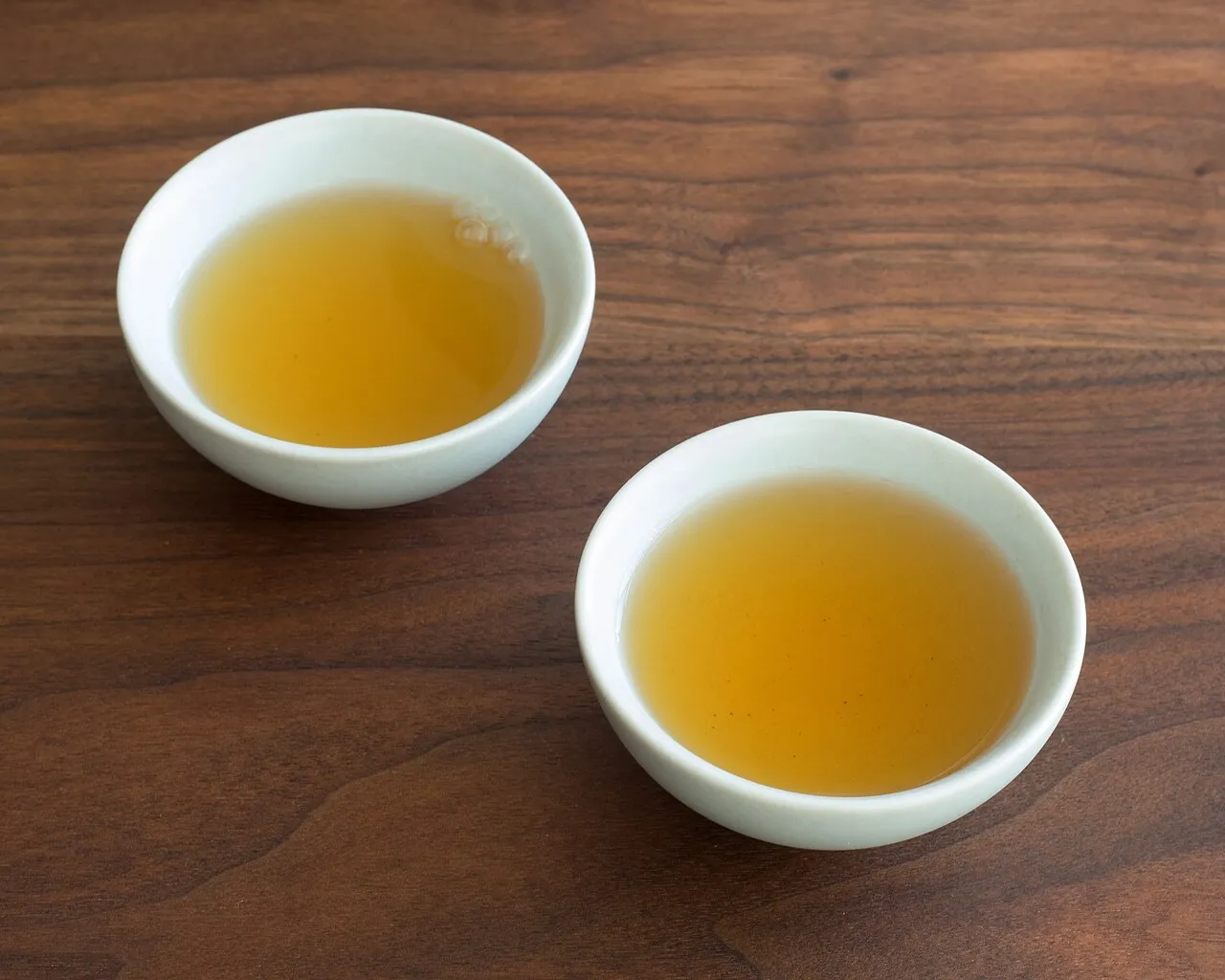
Label the two cups and write down the single changed condition. The photograph below shows two tasting cups; it does not document the exercise above.
When the material needs investigation
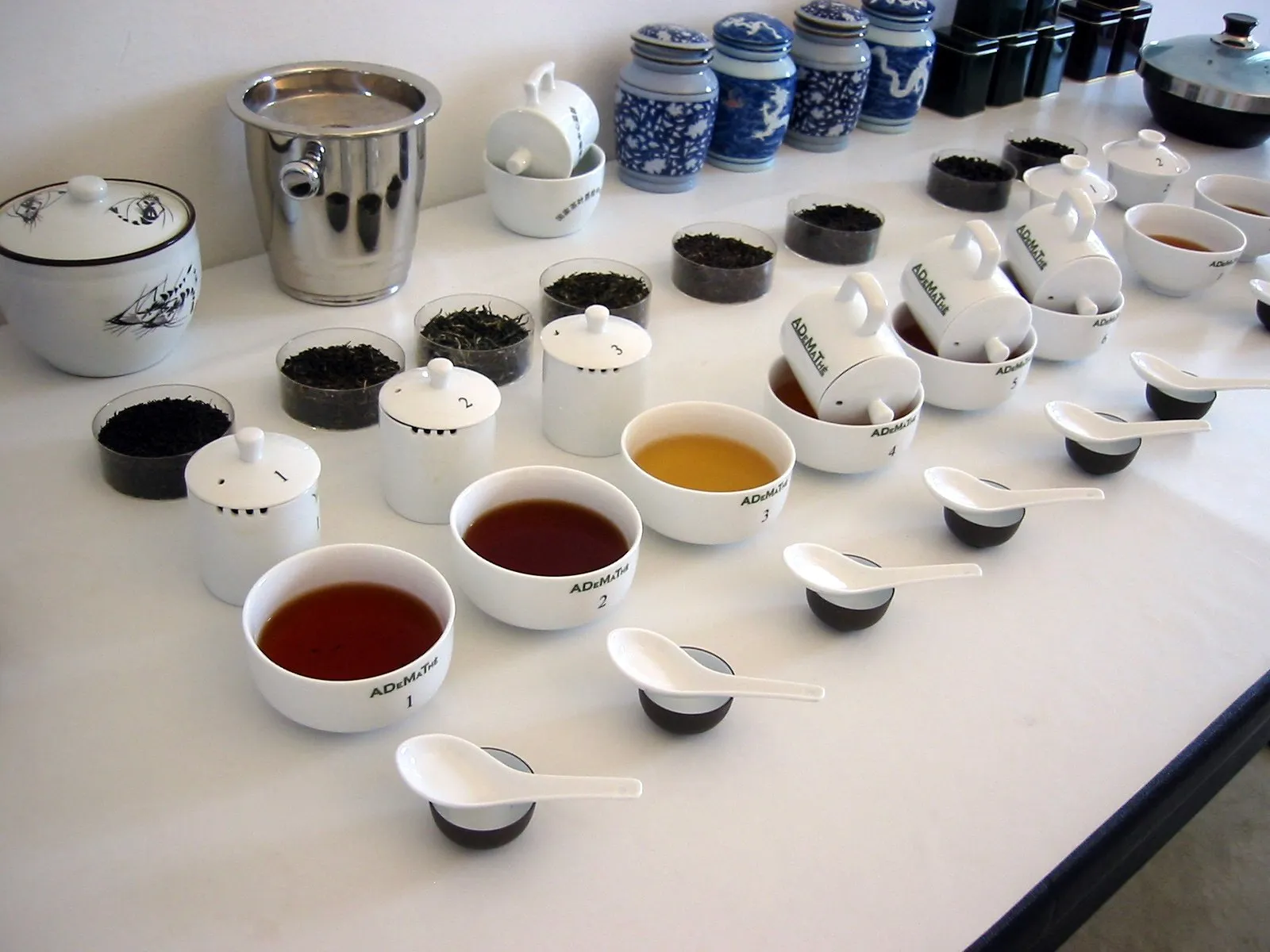
Storage damage or manufacturing defects may not be remedied by brewing. If several reasonable preparations share an unwanted character, check provenance, batch and storage. Do not continue tasting suspected mould to confirm a diagnosis. Professional sensory evaluation uses specified vessels and methods; interpret results in light of the samples and conditions.
The quality troubleshooter introduces possible causes and professional vocabulary; it does not replace product testing or guarantee safety.
Keep a reusable conclusion
Write “I preferred this cup from this tea, water and preparation,” rather than a rule for every tea in the category. Keep the successful adjustment as the basis for your next trial.
Related Articles
- Brewing Basics: Establish baseline leaf-to-water ratios, temperatures, and steeping times across the six tea categories.
- Water Quality & Tea Liquor: Diagnose how mineral hardness, alkalinity, and pH shift liquor colour and flatness.
- Teaware Thermodynamics: Understand wall thickness, cooling curves, and decanting flow across porcelain, glass, and clay.
- Home Tea Storage: Separate brewing mistakes from flavour deterioration caused by moisture, oxidation, or absorbed odours.
- Where Astringency Comes From: Explore how catechins bind salivary proline-rich proteins to create a drying mouthfeel.
- Interactive Quality Troubleshooter: Trace off-flavours and aroma defects to processing or storage causes.
References
- R-116 — Spiro, M., Jaganyi, D., & Broom, M. C. (1992). Kinetics and equilibria of tea infusion: Part 9. The rates and temperature coefficients of caffeine extraction from green Chun Mee and black Assam Bukial teas. Food Chemistry, 45(5), 333–335. https://doi.org/10.1016/0308-8146(92)90033-x
- R-129 — Price, W. E., & Spiro, M. (1985). Kinetics and equilibria of tea infusion: rates of extraction of theaflavin, caffeine and theobromine from several whole teas and sieved fractions. Journal of the Science of Food and Agriculture, 36(12), 1309–1314. https://doi.org/10.1002/jsfa.2740361216
Article Knowledge Network
Explore the connections between the teas, processes and flavours in this article.