
Start with the essentials
A tea label combines name, material, origin, dates, grades and storage information. Which words tell you what the product is, and which describe place, leaf form or marketing? Separating them shows what is known and what still needs checking.
This article explains category, cultivar, season, standards and different dates, including products with added ingredients. The aim is to organise verifiable information before choosing for your taste and use.
Three key points
- Names contain several layersCategory, region, cultivar and commercial name answer different questions.
- Dates and grades need contextHarvesting differs from packaging, and grading systems vary by product.
- Traceability has practical valueProducer, batch, material and storage details help verify and revisit information.
Check a package for yourself
Identify name, ingredients, producer, dates, storage and standard number, noting what each establishes. Ask about unclear details and try a small sample before deciding whether the tea suits you.
Begin with verifiable information
Find name, ingredients, producer or importer, dates, net weight and storage instructions, then explore origin, cultivar, grade and standards. Countries and product formats have different requirements. This guide helps you read information, not conduct a complete compliance assessment[1][2].
The front often emphasises the product and brand, while other details may appear underneath, on the back, on an inner bag or on a card. With a gift set such as this Longjing example, keep the box, canisters and card together while locating the information. A front view is not the complete label.
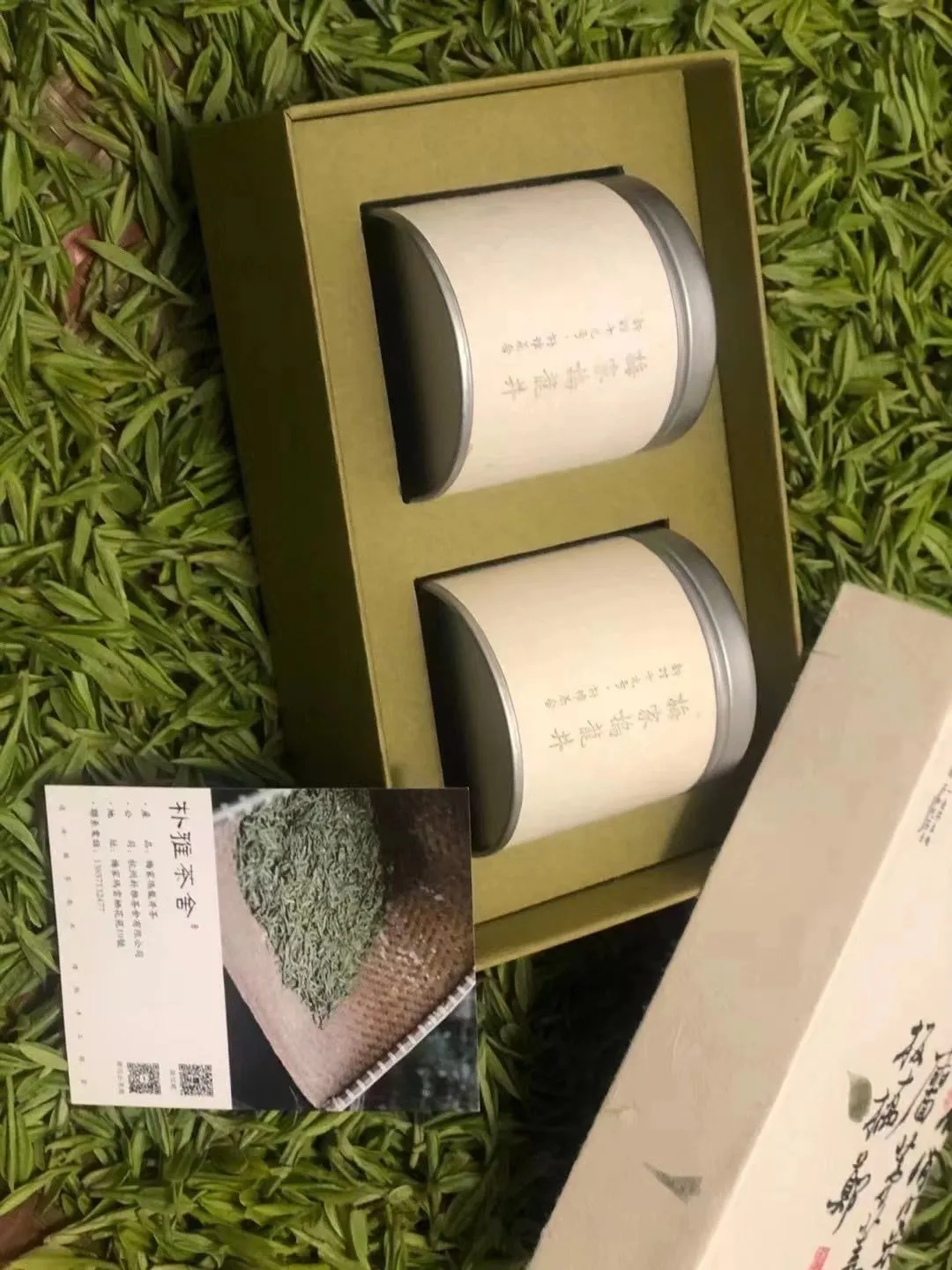
What does each label tell you?
| Information | What it describes | What it cannot establish alone |
|---|---|---|
| Category and processing | General manufacture | Your preference or a therapeutic effect |
| Origin | Declared provenance | Every raw-material and processing detail |
| Cultivar | Genetic background | Identical flavour in every batch |
| Commercial name | Product identity | A botanical cultivar or formal grade |
| Grade | A particular grading system | Direct equivalence across categories |
| Standard number | A set of technical requirements | Batch-specific test results or all quality claims |
Ask how claims such as spring-picked, old-tree or handmade are defined and documented. Combine traceability with tasting rather than relying on a single promotional word.
Harvest and packing dates differ
Plucking, initial manufacture, refining, compression and packing can occur at different times. Ask which event a year refers to. A packing year does not independently establish the harvest year.
Read shelf life with its conditions. See home storage for opened tea.
Scented, flavoured and mixed products
Read the ingredients and process description. Flower-scented tea, leaf mixed with fruit or flowers and flavour-added products can differ. A floral association does not establish added flavouring; words such as natural or honey aroma do not replace ingredient and provenance information.
Ready-to-drink products with sugar, milk or other additions need their own nutritional and storage interpretation. Ask about unclear descriptions.
Different retail products may use “tea” or a related word in their name. Read the name together with the ingredients to distinguish tea-leaf products, herbal infusions and flavoured mixtures. Flowers or fruit pictured on the front suggest positioning but do not replace an ingredient list.
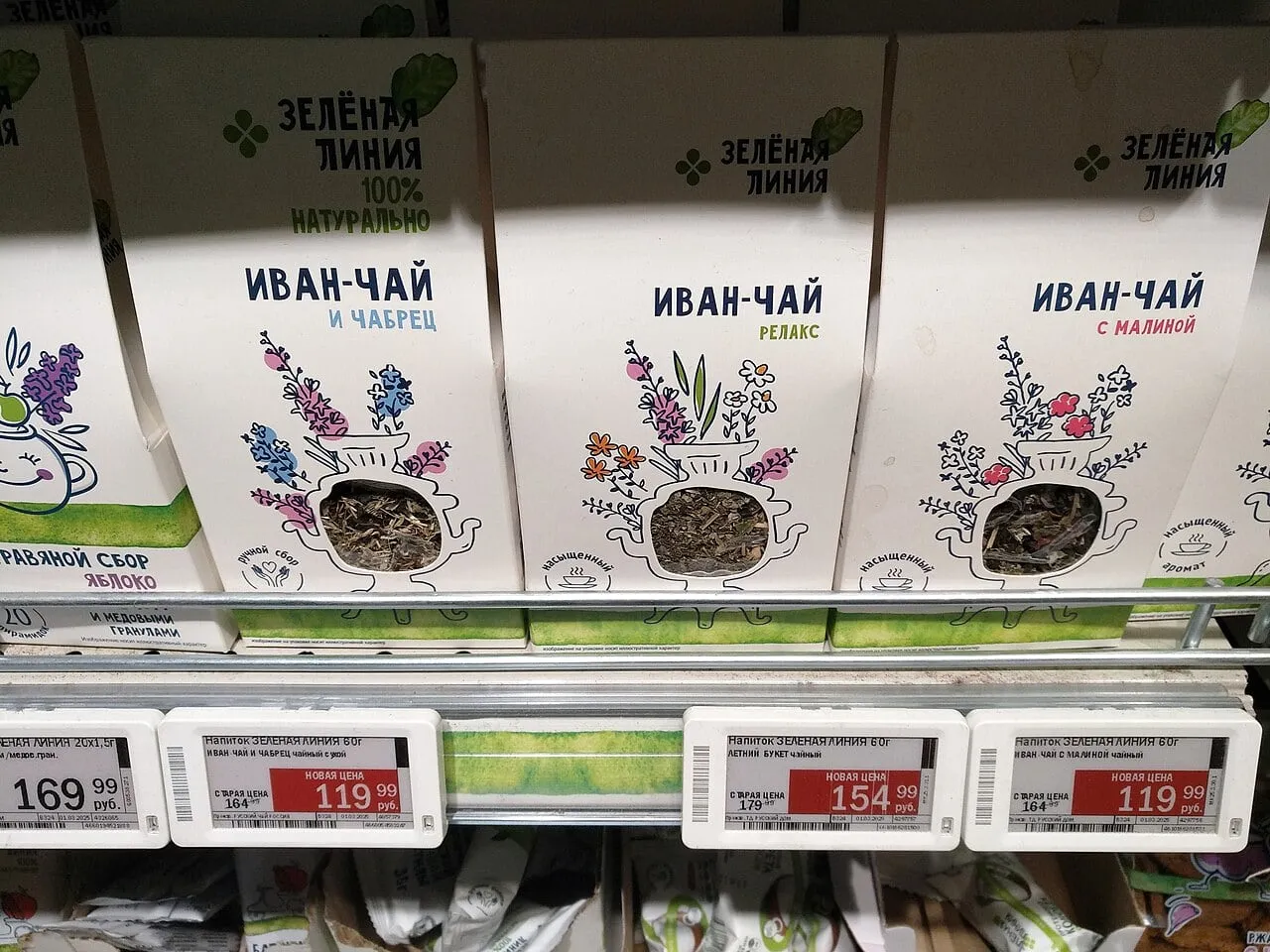
Check a standard’s scope
Copy the complete number and edition year, then consult the relevant official platform for its title, status and scope. Identify whether it describes a product or a test method; having a number does not validate every quality claim.
For mainland China, GB 7718-2025 has been published and the official catalogue lists replacement of GB 7718-2011 on 16 March 2027. Consider the product’s production date and applicable transition rules rather than assuming publication instantly changed every label[3]. This example is specific to that jurisdiction.
Reference Guide to Common Chinese Tea Product & GI Standards
On prepackaged tea sold in mainland China, the “Product Standard Number” (产品标准号) typically cites a national standard (GB/T), a geographical indication (GI) standard, or an industry standard (GH/T). Recognising common codes helps you verify what category and origin framework a package claims to follow:
| Common Standard Code | Scope & Category | What to Check on the Label |
|---|---|---|
| GB/T 14456 (series) | General national standard for green tea (divided by processing and leaf style) | Indicates general green tea classification; does not by itself certify a specific famous micro-origin |
| GB/T 18650 | Geographical Indication product: Longjing Tea | Declares compliance with protected Longjing origin zones (West Lake, Qiantang, Yuezhou) and processing rules; check the panel for the specific sub-zone |
| GB/T 18957 | Geographical Indication product: Dongting Biluochun | Covers Dongting Mountain origin and cultivar/craft requirements; general green tea codes do not certify GI Biluochun |
| GB/T 13738 (series) | General national standard for black tea | Distinguishes Part 1 (broken black tea), Part 2 (Congou black tea such as Keemun and Dianhong), and Part 3 (Souchong black tea) |
| GB/T 18745 / GB/T 19598 | Geographical Indication products: Wuyi Rock Tea / Anxi Tieguanyin | Define protected regional boundaries and category-specific grading; “Special Grade” or “Grade 1” cannot be compared directly across different tea categories |
| GB/T 22291 / GB/T 31751 | General white tea standard / Compressed white tea standard | Distinguishes loose white tea (Baihao Yinzhen, White Peony, Shoumei) from compressed white tea cakes or bricks (Aged Fuding White Tea) |
| GB/T 22111 | Geographical Indication product: Pu-erh Tea (Raw and Ripe) | Declares Yunnan large-leaf sun-dried maocha material and Pu-erh processing; check whether the label specifies “Raw” (生茶) or “Ripe” (熟茶) |
Note: This table is an orientation aid; standard editions may be revised over time. A printed standard number represents the producer’s compliance declaration, not a guarantee of personal flavour preference.
Decoding Seasonality, Plucking Maturity, and Promotional Terms
Beyond mandatory fields, tea packages and retail pages frequently feature traditional or promotional terms. Separate verifiable facts from subjective positioning:
- “Pre-Qingming (明前) / Pre-Guyu (雨前) / Spring / Autumn”: Describe harvest timing. Because temperatures vary by latitude and elevation, “Pre-Qingming” leaves from different regions do not share identical maturity; moreover, harvest timing must be stated separately from the packaging date.
- “First Flush / Single Bud / One Bud One Leaf”: Describe plucking tenderness. Tender buds are not universally superior across all categories—for example, Wuyi Rock Tea, Anxi Tieguanyin, and Dongding Oolong rely on more mature open leaves (kaimian cai) to develop layered floral-fruity volatiles and rich mouthfeel during zuoqing.
- “Ancient Tree (古树) / Single Bush (单株) / Core Zhengyan (正岩) / High Mountain”: Without verifiable origin documentation or batch traceability, such terms often lack uniform public auditing. Sample small quantities first and weigh verifiable origin standards alongside your own tasting notes.
Try a fictional label
Suppose a label reads “oolong, a named region, spring 2026 harvest, 50 g.” Separate category, region, season and weight, then ask about cultivar, roast, packing and storage. This is an exercise, not a real product or proof of quality.
For unfamiliar tea, begin with a small sample and familiar preparation. Compare prices on equal weight and format while considering verifiable information and personal preference.
Keep information when opening individual packets
Use one box of individually wrapped tea for a practical check: can you connect the outer product name to each packet, and where are the batch, dates and storage instructions? If an inner packet carries only branding, discarding the box makes later checks harder. When repacking at home, record the tea name and repacking date while retaining the original packaging.
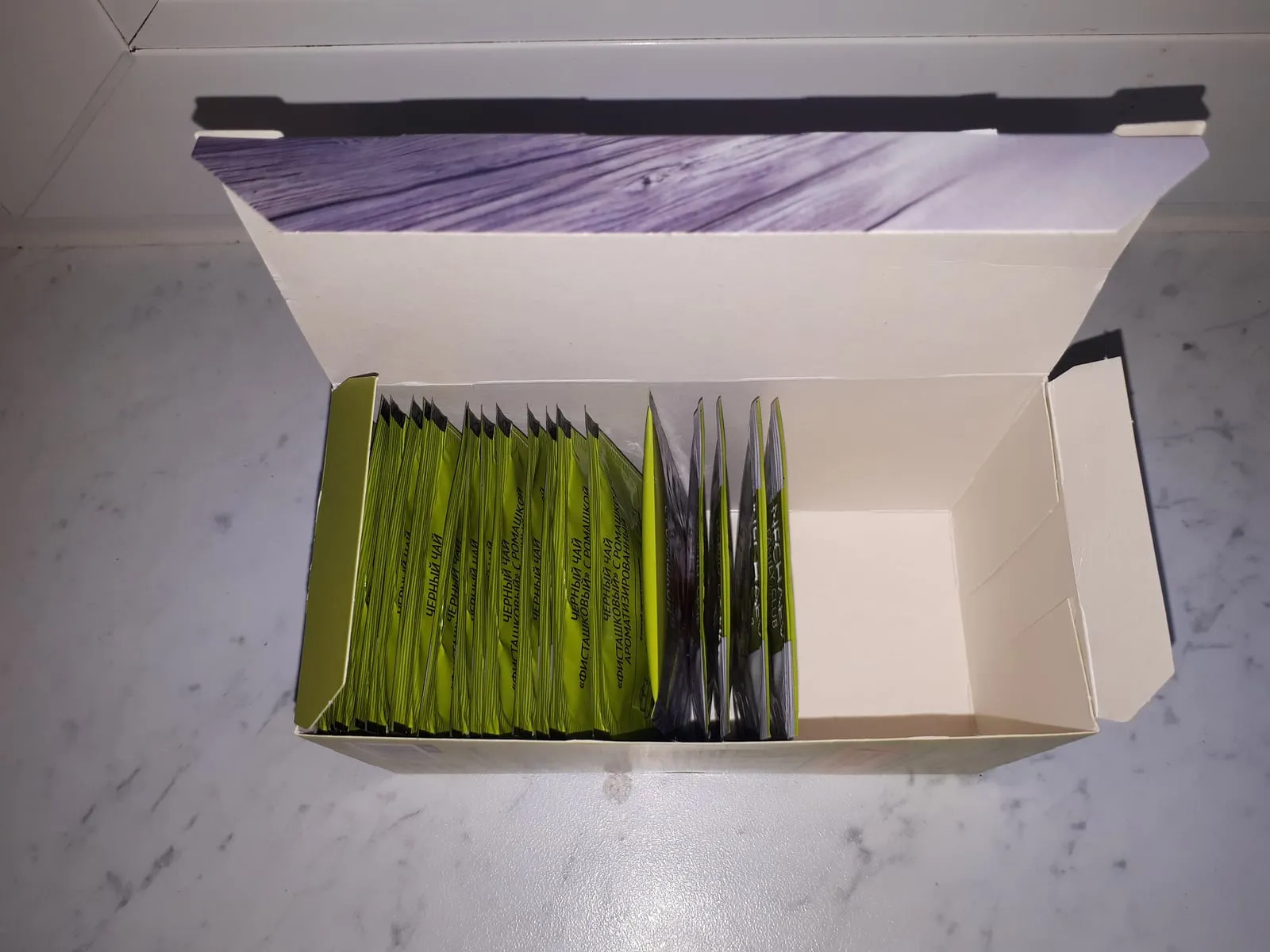
These photographs show three different products and illustrate appearance, names and ingredients, and the relationship between outer and inner packaging. For your own check, follow one actual product through all the steps, note missing information and ask the producer when necessary.
Related Articles
- Home Tea Storage: Combine label storage instructions, shelf-life dates, and packaging barriers to manage portioning and moisture after opening.
- Brewing Basics: Match water temperature and leaf-to-water ratio to the category, leaf form, and rolling tightness identified on the label.
- The Art of Tea Blending & Commercial Standardisation: Understand how commercial blending stabilises flavour across batches and how blends differ from single-origin declarations.
- Tea Cultivar Science: Learn what cultivar names on labels (such as Longjing #43, Fuding Dabai, Shuixian, or Rougui) indicate about genetic flavour potential.
- Six Tea Categories Overview: Connect the category name on a label to its underlying biochemical processing pathway.
References
- R-340 — 原卫生部 (2012). 《预包装食品标签通则》(GB7718-2011)问答. https://www.nhc.gov.cn/zwgkzt/wsbysj/201201/54021.shtml
- R-341 — 国家卫生健康委员会 (2025). 《食品安全国家标准 预包装食品标签通则》(GB 7718-2025)问答. https://www.nhc.gov.cn/sps/c100087/202509/bc824a504ec34c27883da73f14c20d44.shtml
- R-344 — 国家卫生健康委员会. 食品安全国家标准目录(截至2025年9月共1725项). https://www.nhc.gov.cn/sps/c100087/202601/b8bc7bf0fd6243c1914d8c0708d9929a/files/%E9%A3%9F%E5%93%81%E5%AE%89%E5%85%A8%E5%9B%BD%E5%AE%B6%E6%A0%87%E5%87%86%E7%9B%AE%E5%BD%95%EF%BC%88%E6%88%AA%E8%87%B32025%E5%B9%B49%E6%9C%88%E5%85%B11725%E9%A1%B9%EF%BC%89.pdf
Article Knowledge Network
Explore the connections between the teas, processes and flavours in this article.