
Start with the essentials
Putting leaves into a vessel and adding hot water feels ordinary today. The development of loose-leaf drinking during the Ming period removed cake grinding and brought leaf shape, aroma and steeping rhythm more directly into tasting. Manufacturing, utensils and aesthetic interests changed with it.
This article connects tribute policy, tea books and teaware with the gradual spread of steeping, then relates their advice to water, leaf quantity and extraction. The change unfolded over time.
Three key points
- Preparation becomes simplerWhole leaves make form and manufacturing characteristics directly visible.
- Brewing introduces choicesLeaf quantity, water temperature and contact time influence the cup.
- Policy and practice interactReform, production, books and utensils belong in the same historical account.
Follow the main thread
Compare leaf form, tools and preparation across Tang, Song and Ming practices. Identify what survives in your own brewing, and distinguish tea-book recommendations from records of institutional policy.
Abolishing Cakes, Promoting Loose Leaf: A Top-Down Tea Revolution
Background and substance of the edict
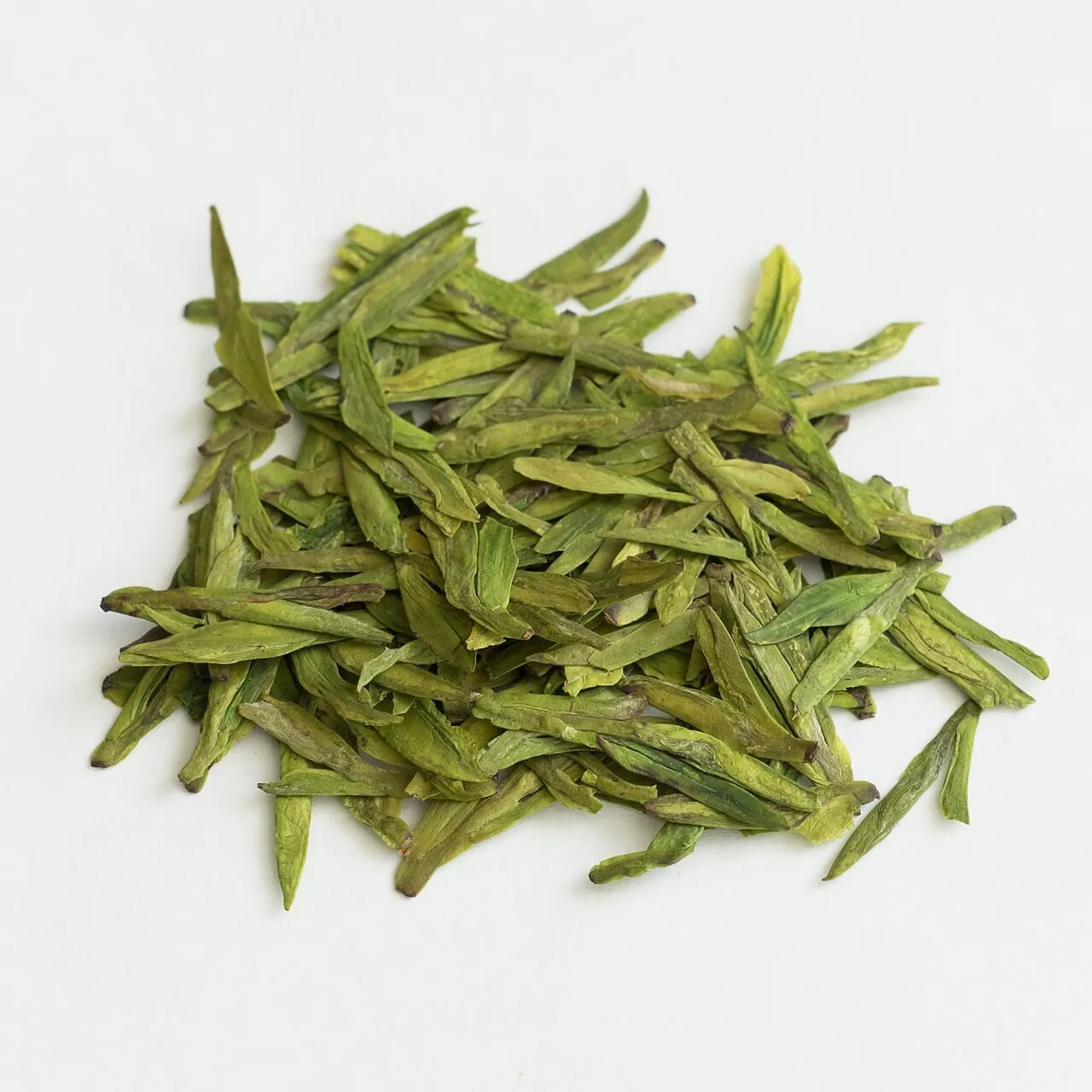
In September 1391, Zhu Yuanzhang ordered that “the production of dragon-phoenix cakes be stopped; only bud tea shall be offered as tribute”[1]. “Bud tea” here means loose leaf: tea picked and dried without compression into cakes. The immediate effects were:
- Tribute tea changed shape: the Beiyuan Imperial Tea Garden in Fujian ceased making dragon-phoenix cakes and switched to loose-leaf tribute;
- Folk methods followed suit: cake production was complex (steaming, pounding, moulding, drying) and costly; loose-leaf processing was far simpler (pan-firing or steaming then drying), greatly boosting productivity;
- Drinking style transformed: whisked tea required a tea whisk, special bowls, a water ewer and a brazier, plus considerable skill; steeping needed only leaves, water and a brief wait, lowering the barrier dramatically.
The Ming tea connoisseur Zhang Yuan summarised in his Cha Lu (Tea Records, c. 1595): “The wonder of tea lies in the excellence of its initial crafting, the correctness of its storage, and the appropriateness of its brewing.”[2] This statement marks the core shift of Ming tea studies: from the ritual competition of “tea dueling” to the pursuit of quality across crafting, storage and brewing.
From compressed cakes to loose leaf: a chain of craft and flavour changes
Compressed cakes (steamed green cakes) were steamed and pounded before moulding, rupturing cell walls and exposing contents to partial oxidation and polymerisation under heat and moisture. When whisked with boiling water and beaten with a bamboo whisk, further extraction was promoted. Because the powder was drunk together with the liquor, Tang–Song tea tasted heavy and carried the character of steamed cake tea.
Steeped loose leaf is different:
- Cell structure remains more intact: pan-fired or baked loose teas suffer less cell damage before drying, preserving contents more fully;
- Oxidation is lower: without the steaming and compression of cakes, polyphenol oxidation is lighter, yielding a greener liquor;
- Extraction is more controllable: as leaves slowly unfurl in the pot, compounds are released gradually according to temperature and time, allowing the brewer to adjust strength.
The essence of this difference is a shift from “pre-oxidation + rapid release” to “preservation + progressive release.” Ming tea masters sensed this keenly and developed fine parameter control in practice.
The Rise of Steeped Infusion: From Xu Cishu to Zhang Yuan
Brewing wisdom in Ming tea books
During the middle and late Ming, a flood of tea books appeared. The most precise accounts of the steeping method are found in Zhang Yuan’s Cha Lu and Xu Cishu’s Cha Shu (Tea Treatise, c. 1597).
Zhang Yuan divided brewing into four steps—adding tea, pouring water, waiting for the right temperature, and tasting—and proposed an “ordered sequence of tea addition”:
“There is an order to adding tea; do not miss the proper moment. Tea first, then water, is called lower infusion; water halfway, then tea, then filled to the brim, is called middle infusion; water first, then tea, is called upper infusion.”[2]
Zhang Yuan himself matched them to the seasons: “middle in spring and autumn, top in summer, bottom in winter.” Later tea drinkers also adapt them to tea shape:
- Lower infusion: for tightly rolled, heavier teas (e.g. pan-fired pearl green tea); tea is added first so it is fully wetted;
- Middle infusion: for medium-shaped leaves; water is added halfway, then tea, then topped up;
- Upper infusion: for light, downy tender teas (e.g. Biluochun); water first protects the buds from a direct boiling shock.
Xu Cishu further stressed the matching of water temperature and time:
“Once water enters the kettle, it must be heated quickly; when it sounds like wind in the pines, lift the lid to judge whether it is young or old. After the crab-eye stage, when the water shows small waves, that is the right moment. Once it boils in great surges and falls silent, the moment has passed: the water is old, the fragrance scatters, and it is unfit to use.”[3]
Xu Cishu treats the “small waves after crab-eye” stage as the right moment and warns that long boiling makes the water “old” and scatters fragrance; today this is often read as lower water temperatures (about 80–85 °C) for tender bud teas and near-boiling water for coarser leaves. This idea of adapting the brew to the tea aligns closely with modern scientific findings on optimal brewing temperatures for different tea categories.
Core parameters of the steeped method
Combining Ming tea books with modern brewing-chemistry research, the key parameters can be summarised as follows:
| Parameter | Ming tea-book record | Modern scientific basis | Representative range |
|---|---|---|---|
| Temperature | tender / old water | temperature affects diffusion coefficient and molecular kinetic energy | 75–95 °C |
| Leaf-to-water ratio | small pot less tea, large pot more tea | concentration gradient drives diffusion rate | 1:50–1:25 |
| Steeping time | drink quickly after pouring, do not stew | extraction kinetics follow an exponential approach to saturation | 10–60 s |
| Vessel | Yixing teapot, white porcelain cup | material affects heat capacity and adsorption | — |
Values are representative ranges; actual results vary with cultivar, leaf grade, water and vessel.
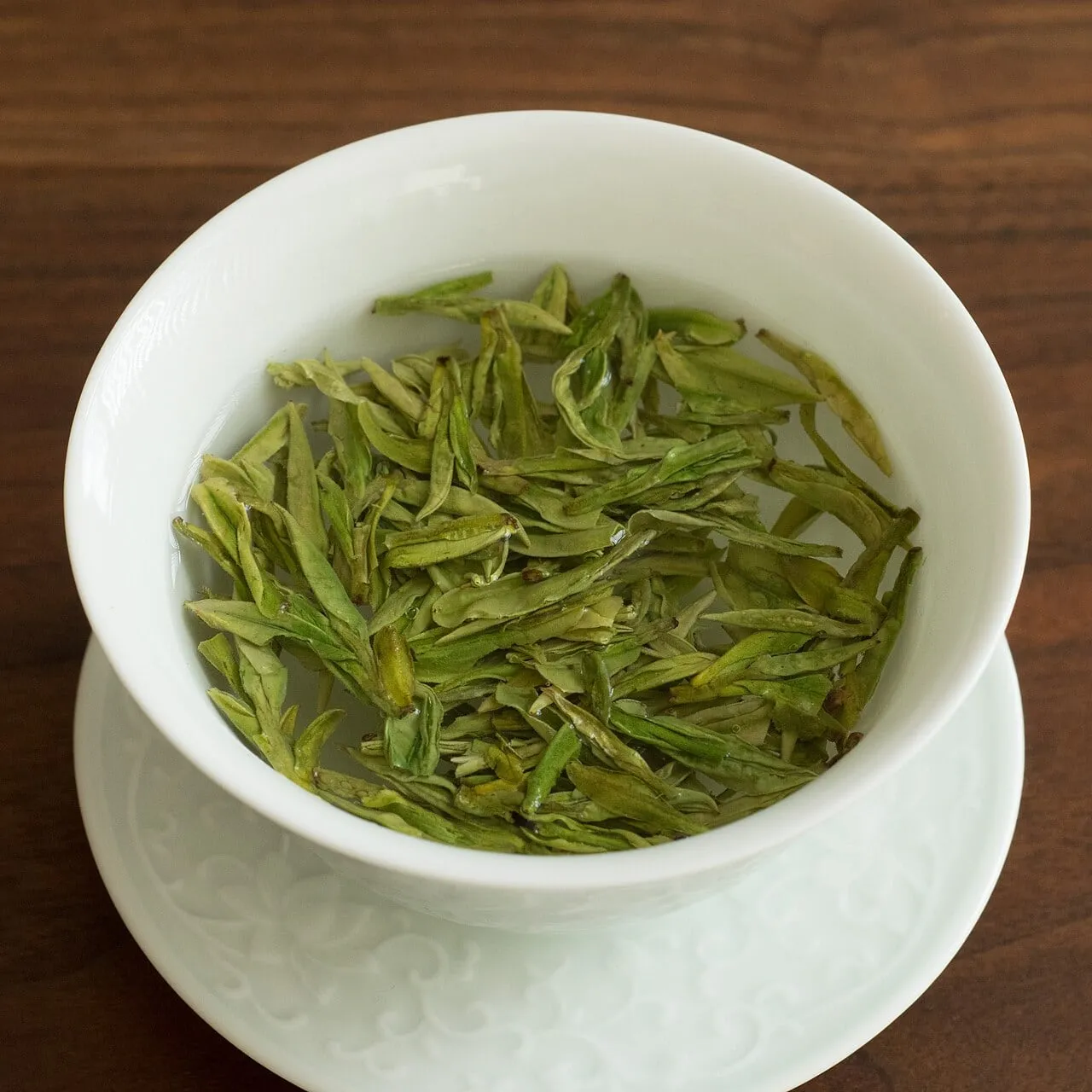
A contemporary infusion lets us see loose leaves opening in water. This is a modern example, not a reconstruction of Ming vessels or practice.
Simplification of Teaware: Yixing Teapots and the Gaiwan Prototype
Two vessels for loose-leaf tea
Compare the pot and the bowl.
Steep and sip at once
- A small purple-clay pot
- Hot water; loose leaves unfurl
- Pour off soon; never stew
Zhou Gaoqi: steep and sip in turn, to bring out colour, aroma and taste [4].
Sources & reading
Quotations from Xu Cishu’s Chashu [3] and Zhou Gaoqi’s Yangxian Minghu Xi [4], as cited in this article.
Vessels are schematic, not specific museum pieces.
The rise of the Yixing teapot
The Ming dynasty saw the birth of the Yixing purple-clay (zisha) teapot. From the Zhengde to Jiajing periods, monks at Jinsha Temple in Yixing and Gong Chun (also known as Gongchun) began making teapots from the local iron-rich, porous clay. Purple clay is moderately heat-retaining, breathable, and does not steal the tea’s aroma; over time it adsorbs tea oils and develops a patina. These properties make it ideal for steeping loose leaf.
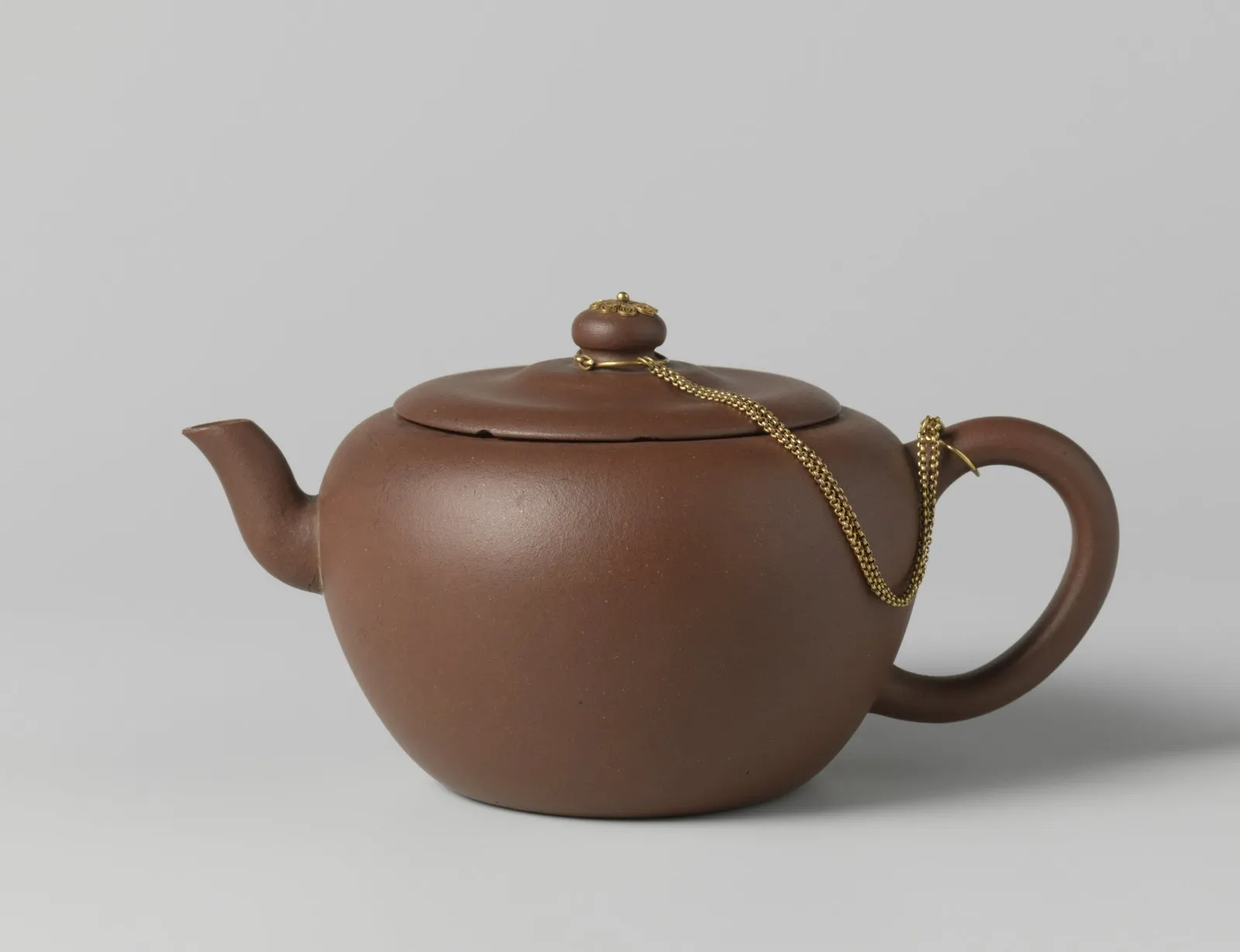
Zhou Gaoqi recorded in his Yangxian Minghu Xi (c. 1640): “The pot serves the true tea; fresh water and lively fire, steep and sip in quick succession, to exhaust the hidden colour, sound, fragrance and taste.”[4] “Steep and sip in quick succession” means brewing and drinking immediately, never letting the liquor stew—exactly the默契 partnership between the steeping method and the Yixing pot.
The prototype of the white porcelain gaiwan
In the middle and late Ming, Jingdezhen white porcelain reached maturity; white porcelain bowls and cups gradually became important literati tea vessels. White porcelain does not absorb aroma or mask colour, making it easy to observe the liquor shade—consistent with the steeped method’s aesthetic of “appreciating colour.” After the Qianlong reign of the Qing, the lidded bowl with saucer—the gaiwan—was formally standardised, but its prototype (white bowl with lid) was already visible in the Ming.
Xu Cishu wrote of tea cups: “Today pure white is best, and small ones are prized.”[3] The bowl with a lid retains heat, keeps out dust and allows the drinker to sniff the aroma—functions that foreshadow the gaiwan.
How Brewing Parameters Affect Flavour: Diffusion and Extraction Kinetics
The scientific principles of infusion
Temperature and time in the cup
Compare the liquor and the loupe.
Pale and fresh
- Cooler water
- A short steep
- Pale, clear liquor
- Loupe: savoury notes come out first
Theanine dissolves early; catechins and caffeine come out less.
Sources & reading
A qualitative comparison: no extraction percentages are implied. Actual results depend on the tea, leaf size, ratio and water.
Dots show a direction of change, not measured amounts.
The explorer above shows how the core parameters of Ming steeped infusion—water temperature and steeping time—jointly determine the dissolution rates of tea polyphenols (catechins), caffeine and amino acids (theanine) in the liquor. Switch the three brews and you will see: higher temperatures accelerate the release of bitter and astringent compounds, while lower temperatures and shorter times preserve more freshness. This is the scientific basis of the Ming principle of “adapting the brew to the tea.”
Tea brewing is essentially a solid–liquid extraction process: hot water acts as a solvent, dissolving soluble compounds from the solid tea leaf. This process is governed by diffusion laws (Fick’s laws) and dissolution equilibrium:
- Diffusion rate is positively correlated with temperature: as temperature rises, water-molecule kinetic energy increases, raising the solute diffusion coefficient and speeding extraction;
- Concentration gradient is the driving force of diffusion: the higher the leaf-to-water ratio (more leaf per unit water), the faster solute concentration in the liquid rises;
- Time moves the system toward equilibrium: extraction is rapid at first, then slows as the concentration gradient shrinks, eventually approaching saturation.
Modern research shows that different compounds dissolve at markedly different rates[5][6]:
- Amino acids (e.g. theanine): small molecular weight, highly polar, dissolve quickly even at low temperatures; they are the main source of the liquor’s “freshness”;
- Caffeine: moderately polar; its dissolution rate rises sharply with temperature, with substantial release within 30–60 s at high temperatures;
- Tea polyphenols (catechins): larger, structurally complex molecules dissolve more slowly, but high temperature and long steeping can bring them out fully, contributing astringency (the drying sensation).
These differences are the scientific basis of the Ming principle of “adapting the brew to the tea”: tender bud teas are rich in amino acids and suit lower temperatures and shorter times to preserve freshness; coarser leaves are higher in polyphenols and benefit from higher temperatures and slightly longer steeping to draw out flavour.
Ming steeped infusion vs modern gongfu tea
The Ming steeped method and modern gongfu tea share the same spirit: small pot, small cups, high temperature, quick decanting, multiple infusions. But gongfu tea, refined after the Qing dynasty, pushed the parameters further: the leaf-to-water ratio tightened to 1:20–1:15, and steeping times shortened to 5–20 s, pursuing layered changes in every infusion through “fast in, fast out.” This evolution is an adaptive development of the steeped method for oxidized teas such as oolong and Pu-erh.
How the Steeped Method Shaped Modern Chinese Tea Drinking
From court to common table
The greatest contribution of the steeped method was to turn tea drinking from an aristocratic ritual into an everyday habit. Whisked tea required specialised tools—whisk, bowl, ewer, brazier—and considerable skill in beating; steeping needs only a pot, a cup, leaves and hot water, affordable by almost any social class. In the middle and late Ming, urban teahouses proliferated, and townspeople adopted tea as a social and leisure activity. The simplicity of steeping was the technical precondition for this popularisation.
Catalyst for tea-category differentiation
Once loose leaf became dominant, tea makers in different regions began exploring processing methods suited to local raw materials and climate. From the Ming into the Qing and later, pan-fired green tea (e.g. Longjing, Biluochun), baked green tea (e.g. Huangshan Maofeng), white tea (Silver Needle, White Peony), and black tea (Lapsang Souchong) were formalised or germinated[8]. All of these categories exist as loose leaf, and their brewing methods all take steeping as the starting point, varying only in temperature, ratio and time.
One could say that without the steeped method, there would be no modern brewing system for the six great tea categories. Whisked tea was only suited to steamed green cakes; the universality of steeping makes it the common brewing foundation for green, white, yellow, black, oolong and Pu-erh teas.
Aesthetic shift: from “duel” to “savour”
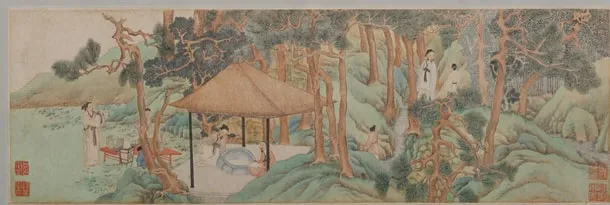
Song-dynasty whisked tea prized “tea dueling,” pursuing the whiteness and persistence of the foam and the delayed appearance of water marks—a competitive visual aesthetic. The Ming steeped method turned toward “savouring”: savouring liquor colour, aroma, taste and infused leaf. Zhang Yuan wrote: “Be meticulous in making, keep it dry in storing, keep it clean in brewing. Meticulous, dry, clean — therein lies the whole way of tea.”[2] This inward, sensory aesthetic established the core spirit of Chinese tea culture: tea is not performance, but a dialogue between human and nature.
Ming Loose-Leaf Steeped Tea
Historical · Loose-Leaf InfusionThe flavour profile is a relative schematic; actual results vary considerably with tea category, grade, origin and brewing parameters.
Common Myths & Scientific Clarifications
Myth 1: “After Zhu Yuanzhang abolished cake tea, did Ming steeped brewing mean casually pouring boiling water over leaves?”
Scientific Clarification: Ming steeped brewing was far from casual; it established a rigorous, methodical science of loose-leaf extraction. Following Zhu Yuanzhang’s 1391 edict[1], scholars codified brewing kinetics. Zhang Yuan’s Record of Tea and Xu Cishu’s Tea Aptitudes established precise rules for water thermometry (“crab-eye” vs. “fish-eye” bubbles) and leaf-infusion sequence (top-, middle-, or bottom-drop depending on tenderness and weather)[2][3]. Modern extraction kinetics confirm that managing water temperature and infusion flow directly controls the dissolution ratio of caffeine to catechins[5], validating Ming practices.
Myth 2: “Were Yixing purple-clay teapots originally invented specifically for brewing oolong tea?”
Scientific Clarification: Yixing teapots were originally created to brew Jiangnan pan-fired loose green teas, not oolong. When master potters Gongchun and Shi Dabin refined Yixing teapots in the mid-to-late Ming, semifermented oolong processing did not yet exist. Connoisseurs used zisha teapots for delicate loose teas such as Songluo, Huqiu, and Luojie (the last of which was steamed rather than pan-fired)[3]. The open dual-pore microstructure permitted air permeability without water leakage, preventing tender leaves from stewing and turning yellow. Only during the mid-Qing dynasty did zisha pots become deeply paired with Fujian and Guangdong Gongfu oolong teas.
Myth 3: “Was the three-piece gaiwan (bowl, lid, and saucer) invented and standardized during the Ming dynasty?”
Scientific Clarification: The standardized “three-talents” gaiwan integrating lid, bowl, and saucer only matured and spread widely during the Qing dynasty. Ming drinkers transitioned to lidded white porcelain cups or Ding ware bowls to observe the pale liquor of loose leaves[3], but these lacked the distinct saucer/stand component. It was during the Kangxi, Yongzheng, and Qianlong eras of the Qing that the three-piece ensemble was codified, serving both functional needs (heat insulation, aroma sniffing, skimming foam) and cosmological symbolism (representing heaven, earth, and humanity).
Myth 4: “Does steeping loose leaf at near-boiling temperatures always release the best aroma?”
Scientific Clarification: Higher water temperatures do not unconditionally improve tea; Ming masters strictly advocated matching water temperature to leaf grade. Xu Cishu stressed judging the water: the “small waves after crab-eye” stage is right, while long boiling makes the water “old” and scatters fragrance[3]. Pouring rolling boiling water onto tender green teas dissipates delicate floral volatiles, denatures soluble proteins, and scalds the leaf into an unpleasant stewed note. Modern biochemistry shows that water at 80–85 °C limits the rapid extraction of bitter ester catechins while allowing sweet theanine and fragrant terpenes to balance harmoniously[5].
Related entries
- Origin and Global Spread of Tea — the two threads of tea from medicine to beverage, from China to the world
- Representative Craft · Longjing — the pinnacle of Ming pan-fired green tea
- Principles of Green Tea Fixation — how pan-firing fixes the green colour and freshness of loose leaf
- Flavour Wheel and the Six Tea Categories — how the steeped method reveals the flavour signatures of different tea types
Glossary
| English | 中文 | Note |
|---|---|---|
| steeped tea / yuepao (infusion method) | 瀹泡法 | Ming-dynasty loose-leaf infusion method that replaced Tang–Song whisked tea |
| loose tea / loose-leaf tea | 散茶 | Uncompressed tea leaves, as opposed to compressed cakes |
| compressed tea cake / brick tea | 团茶 / 饼茶 | Steam-pressed tea shapes that were the dominant tribute-tea form in Tang and Song |
| whisked tea / diancha | 点茶 | Song-dynasty dominant method: tea powder whisked with boiling water to produce foam |
| Yixing purple-clay teapot / zisha teapot | 紫砂壶 | Porous teapot made from Yixing purple clay, ideal for loose-leaf brewing |
| gaiwan | 盖碗 | Lidded (and usually saucered) white porcelain bowl for observing colour and sniffing aroma |
| gongfu tea / kungfu tea | 工夫茶 | Refined small-pot, small-cup brewing method that emerged after the Qing, rooted in Ming steeping |
| leaf-to-water ratio | 茶水比 | Ratio of tea mass to water volume, e.g. 1:50 means 1 g tea to 50 ml water |
| waiting for the right water temperature | 候汤 | Pausing after boiling to reach the appropriate temperature before brewing |
| adding tea leaves | 投茶 | The action of putting tea into the pot or bowl; Ming texts distinguish upper, middle and lower infusion |
References
- R-125 — 《明太祖实录》卷二百十四,洪武二十四年九月壬寅条(罢造龙团,听茶户自采制造细芽入贡). https://zh.wikisource.org/wiki/明太祖實錄
- R-126 — 张源 (明·约1595年).《茶录》. 论采茶、造茶、辨水与点试. https://ctext.org/wiki.pl?if=gb&res=802047
- R-127 — 许次纾 (明·万历二十五年 1597年).《茶疏》. 明代散茶与瀹饮法核心典籍. https://ctext.org/wiki.pl?if=gb&res=802048
- R-385 — 周高起 (明·约1640年).《阳羡茗壶系》. 宜兴紫砂壶源流与名家史料.
- R-129 — Price, W. E., & Spiro, M. (1985). Kinetics and equilibria of tea infusion: rates of extraction of theaflavin, caffeine and theobromine from several whole teas and sieved fractions. Journal of the Science of Food and Agriculture, 36(12), 1309–1314. https://doi.org/10.1002/jsfa.2740361216
- R-034 — Xu, Y.-Q., et al. (2018). Chemical compositions and biological activities of different types of tea. Comprehensive Reviews in Food Science and Food Safety, 17(2), 432–452.
- R-030 — 陈宗懋 主编 (2000).《中国茶叶大辞典》. 中国轻工业出版社. ISBN: 978-7501925094.
- R-031 — 施兆鹏, 夏涛 主编 (2016).《茶叶加工学》(第3版). 中国农业出版社. ISBN: 978-7109214347.
Article Knowledge Network
Explore the connections between the teas, processes and flavours in this article.