
Start with the essentials
Tea history follows both the use of a plant and changes in everyday drinking. Modern loose-leaf steeping differs from cooking tea powder or whisking it in a bowl; the same plant also entered temples, households and trading markets in different places.
This article separates legends, physical finds and written evidence, then connects Chinese preparation methods with tea’s eastward and westward journeys. Changes in preparation and movement help explain today’s diverse tea cultures.
Three key points
- Origins involve separate questionsThe plant’s natural history, cultivation and documented drinking require different evidence.
- Preparation changes tools and flavourCooking powder, whisking it and steeping leaves are distinct methods.
- Movement reshapes habitsReligious exchange, trade and planting industries spread tea, while communities developed their own ways of drinking.
Follow the main thread
Connect cooked, whisked and steeped tea on a timeline, then compare their tools with yours. Which steps survive? When a claim says “earliest,” identify whether it concerns a plant, a physical find or a drinking record.
First, separate legend from history
Any rigorous account of tea’s origins must distinguish between cultural myth and verifiable history:
- The Legend of Shennong: The story that “Shennong tasted a hundred herbs, encountered 72 poisons in a day, and was cured by tea” (often attributed to the Shennong Bencao Jing, though the line does not appear in the received text and is a later embellishment) represents the collective cultural memory of tea’s early medicinal use. It is a venerable myth, lacking exact historical dates or archaeological artifacts[1].
- Verifiable Historical & Archaeological Evidence:
- In pre-Qin texts, the character tu (荼) was polysemous, denoting both bitter herbs and the tea plant. The 4th-century Chronicles of Huayang (Huayang Guozhi) records that after King Wu of Zhou’s conquest of the Shang (c. 1046 BCE), the Ba and Shu tribes of Southwestern China offered “cinnabar, lacquer, tea, and honey” as tribute, identifying the Sichuan-Yunnan-Guizhou region as the cradle of tea domestication and drinking[1].
- Western Han Documentation: Wang Bao’s Contract for a Servant (Tong Yue, 59 BCE) explicitly refers to “boiling tea and cleaning utensils” (烹荼尽具) and “buying tea at Wuyang” (武阳买荼), proving that by the 1st century BCE, Wuyang (modern Pengshan, Sichuan) had established specialized tea commercial markets[1].
- Archaeological Discovery: Plant remains excavated from the Han Yangling Mausoleum (the tomb of Emperor Jing of Han, 188–141 BCE) were confirmed as tea through phytolith and biomarker (caffeine, theanine) analysis and were long regarded as the oldest physical tea remains; tea residues from an early Warring States tomb at Zoucheng, Shandong, reported in 2021, push the physical evidence back to the 5th century BCE.
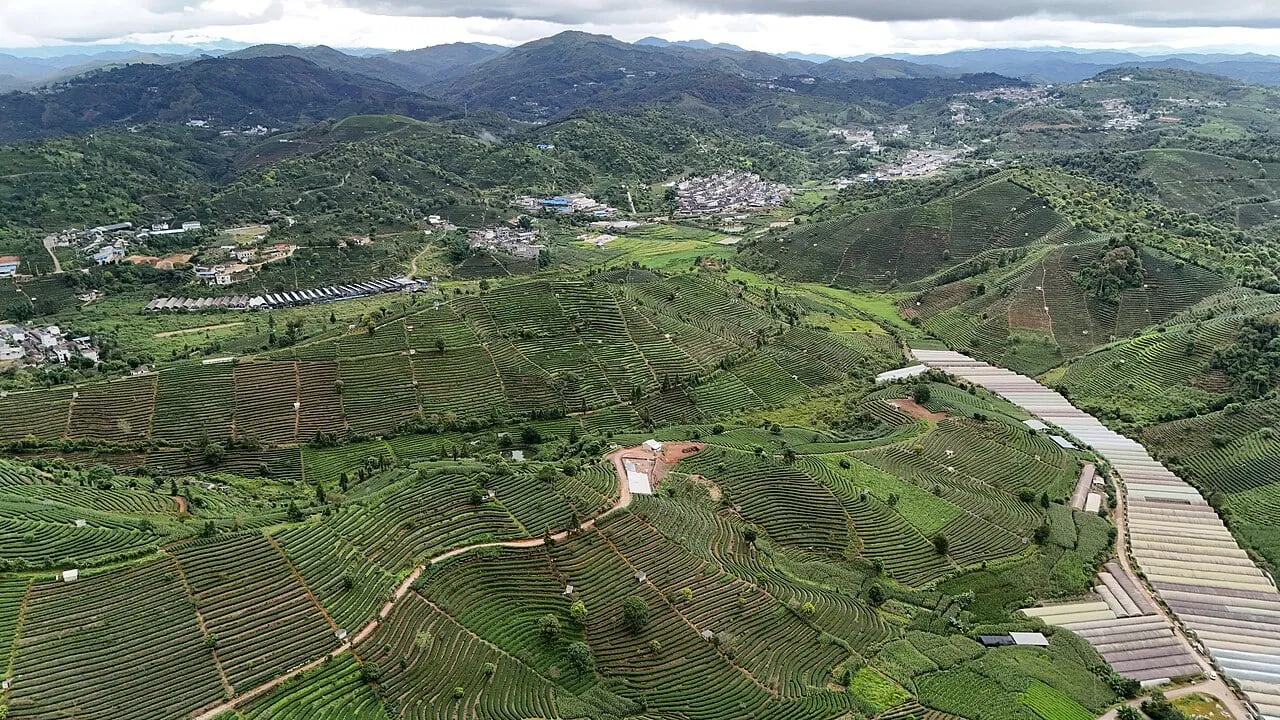
The Evolutionary Arc of Chinese Tea-Drinking
The way Chinese society consumed tea underwent three fundamental transitions, transforming from a pungent culinary broth to a high art form, and finally to modern loose-leaf steeping:
How China drank tea, era by era
Compare the tea, the vessel and the source.
Tea boiled as a soup
- Leaves with onion, ginger, peel
- A clay pot of tea soup
- Wang Bao, 59 BCE: “boil tea”
The earliest dated record comes from Sichuan; tea later reached Jiangnan.
Sources & reading
The Shennong story is a later legend, not dated history; the first dated record is Wang Bao’s contract of 59 BCE. Eras follow this article’s outline.
Icons are schematic, not specific artefacts.
1. Han to Six Dynasties: From “Medicinal Broth” to “Tea in Lieu of Wine”
Before the Tang, tea leaves were often boiled in a cauldron together with scallions, ginger, dates, orange peel, evodia, and salt, eaten as a thick soup known as “tea congee” (茶羹) or “eating tea”. During the Three Kingdoms, tea entered elite diplomacy and court etiquette. The Records of the Three Kingdoms notes that Sun Hao secretly granted the minister Wei Yao “tea instead of wine”, initiating a cultural tradition of clean governance and sobriety. In the Wei-Jin and Southern/Northern Dynasties, Buddhist monks meditating to ward off sleepiness and literati engaging in pure conversation (清谈) elevated tea into an enduring emblem of clarity and serenity[1][2].
2. Tang Dynasty: Steamed Cake Tea & Lu Yu’s Classic of Tea
In the Tang dynasty, tea drinking swept the empire. The Tea Sage Lu Yu (c. 733–804 CE) penned the three-volume Classic of Tea (Cha Jing), establishing the first comprehensive framework of tea botany, processing, and ritual[2]:
- Compressed Brick Production: Leaves were steamed, pounded, pressed in moulds, baked dry, strung, and sealed.
- Three-Boil Simmering: Before drinking, cakes were gently roasted over charcoal, ground to fine powder in a bronze mill, and sifted through fine silk. In the brazier: the first boil was seasoned with salt; at the second boil a ladle of water was drawn, a bamboo stick stirred the vortex to incorporate the tea powder; at the third boil the reserved water was reintroduced to calm the boil and nurture the froth, before decanting into celadon bowls.
- See Tang Boiled Tea.
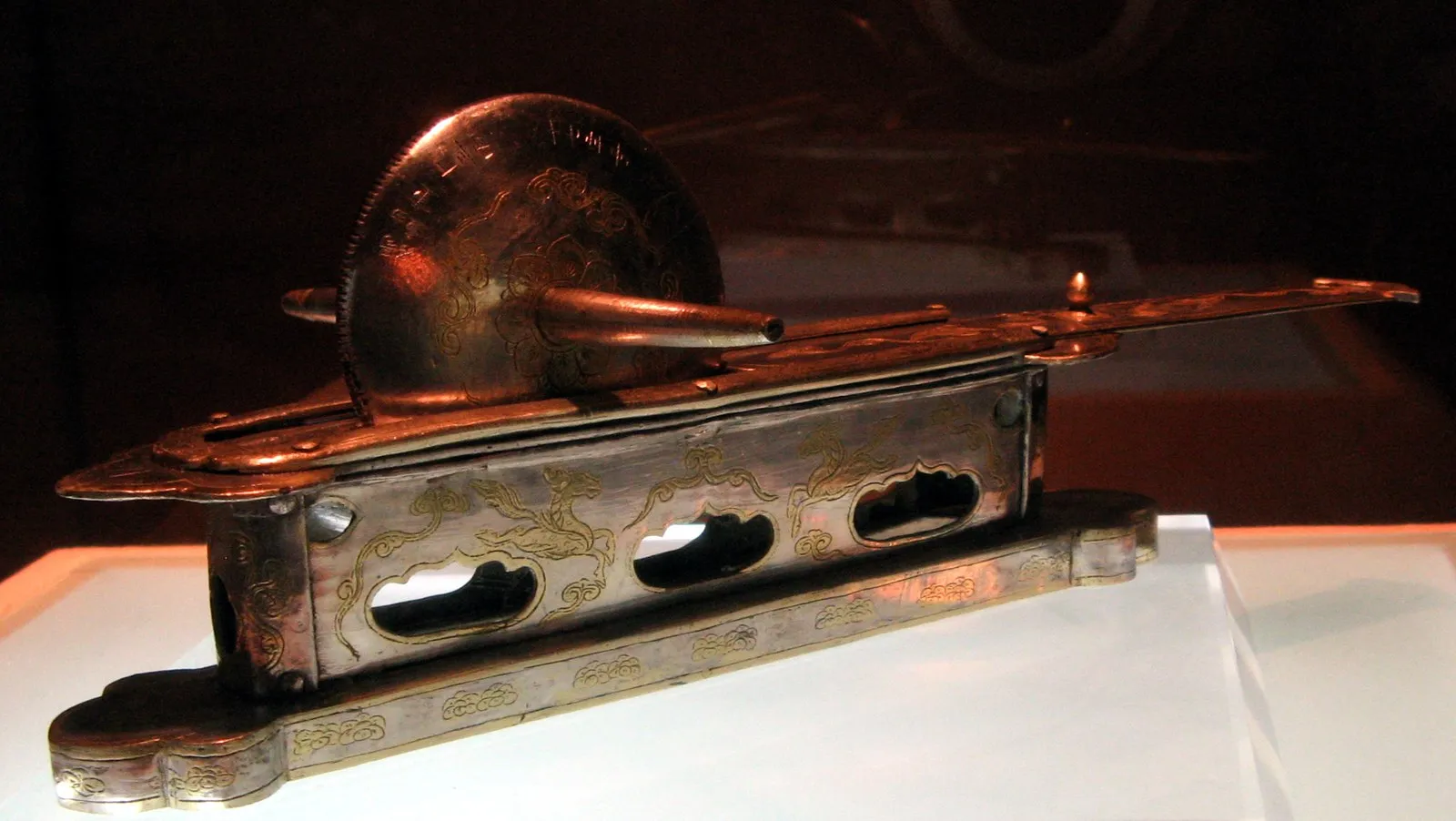
3. Song Dynasty: Tribute Tea, Whisked Tea & Contests
The Song dynasty refined compressed tea into supreme luxury (such as the famed Dragon-Phoenix Tribute Cakes) and developed the exquisite whisked tea method (diancha)[3]:
- Whisked Foam: Ultra-fine tea powder was placed into dark Jian ware bowls, blended with hot water into a smooth paste, and infused in seven successive pourings while vigorously beaten with a split-bamboo whisk (chasen). This created thick, persistent white foam (tanghua), giving rise to tea games (chabaixi) and tea contests (doucha) that tested foam brightness and persistence[3].
- This matcha practice was brought to Japan by Zen monks such as Eisai, forming the direct bedrock of the Japanese tea ceremony. See Song Whisked Tea.
4. Ming & Qing: Abolition of Tribute Cakes & Emergence of Six Categories
- The Ming Reform: In 1391 (24th year of Hongwu), Emperor Zhu Yuanzhang issued an imperial edict abolishing compressed tribute cakes in favor of loose-leaf bud tea, relieving peasant labor[4]. This pivotal decree sent the mill-and-whisk tradition into rapid decline, propelling society toward loose-leaf steeping in teapots (the gaiwan only took its standard form in the Qing). See Ming Steeped Tea.
- The Explosion of the Six Tea Categories: Loose-leaf processing encouraged artisanal experimentation. Between the late Ming and mid-Qing dynasties, artisans mastered polyphenol oxidation and oxidation control:
- Green tea shifted from steaming to pan-firing (preserving fresh aroma);
- Mount Wuyi birthed smoke-roasted Lapsang Souchong (the progenitor of all black teas);
- Fujian and Guangdong perfected semi-oxidized Oolong tea (the zuoqing bruising craft);
- Hunan, Sichuan, and Yunnan developed post-oxidized Dark tea and Pu-erh;
- By the mid-Qing, the complete six-category classification (Green, White, Yellow, Oolong, Black, and Dark) had fully matured.
The Two-Pronged Global Spread
Tea expanded across the globe through two distinct historical currents: cultural diffusion to the East and maritime commerce to the West:
Two paths out of China
Follow the arrows on the map.
Monks carry tea east
- Tiantai, Mingzhou: seeds, methods
- Saichō, Eisai: home to Japan
Tang boiled and Song whisked tea reached Japan in turn, seeding chanoyu.
Sources & reading
Dates follow this article; each move took decades, and routes overlapped.
Schematic map, not to scale.
Eastward: Monks, Zen Buddhism, and Chanoyu
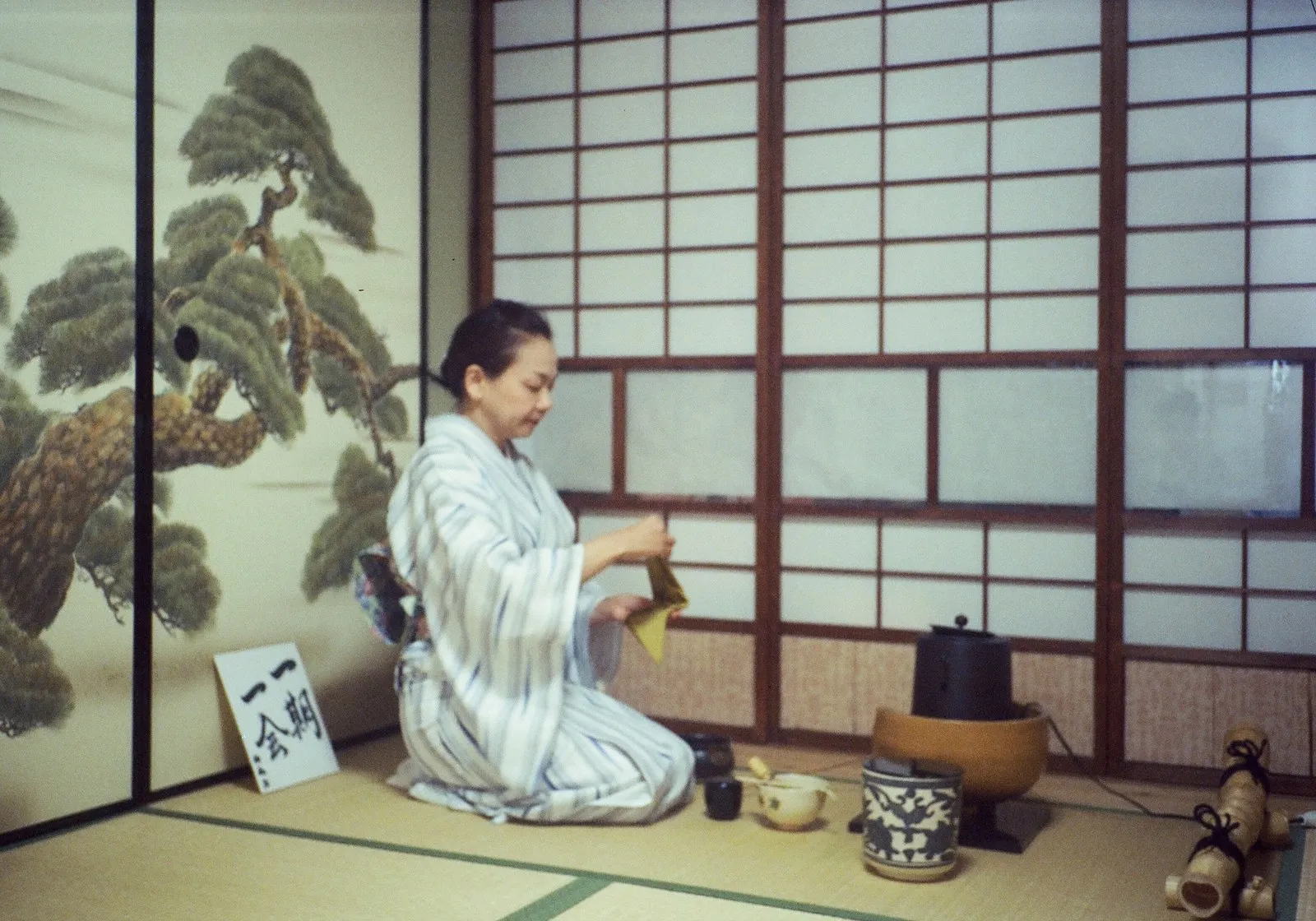
From the 9th century onward, monks like Saichō and Kūkai brought tea seeds from Tang China to Japan. In 1191, Zen Master Eisai returned with Song seeds and the whisked-tea method, later writing Kissa Yōjōki (Drink Tea and Prolong Life, 1211). In the Muromachi and Sengoku periods, Sen no Rikyū synthesized the austere wabi-cha aesthetic (“harmony, respect, purity, and tranquility”), completing tea’s transcultural flowering in East Asia[3]. See Japanese Tea Ceremony.
In Japan, tea practices developed their own settings and etiquette. This image records a host preparing tea in modern Kyoto, not the historical transmission itself.
Westward: Merchant Fleets, Industrial Plantations & Geopolitics
- Maritime Trade Expansion: In 1610, the Dutch East India Company brought the first Chinese tea cargo to Europe[5]. In 1662, Portuguese Princess Catherine of Braganza married King Charles II of England, turning tea drinking into an aristocratic fashion and laying the foundation for British afternoon tea[6]. See British Afternoon Tea.
- Geopolitical Turmoil: British trade deficits caused by massive tea imports prompted the East India Company to illicitly traffic opium into China, ultimately precipitating the Opium Wars[8][9]. In the American colonies, the Boston Tea Party of 1773 became one of the key events leading to the American Revolution.
- Botanical Espionage & Asian Plantations: Seeking to break China’s monopoly, the British identified wild Camellia sinensis var. assamica in Assam in 1823[5]. In 1848, Scottish botanist Robert Fortune traveled disguised into the Chinese interior, smuggling tea seeds, seedlings, and experienced tea artisans[7] to establish colonial plantations in the Himalayan foothills, including Darjeeling; Ceylon’s (Sri Lanka’s) tea industry arose separately after coffee rust struck in the 1860s.
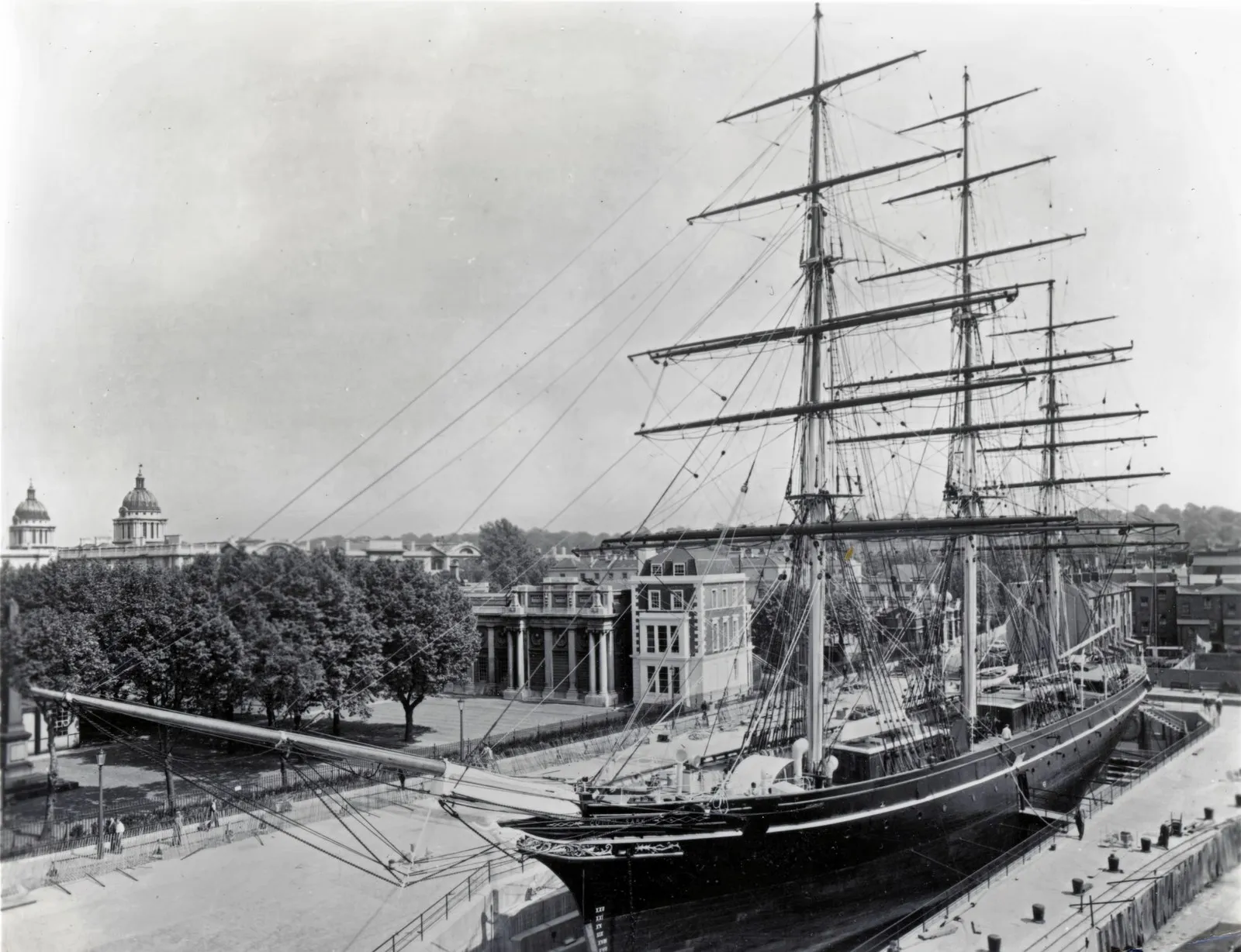
20th Century: Modern Tea Science & Contemporary Industry
In the 20th century, tea transformed from an agrarian craft into a global food science discipline:
- Foundations of Modern Tea Science: Agronomists like Wu Juenong (1897–1989) annotated the Classic of Tea, founded university tea science departments in China, and pioneered mechanized rolling, drying, and scientific plantation management[11].
- Industrial Mechanization: The 1930s invention of the CTC (Crush, Tear, Curl) machine in Assam enabled rapid-infusing black tea production[5], which paired with the tea bag to democratize tea across global mass markets. See Gongfu vs. CTC Black Tea.
- Biochemistry & Contemporary Innovations: Modern science isolated key functional bioactives—catechins (EGCG), L-theanine, and caffeine. In 1973, Yunnan standardized pile-fermentation (wodui) for ripe Pu-erh[10]. Today, ready-to-drink (RTD) bottled teas, cold brew kinetics, and specialty single-origin tea appreciation continue to evolve worldwide.
See also
- Tang Boiled Tea — the three boils, salted water, and the craft of Tang simmered tea
- Song Whisked Tea — whisked froth, tea contests, and the road to Japan
- Ming Steeped Tea — loose-leaf steeping and teaware evolution
- The Tea-Horse Road — the tea-for-horses network and porter epic
- The Maritime Tea Route — Canton trade, Boston Tea Party, and Clipper races
- The World Tea Map — how history shaped today’s map of tea
- Dark-Tea pile-fermentation — the 1973 milestone of standardized ripe Pu-erh
References
- R-113 — 朱自振.《中国茶叶历史资料选辑》. 农业出版社, 1981.
- R-021 — 陆羽 (唐·约780年).《茶经》. 中国第一部茶学专著. https://ctext.org/wiki.pl?if=gb&res=647614
- R-118 — 桑田忠亲 (1979).《日本茶道史》. 河出书房新社. ISBN: 978-4309220970.
- R-125 — 《明太祖实录》卷二百十四,洪武二十四年九月壬寅条(罢造龙团,听茶户自采制造细芽入贡). https://zh.wikisource.org/wiki/明太祖實錄
- R-045 — 威廉·乌克斯(William H. Ukers).《茶叶全书》(All About Tea). 1935.
- R-256 — Ellis, M., Coulton, R., & Mauger, M. (2015). Empire of Tea: The Asian Leaf that Conquered the World. London: Reaktion Books. ISBN 978-1-78023-440-3.
- R-257 — Fortune, R. (1852). A Journey to the Tea Countries of China. London: John Murray.
- R-258 — 庄国土 (1995).《茶叶、白银和鸦片:1750—1840 年中西贸易结构》. 《中国经济史研究》, 1995 年第 3 期, 第 64–76 页.
- R-259 — 仲伟民 (2010).《茶叶与鸦片:十九世纪经济全球化中的中国》. 生活·读书·新知三联书店. ISBN 978-7-108-03427-4.
- R-030 — 陈宗懋 主编 (2000).《中国茶叶大辞典》. 中国轻工业出版社. ISBN: 978-7501925094.
- R-276 — 吴觉农 (1987).《茶经述评》. 农业出版社.
Article Knowledge Network
Explore the connections between the teas, processes and flavours in this article.