
Start with the essentials
Sencha, gyokuro and matcha are familiar Japanese green teas, but their material, processing and preparation differ. Steam fixation, pre-harvest shading, rolling and milling belong at different stages; hōjicha and genmaicha add other treatment and blending choices.
This article connects history and regions with steaming, shaded cultivation and tea types, then explains flavour and leaf form. Separating growth, manufacture and preparation helps distinguish steeped leaves from powder mixed into water.
Three key points
- Steaming is fixationSteam controls enzymatic oxidation during manufacture, with intensity and later handling affecting the result.
- Shading precedes harvestingCovered cultivation changes the material used for gyokuro and matcha.
- Powder and leaves need different preparationMatcha is mixed into water; sencha and gyokuro are usually infused and separated.
Connect the region with the tea
Identify the name, shading information and leaf or powder form before reading preparation advice. Compare sencha and gyokuro through savouriness, bitterness and aroma; account for the different way matcha is consumed.
History of Japanese Tea: From Envoys to the Way of Tea
Envoys to Tang China and the arrival of tea seeds
Japanese tea drinking is usually traced to 805 CE, when the envoy Saichō brought tea seeds back from China and planted them on Mount Hiei. In 815 CE Emperor Saga held a tea ceremony at court, marking the early adoption of tea among the aristocracy. At this stage the beverage followed the Tang dynasty method of boiling compressed tea cakes—an approach far removed from the later Japanese system.
Eisai and Kissa Yōjōki
During the Southern Song dynasty the Zen monk Eisai travelled to China twice, returning in 1191 with tea seeds and the Song whisked-tea method. In 1211 he wrote Kissa Yōjōki (Record of Drinking Tea for Health), calling tea a “miraculous medicine for preserving health and prolonging life.” Eisai gifted tea seeds to Priest Myōe, who planted them at Kozan-ji in Toganoo and in Uji, establishing Uji’s enduring status as the cradle of Japanese tea mastership[1]. During the Muromachi period, Shogun Ashikaga Yoshimitsu designated the renowned “Seven Famous Tea Gardens of Uji,” initiating centuries of imperial tribute.
Matcha and the aesthetics of wabi
The whisked-tea method Eisai introduced evolved into Matcha-dō in Zen temples. In the 15th century Murata Jukō wove Zen aesthetics into the tea ceremony, proposing the ideal of wabi (quiet, rustic simplicity); in the 16th century Sen no Rikyū refined it into the Japanese tea ceremony built on the four principles of wa-kei-sei-jaku (harmony, respect, purity, tranquillity). Matcha-dō is not merely a way of drinking tea but a comprehensive art of space, utensils and state of mind.
The rise of Sencha
In 1738 Nagatani Sōen developed the aosei Sencha method—steaming fresh leaves, then rolling them by hand over a heated drying table into fine needles. This innovation made green tea accessible for everyday drinking, and Sencha gradually overtook Matcha as the mainstream tea. In the 18th century Baisao (the “old tea seller”) championed a populist Sencha style in opposition to the aristocratic Matcha ceremony, democratising Japanese tea culture[1].
Major Growing Regions and Terroir
Japanese tea cultivation is concentrated in the mild, humid belt between 30° N and 38° N. The three core regions are:
| Region | Location | Climate | Representative teas | Share of national output |
|---|---|---|---|---|
| Shizuoka | Central Honshū, at the foot of Mt. Fuji | Warm and humid, >2 000 mm annual rainfall, large day–night temperature difference | Sencha, Fukamushi Sencha, Matcha | ~40 % |
| Kagoshima | Southern Kyūshū | Subtropical, abundant sunshine, early spring harvest | Sencha, Gyokuro, organic teas | ~20 % |
| Uji, Kyoto | Kinki region, Uji River basin | Basin fog, high humidity, fertile soil | Gyokuro, Matcha, Sencha | ~5 % (predominantly high-end) |
Shizuoka has long been Japan’s largest tea-producing prefecture (Kagoshima overtook it in crude-tea output for the first time in 2024); its Sencha is prized for fresh, brisk flavour. Kagoshima’s warmer climate allows the earliest spring plucking and has seen rapid growth in organic cultivation. Uji, with its long craft tradition and favourable micro-climate, is the premium synonym for Gyokuro and Matcha[2].
Smaller regions such as Fukuoka (Yame tea), Saga, Mie (Ise tea) and Saitama (Sayama tea) each have local specialities. Japanese tea gardens are generally low in altitude (mostly below 500 m), reflecting the hilly and alluvial-terrace topography rather than the high-mountain gardens of Taiwan or parts of China. Within Kyoto Prefecture, the mountain town of Wazuka in the south stands out: its dramatic river-basin topography and misty terraced slopes yield over 40% of Kyoto’s prized Tencha, forming the agrarian backbone of authentic Uji Matcha.
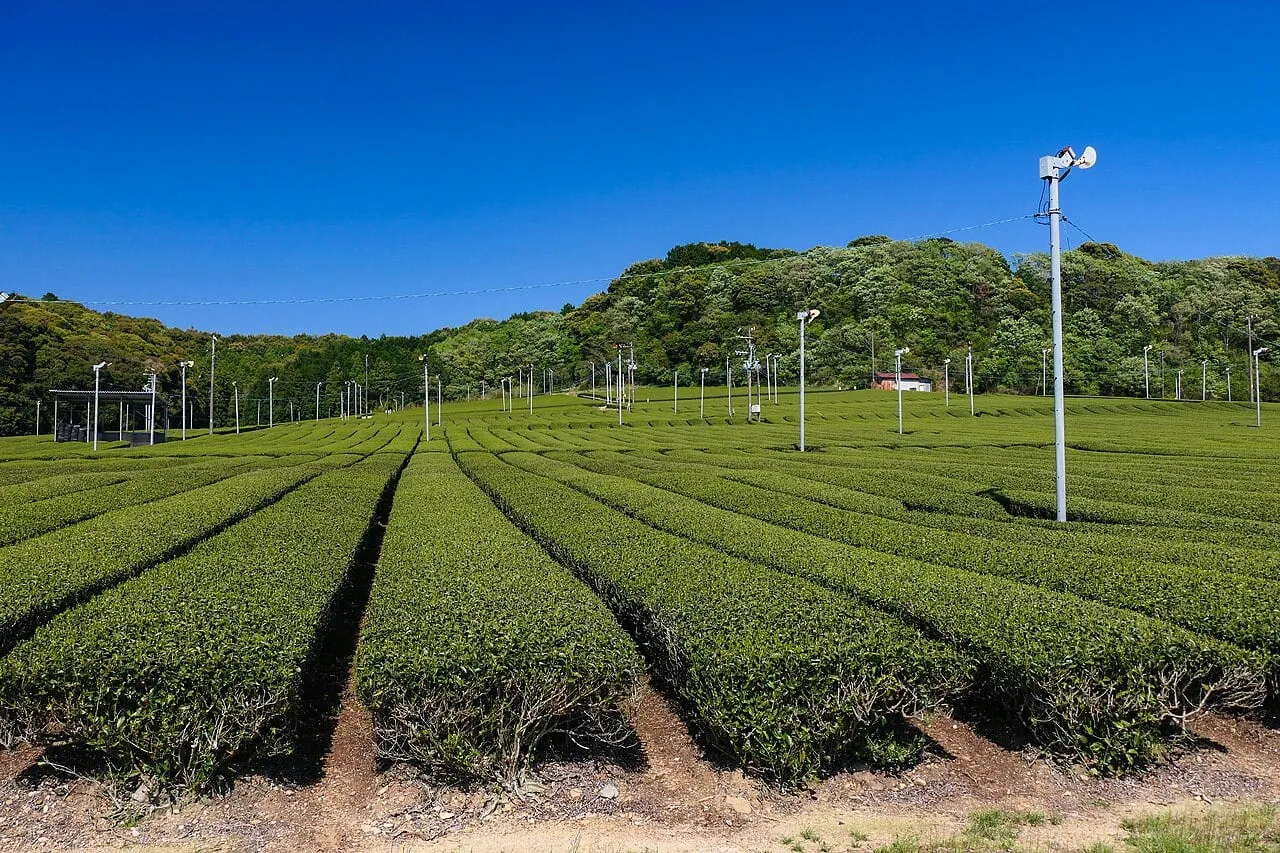
Look beyond the regional name to the garden’s management. This Fukuroi view brings together pruned bushes, access rows and numerous fans. A tea garden is a working landscape with cultivation and environmental-management equipment, as well as a view of green hills.
Core Cultivars: Yabukita and Diversity
The Japanese tea landscape is dominated by a single cultivar, Yabukita, which occupies roughly 75 % of planted area[2]. Discovered in 1908 in Shizuoka and widely promoted from the 1950s onward, Yabukita is valued for:
- Uniform budding, which suits mechanised harvesting;
- High yield per unit area;
- Broad process suitability, producing fragrant, fresh Sencha;
- Moderate cold tolerance, performing well in central and southern Japan.
Yet this monoculture risks flavour homogeneity and pest vulnerability. In recent years Japan’s Ministry of Agriculture, Forestry and Fisheries (MAFF) and regional tea research stations have actively promoted diversified cultivars:
- Yabukita: the mainstream standard;
- Saemidori: high amino acids, low astringency, suited to Gyokuro and premium Sencha;
- Okumidori: excellent for deep steaming, yielding a deep-green liquor;
- Fukumidori: high aroma, suited to Sencha and Kabusecha;
- Asatsuyu: a native cultivar with outstanding umami, sometimes called “nature’s Gyokuro.”
Cultivar choice directly affects the biochemical profile of the finished tea: high-theanine varieties (e.g. Saemidori) are preferred for shaded Gyokuro, while aromatic varieties are better for ordinary Sencha[2][3].
Steaming: The Soul of Japanese Green Tea
Steaming vs pan-firing: fixation shapes colour and taste
How long to steam?
Switch levels: leaf shape and liquor.
Asamushi: fresh, a little brisk
- 100 °C steam for 20–40 s
- Leaf stays whole: long needles
- Bright yellow-green liquor
Short steaming keeps the leaf whole and the aroma lifted.
Sources & limits
Times, liquor and taste follow the steaming-level table in the Japanese tea article [3][4]. Deep steaming is a processing style, not a grade.
The dial shows the upper time of each level out of 120 s; leaf and liquor are schematic.
The interactive diagram above shows how Japan’s core fixation craft—100 °C steam fixation—shapes liquor colour, mesophyll softening and flavour profile. Light steaming (20–40 s) preserves higher floral-vegetal aroma and intact needles; deep steaming (80–120 s) softens the leaf tissue, yielding a deep emerald liquor rich in suspended particles.
Fixation (de-enzyming) is the critical step that halts enzyme activity and prevents oxidation in green tea. Chinese green tea relies mainly on pan-firing at 180–220 °C; direct contact with the hot pan triggers Maillard and caramelisation reactions, producing chestnut and bean aromas. Japanese green tea uses steaming at 100 °C, with saturated steam penetrating the leaf layer for 20–120 seconds[3][4].
The core advantages of steaming are:
- High chlorophyll retention: steam heats evenly without local overheating, so chlorophyll degradation is minimal and the finished tea stays vivid green;
- Amino-acid preservation: steam rapidly inactivates polyphenol oxidase (PPO) and peroxidase (POD), reducing heat denaturation of proteins and amino acids and preserving umami compounds;
- Distinct aroma type: steamed teas show marine, seaweed-like and fresh green notes, whereas pan-fired teas lean toward chestnut and floral aromas[3][4].
Steaming depth and classification
Japanese teas are classified by steaming duration, which directly affects liquor colour and taste:
| Steaming type | Duration | Liquor colour | Taste | Representative teas |
|---|---|---|---|---|
| Light (Asamushi) | 20–40 s | Bright yellow-green | Fragrant, fresh, slightly astringent | Premium Sencha, Gyokuro |
| Normal (Futsumushi) | 40–60 s | Clear green-yellow | Balanced, aroma and flavour in harmony | Mainstream Sencha |
| Deep (Fukamushi) | 80–120 s | Deep vivid green | Rich, mellow, low astringency, prone to sediment | Shizuoka Fukamushi Sencha |
Values are representative ranges; actual practice varies with leaf condition, equipment type and craft experience[3][4].
Fukamushi-cha (deep-steamed tea) is a Shizuoka specialty. The extended steaming softens the leaf tissue so that more cell sap is released during rolling; the finished tea is more broken, producing a deep-green, intensely flavoured liquor with more sediment. Research shows that deep steaming increases the solubility of sugars and amino acids while thermally degrading some catechins, thereby reducing astringency[4].
Post-steaming steps
After steaming, leaves pass through cooling, rolling, shaping and drying. Rolling distributes tea juices over the leaf surface, promoting the extraction of soluble compounds during brewing; drying further reduces moisture to below 5 % for safe storage. Finished Sencha is usually kept at or below about 5 % moisture[2].
Shading Cultivation: The Secret of Gyokuro and Matcha
Biochemical mechanisms of shading
Shading before harvest
Switch cover: light, leaf, tea.
Open field: sencha
- No cover, full sun
- Sun: more theanine → catechins
- Yellow-green leaf
- Sencha: fresh, slightly brisk
Strong light drives carbon metabolism: more catechins, more bite.
Sources & limits
Days and cover follow the shading table in the Japanese tea article; Japan’s farm ministry (MAFF) describes gyokuro as covered for about 20 days and kabusecha for about a week. Taste still varies with cultivar, season and brewing.
Light rays and blue dots (theanine from the roots) are schematic, not measured.
Shading cultivation uses covering material to limit light reaching the bushes. Gyokuro, Kabusecha and Tencha differ in their covering arrangements and subsequent processing, distinctions used in MAFF’s overview[7]. Read the cultivation treatment separately from changes inside the leaf:
- Shading and umami: MAFF’s overview relates Gyokuro’s umami to restricted light, reduced formation of bitter/astringent components, and the movement of root-produced theanine into the leaves[7]. This connects cultivation with a tea type; it does not make a garden photograph a composition test or establish a fixed concentration multiplier.
- Decreased catechin content: Catechins (notably the ester-type EGCG and ECG) are the main source of astringency. Shading suppresses their synthesis, making the liquor markedly sweeter and more mellow[5][6].
- Increased chlorophyll and lutein: Shade promotes the synthesis of chlorophyll b and light-harvesting pigment complexes, deepening leaf colour and liquor tone[5].
- Caffeine changes: The effect of shading on caffeine is complex; some studies report slightly higher caffeine in shaded leaves, possibly linked to enhanced nitrogen metabolism[5][6].
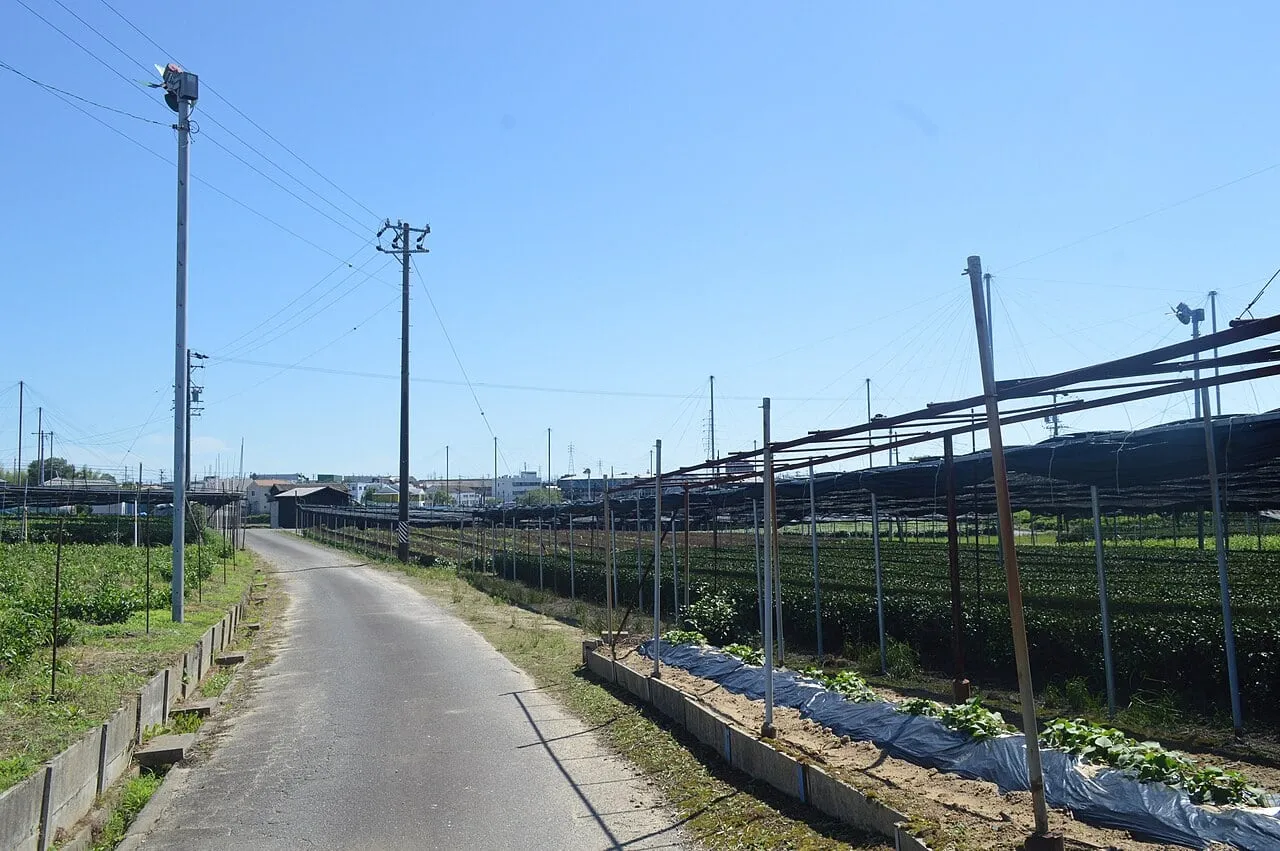
Shading begins with a physical arrangement: supports above the bushes carry material that can be spread or gathered. The Nishio scene in Aichi shows supports and black covering material above the tea canopy. First locate the cover relative to the bushes, then consider the duration of its use.
Shading days and tea-type correspondence
| Shading days | Cover type | Tea type | Flavour character |
|---|---|---|---|
| 0 days | None | Sencha | Fresh, brisk, slightly astringent, fragrant |
| 7–10 days | Black net | Kabusecha | Rich, mellow, reduced astringency, between Sencha and Gyokuro |
| 20+ days | Black net / reed screen | Gyokuro | An umami-rich tendency; varies with the tea and preparation |
| 20+ days (Tencha) | Black net / reed screen | Matcha | Often deep green with covered aroma; foam also depends on preparation |
Values are representative ranges; actual practice varies with cultivar, season and cover material[2][5].
Gyokuro uses shade-grown material; MAFF introduces preparation with water at 50–60 °C[7]. This is one reference for a cooler brewing style, not a guarantee that heating otherwise destroys umami molecules. Matcha is made by milling Tencha: the leaves are steamed and dried without rolling, then stems and veins are removed before grinding[7]. Distinguishing an infusion from leaf powder helps explain kyusu brewing and matcha whisking as different preparations.
The Spectrum of Japanese Tea
Sencha
Japan’s largest-volume and most widely consumed tea, accounting for more than half of national output[2]. Made from one-bud-two-to-three-leaf pluckings of Yabukita and other cultivars, processed by steaming, rolling and drying. Premium Sencha is fine, tight and vivid green, with a bright yellow-green liquor, fresh marine fragrance and brisk, slightly astringent taste. Brewing temperature 70–80 °C, time 60–90 s[2].
Gyokuro
Gyokuro uses young leaves grown under shade before harvest; MAFF describes covering the growing spring shoots for about 20 days[7]. Connect that cultivation treatment with the dry leaf and the brewed sample. Umami, bitterness and liquor colour still vary with the tea and preparation, rather than defining one universal quality grade.
Matcha
Produced from shaded Tencha that is ground to a 5–20 μm powder on a stone mill. Because Matcha is not rolled, it is consumed as the entire leaf suspended in water. High-quality Matcha is vivid green, with a clean marine fragrance, a rich, fresh taste and fine, persistent foam. Matcha is not only a beverage but the central medium of Japanese tea ceremony (Sadō) and a major ingredient in modern baking and beverage industries[1][2].
Kabusecha
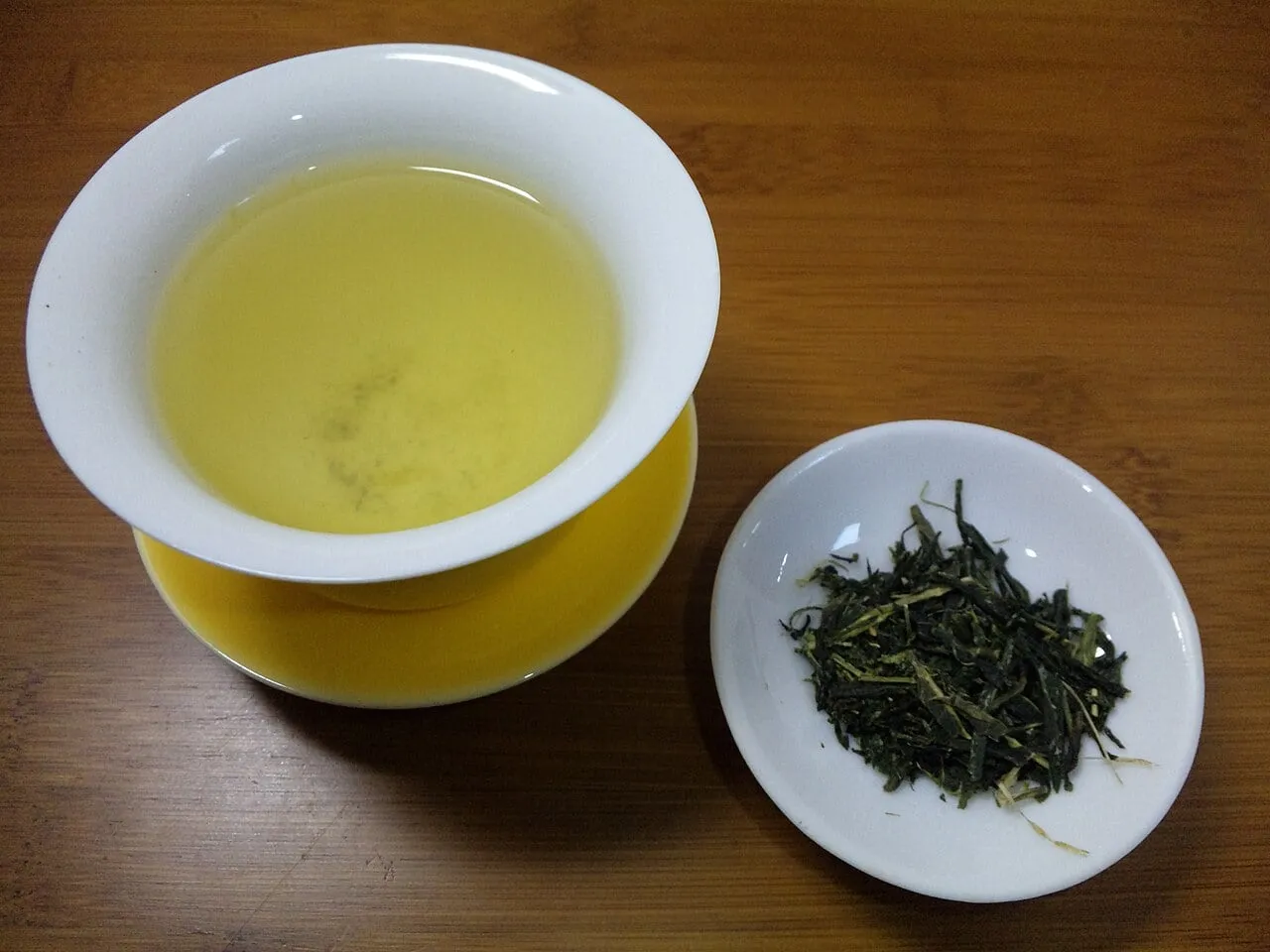
MAFF introduces Kabusecha as tea shaded for roughly a week before harvest[7]. Observe the dry-leaf pieces separately from the brewed liquor before smelling and tasting. This sample connects a cultivation term with a visible product; its flavour still depends on cultivar, manufacture and brewing.
Bancha
Made from more mature summer or autumn leaves, or from larger leaves and stems. Bancha is lower in caffeine and lighter in taste, with a distinctive coarse sweetness and rustic aroma. In Japan it is commonly drunk as an everyday after-meal tea.
Kukicha (Stem Tea)
Made from stems and stalks separated during refining. Kukicha is naturally low in caffeine and has a light, sweet taste with a unique “stem fragrance.” High-grade Kukicha (such as Gyokuro Kukicha) uses tender stems from Gyokuro production.
Hōjicha (Roasted Tea)
Sencha, Bancha or Kukicha is roasted at around 200 °C. During roasting some caffeine sublimates and is lost, while Maillard reactions generate caramel and roasted-nut aromas. Hōjicha is reddish-brown in leaf and orange-yellow in liquor, with a mellow, sweet taste and almost no astringency. Its low caffeine content makes it suitable for evening drinking and for children[2].
Genmaicha (Brown-Rice Tea)
A blend of Sencha or Bancha with roasted brown rice (genmai). The rice contributes a distinctive toasted-grain sweetness and lowers the proportion of tea leaf, thereby reducing caffeine. Genmaicha is a classic populist Japanese tea, often served as an everyday meal tea.
Flavour and Quality Formation
The flavour core of Japanese green tea can be summed up in four words: fresh, green, clear, mellow. The material basis is:
- Umami: Derived mainly from L-theanine and glutamic acid, maximised by shading and low-temperature brewing;
- Green colour: From the ratio of chlorophyll to carotenoids, reinforced by steaming and deep-steaming techniques;
- Freshness: From low-boiling volatiles such as cis-3-hexenol (leaf alcohol) and dimethyl sulphide, preserved by rapid cooling after steaming;
- Mellow body: From soluble sugars and amino acids balancing catechin astringency, enhanced by both shading and deep steaming.
Japanese Sencha & Gyokuro
Green · Steamed Green TeaThe flavour profile is schematic; actual values vary with origin, cultivar, steaming depth, shading days and brewing parameters.
Common Myths & Scientific Clarifications
Myth 1: “Does Japanese tea consist almost entirely of powdered Matcha?”
Scientific Clarification: Matcha represents less than 5 % of Japan’s total tea production, whereas loose-leaf Sencha remains the true mainstream standard [2][7]. Official Ministry of Agriculture (MAFF) statistics show that unshaded, field-grown Sencha constitutes well over half of national output, harvested and processed through steaming, three-stage rolling, and shaping into dark green needles [2][7]. Matcha is derived from Tencha, which requires 20–30 days of 90 % canopied shade (tana-eishaku) prior to harvest to suppress catechins, followed by steaming, drying without rolling, deveining, and slow granite stone-milling into a 5–10 micron fine powder [2][5]. For everyday hydration, Japanese consumers drink brewed Sencha, reserving whisked Matcha for tea ceremonies and sweets.
Myth 2: “Can premium Gyokuro and high-grade Sencha be brewed with near-boiling water like Chinese green tea?”
Scientific Clarification: Absolutely not; high water temperatures ruin the delicate umami balance of shaded Japanese green tea [3][5]. Shading Gyokuro for 20+ days inhibits photosynthetic enzymes, halting the conversion of L-theanine into bitter catechins, while intensive steaming severely weakens leaf cell walls [5]. Brewing at 80–90 °C causes instantaneous surges of astringent esterified catechins and caffeine, drowning out fragile amino acids; conversely, L-theanine dissolves readily at cooler temperatures [3][5]. To appreciate Gyokuro’s signature brothy umami, steep 6 g in 50–60 ml of cooled water (50–60 °C) for 90–120 seconds in a porcelain kyusu.
Myth 3: “Is deep-steamed Fukamushi Sencha intrinsically superior in quality to lightly steamed Asamushi?”
Scientific Clarification: Steaming duration reflects terroir adaptations and stylistic processing choices rather than hierarchical quality grading [3][4]. Traditional light steaming (Asamushi, 20–40 s) is applied to tender spring shoots from high-altitude or shaded mountain terroirs to preserve whole needle shapes and ethereal, fresh floral fragrances [3]. Conversely, deep steaming (Fukamushi, 60–120 s) was developed for sun-drenched coastal plains like Makinohara, where thicker leaves contain higher tannins; prolonged steaming breaks down cell walls, reducing bitterness and releasing suspended chlorophyll particles that produce an opaque, vibrant green cup [3][4]. Choose Asamushi for clarity and refined aroma, and Fukamushi for rich, mellow body without astringency.
Myth 4: “Are Hōjicha and Genmaicha completely caffeine-free, making them entirely unrestricted for infants and pregnant women?”
Scientific Clarification: Neither tea is caffeine-free, though both contain significantly lower concentrations than standard Sencha [5]. Hōjicha is roasted at approximately 200 °C, which sublimates a minor fraction of surface caffeine, and it is traditionally made from mature autumn bancha leaves or fibrous tea stems (kukicha) that naturally accumulate fewer purine alkaloids [5]. Genmaicha reduces caffeine intake simply through physical dilution, blending roughly 50 % green tea leaves with popped roasted brown rice [5]. While each provides a mild, stomach-gentle alternative with roughly half the caffeine of standard green tea, sensitive individuals and expectant mothers should still monitor evening consumption rather than treating them as pure water.
Brewing Guide
| Tea type | Water temperature | Leaf-to-water ratio | Time | Vessel |
|---|---|---|---|---|
| Sencha | 70–80 °C | 6 g / 180 ml | 60–90 s | Kyusu or porcelain gaiwan |
| Fukamushi Sencha | 70–80 °C | 6 g / 180 ml | 40–60 s | Kyusu (fine mesh) |
| Gyokuro | 50–60 °C | 6 g / 60 ml | 90–120 s | Small Kyusu or tasting cup |
| Matcha | 70–80 °C | 2 g / 70 ml | Whisk immediately | Chawan (tea bowl) and Chasen (bamboo whisk) |
| Kabusecha | 60–70 °C | 6 g / 180 ml | 60–90 s | Kyusu |
| Hōjicha | 90–100 °C | 6 g / 180 ml | 30–60 s | Kyusu or clay pot |
| Genmaicha | 90–100 °C | 6 g / 180 ml | 30–60 s | Kyusu |
Values are representative ranges; actual parameters vary with personal taste and tea grade. Japanese teas are usually brewed 2–3 times; the second infusion can use a slightly shorter time and slightly higher temperature.
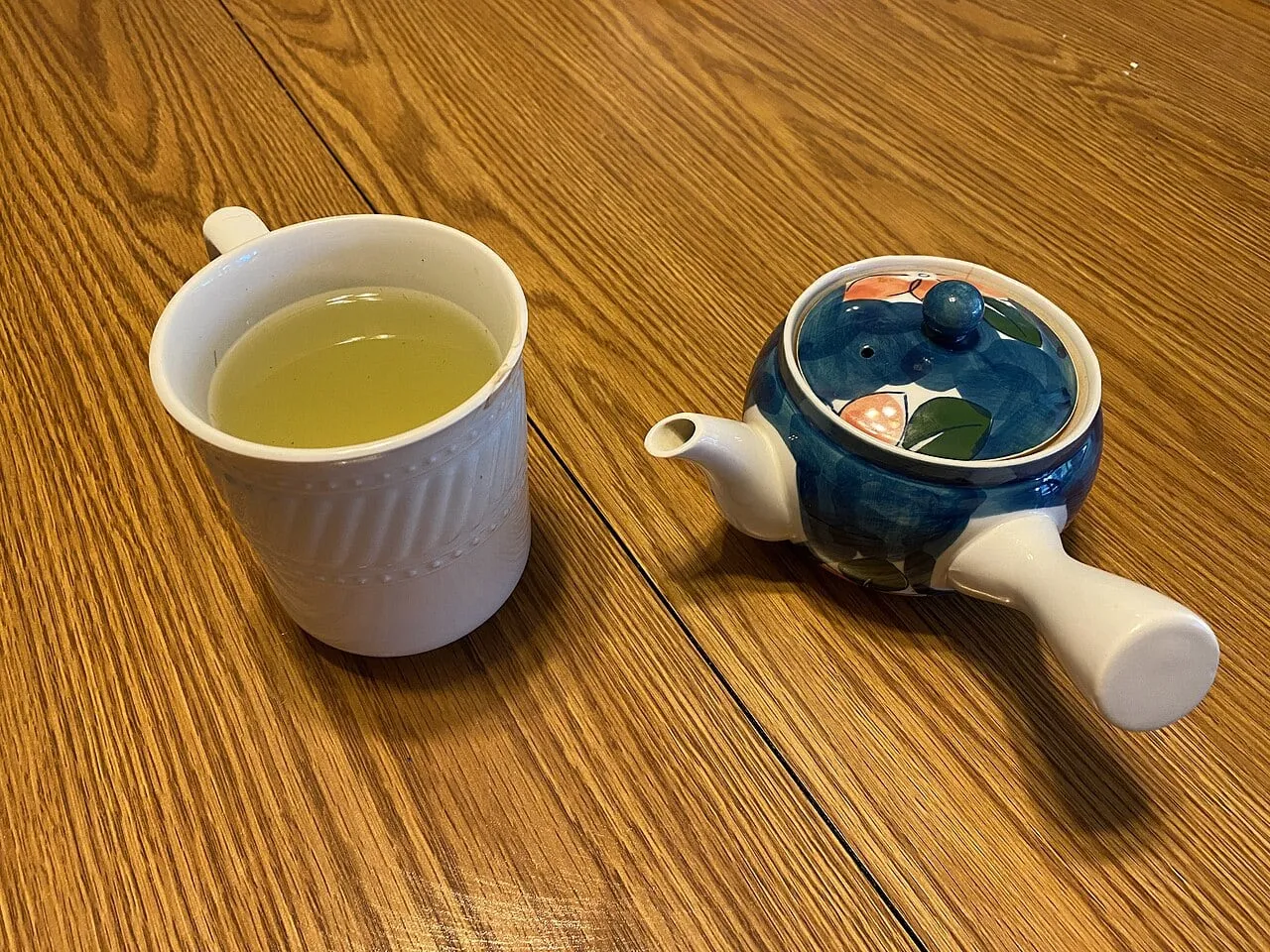
A brewing record brings the tea type into a specific cup. The photographer describes this Gyokuro as brewed in a kyusu at 60 °C for 90 seconds. Treat it as one recorded preparation to compare with your own leaf mass, water volume and time, rather than a universal prescription.
Related entries
- The Science of Green Tea Fixation — enzymatic comparison of steaming and pan-firing
- Composition & Flavour · the ratio — how theanine and catechins determine freshness and astringency
- China’s Four Great Tea Regions — regional comparison between Japanese and Chinese green teas
- Representative Craft · Longjing — the Chinese pan-fired green-tea benchmark
References
- R-118 — 桑田忠亲 (1979).《日本茶道史》. 河出书房新社. ISBN: 978-4309220970.
- R-149 — 日本农林水产省. 《茶の生产·流通消费动态》. 2024. / JAS 标准 《日本农林规格·绿茶》. https://www.maff.go.jp/j/jas/jas_kikaku/kikaku_tea.html
- R-150 — 日本茶中央会. 《日本茶製法の科学》. 2020. / 静冈县茶业试验场. 《蒸青绿茶の製造と品质》. 2019.
- R-060 — Öztürk, B., et al. (2016). Change of enzyme activity and quality during the processing of Turkish green tea. LWT-Food Science and Technology, 65, 318–324. https://www.sciencedirect.com/science/article/abs/pii/S0023643815300852
- R-151 — Ashihara, H., et al. (2013). Biosynthesis and catabolism of caffeine in tea plants. / 日本茶中央会. 《覆下栽培の科学:茶氨酸の蓄积と儿茶素の变动》. 2021.
- R-152 — Tai, Y., Ling, C., Wang, H., et al. (2019). Comparative Transcriptomic Analysis Reveals Regulatory Mechanisms of Theanine Synthesis in Tea (Camellia sinensis) and Oil Tea (Camellia oleifera) Plants. Journal of Agricultural and Food Chemistry, 67(36), 10235–10244. https://doi.org/10.1021/acs.jafc.9b02295
- R-381 — 農林水産省. (2022). 味わいや香りもさまざまなお茶の種類. https://www.maff.go.jp/j/pr/aff/2204/spe1_03.html — Sencha, Gyokuro, Kabusecha and Tencha sections checked 2026-10-27; supports cultivation and manufacturing comparisons, not every biochemical quantity in this article.
Article Knowledge Network
Explore the connections between the teas, processes and flavours in this article.