
Start with the essentials
Ceylon remains a familiar origin name for Sri Lankan tea, covering high-, mid- and low-grown teas and several regional styles. Why might a package name Uva or Kandy, an elevation, or letters such as OP and BOP? These refer to different kinds of information.
This article connects elevation and monsoons with material and manufacture, then explains regional flavour clues, Orthodox and CTC methods, grading names and the Lion Logo.
Three key points
- Elevation works with seasonal conditionsBroad growing bands are a starting point; region, slopes and season add detail.
- Grade letters describe a systemOP and BOP help identify product form and specification within their context.
- Origin marks and tasting serve different purposesProvenance information and personal flavour preferences both need attention.
Connect the region with the tea
Separate region or elevation, grade letters and origin marks on a package. Brew for its actual leaf form, then record aroma, astringency and body to connect label information with the cup.
How altitude shapes flavour: the polyphenol–amino-acid trade-off
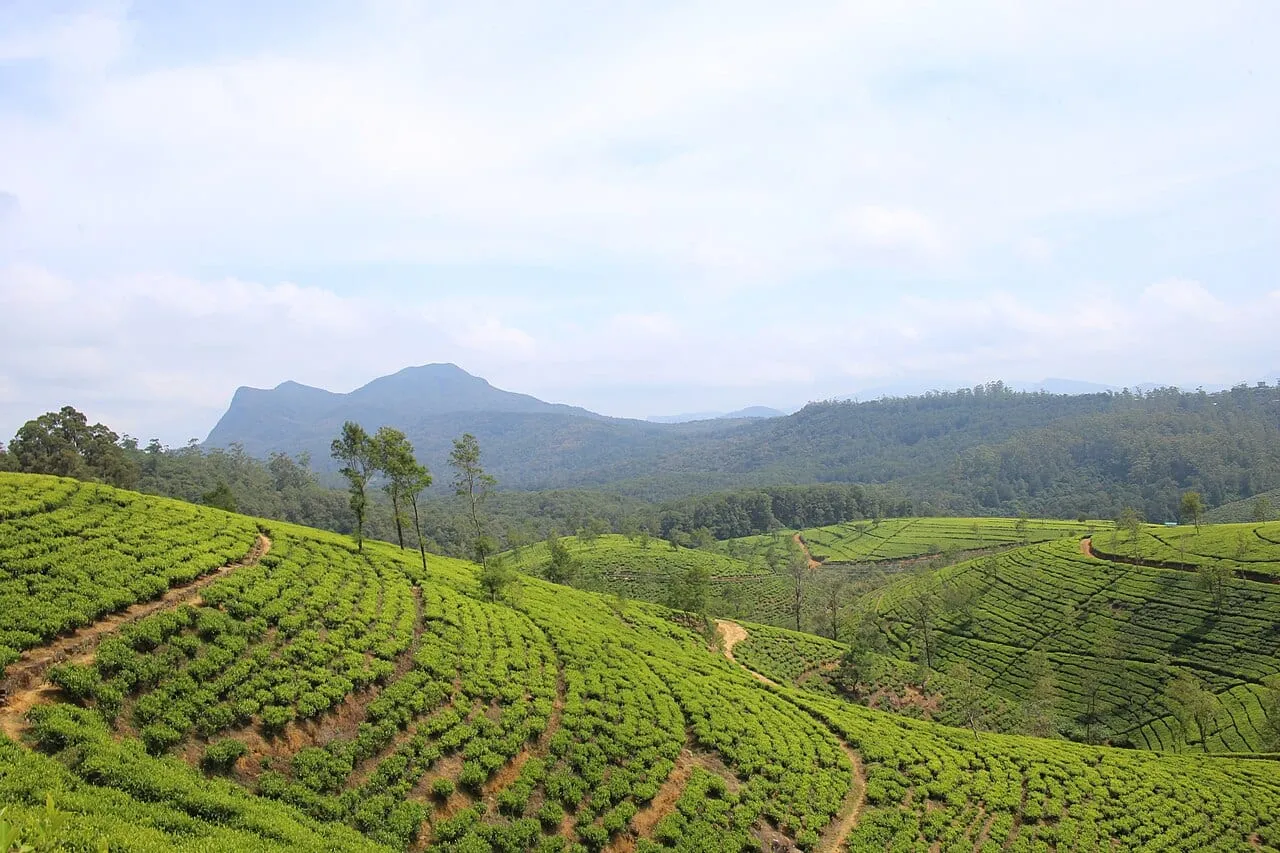
Ceylon tea by elevation
Switch belts: climate, leaf, cup.
High grown: cool, slow growth
- Above 1,200 m, central hills
- Mean 10–18 °C; mist, cool nights
- Slow growth: more amino acids
- Golden, bright, floral cup
Amino acids rise more than polyphenols: a fresh, brisk cup.
Districts & sources
- Primary Growing Districts
- Nuwara Eliya, Uva, Dimbula
Mechanisms: Based on Sri Lanka Tea Board official legal standards (R-141, R-134). Central mountain massifs block monsoon winds to induce Foehn winds in Uva (July–Sept), synthesizing methyl salicylate (wintergreen notes); alpine cold preserves high-pitched terpenes and golden clarity.
Note: Dimbula quality season peaks in Jan–March, while Uva quality season peaks in July–Sept, creating a dynamic seasonal flavor rotation across the island.
One schematic slope; leaf size and liquor colour are relative.
Altitude influences tea quality through a temperature- and light-driven biochemical trade-off.
Lower temperatures → slower growth → richer accumulation. At elevations above 1 200 m, where mean temperatures range from 10–18 °C, the tea bush’s growth cycle is significantly extended. Under cold stress, the plant accumulates more amino acids and soluble sugars as protective osmolytes, which translate into the fresh, sweet and mellow mouthfeel of the cup[4].
Stronger UV → higher polyphenols, but amino acids rise even faster. UV intensity increases with elevation, stimulating the synthesis of tea polyphenols as photoprotectants. However, research on Sri Lankan high-grown estates shows that the increase in amino acids (especially theanine) often outpaces that of polyphenols, so the polyphenol / amino-acid ratio actually decreases. This is the biochemical basis for the pronounced freshness of high-grown teas[4][5].
Wide diurnal temperature range → aroma enrichment. In Nuwara Eliya, day–night temperature differences can reach 15–20 °C. Sugars and aroma precursors accumulated during daytime photosynthesis are consumed more slowly at night, leading to higher concentrations in the leaf. This is also why high-grown teas frequently display marked floral and honey notes [5].
Monsoon and the Uva seasonal quality: weather as a flavour signature
Sri Lanka has a tropical monsoon climate governed by two alternating wind systems:
Two monsoons, two seasons
Switch monsoons: wet side, dry side.
SW monsoon: wet west, dry Uva
- May–Sep, from the Indian Ocean
- Rain falls on the SW slopes
- Central hills block the moisture
- Uva in the lee: Jul–Sep season
Same hills, opposite sides: Uva’s seasonal aroma comes in its dry spell.
Districts & sources
Mechanisms: Based on Sri Lanka Tea Board official legal standards (R-141, R-134). Central mountain massifs block monsoon winds to induce Foehn winds in Uva (July–Sept), synthesizing methyl salicylate (wintergreen notes); alpine cold preserves high-pitched terpenes and golden clarity.
Note: Dimbula quality season peaks in Jan–March, while Uva quality season peaks in July–Sept, creating a dynamic seasonal flavor rotation across the island.
Schematic winds and hill outline; outline from Natural Earth 1:50m.
- South-west monsoon (May–September): brings heavy rain to the south-west slopes and lowlands, while Uva and the other highlands east of the central massif lie in a rain shadow and remain relatively dry and cool.
- North-east monsoon (October–January): dry continental air picks up moisture as it crosses the Palk Strait and brings rain to the east, while Dimbula and Nuwara Eliya on the western side enter their dry quality season (January–March).
Uva seasonal quality is the most distinctive flavour phenomenon in Ceylon tea. During the July–September south-west monsoon (Uva lies in its rain shadow), Uva estates experience a sharp drop in temperature, lower humidity and stronger sunshine. The bush, oscillating between stress and recovery, synthesises large amounts of linalool, geraniol and methyl salicylate—aroma compounds that give Uva tea its unmistakable cooling mint and rose character[6]. This seasonal quality cannot be replicated by processing; it is a weather-written signature of terroir.
Plucking and processing: Orthodox and CTC side by side
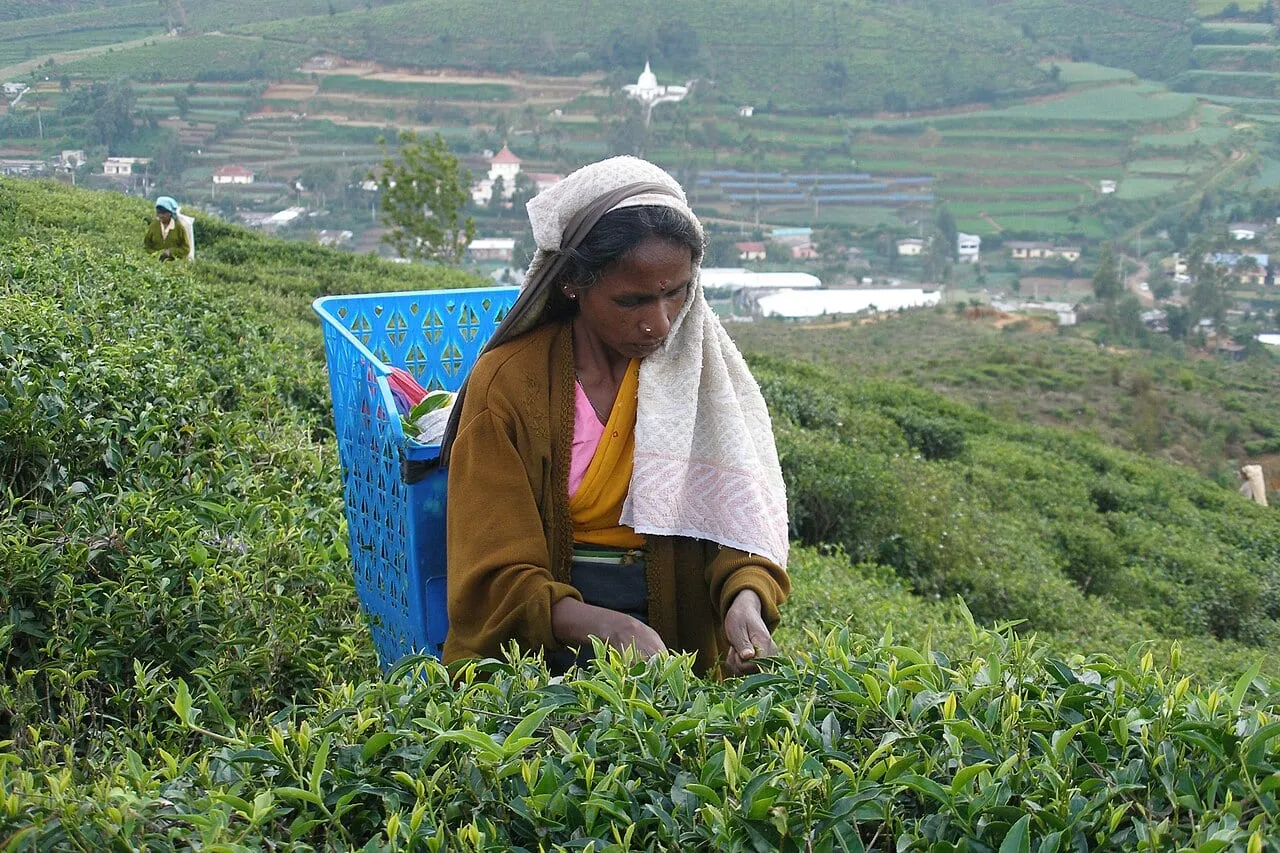
From shoots to the collection basket
The plucker selects shoots and gathers them in a basket. The official process description uses a bud with two leaves to explain hand-plucked material, followed by withering in factory troughs. Selecting the material and then managing water loss sets up the rolling stage[8].
Orthodox
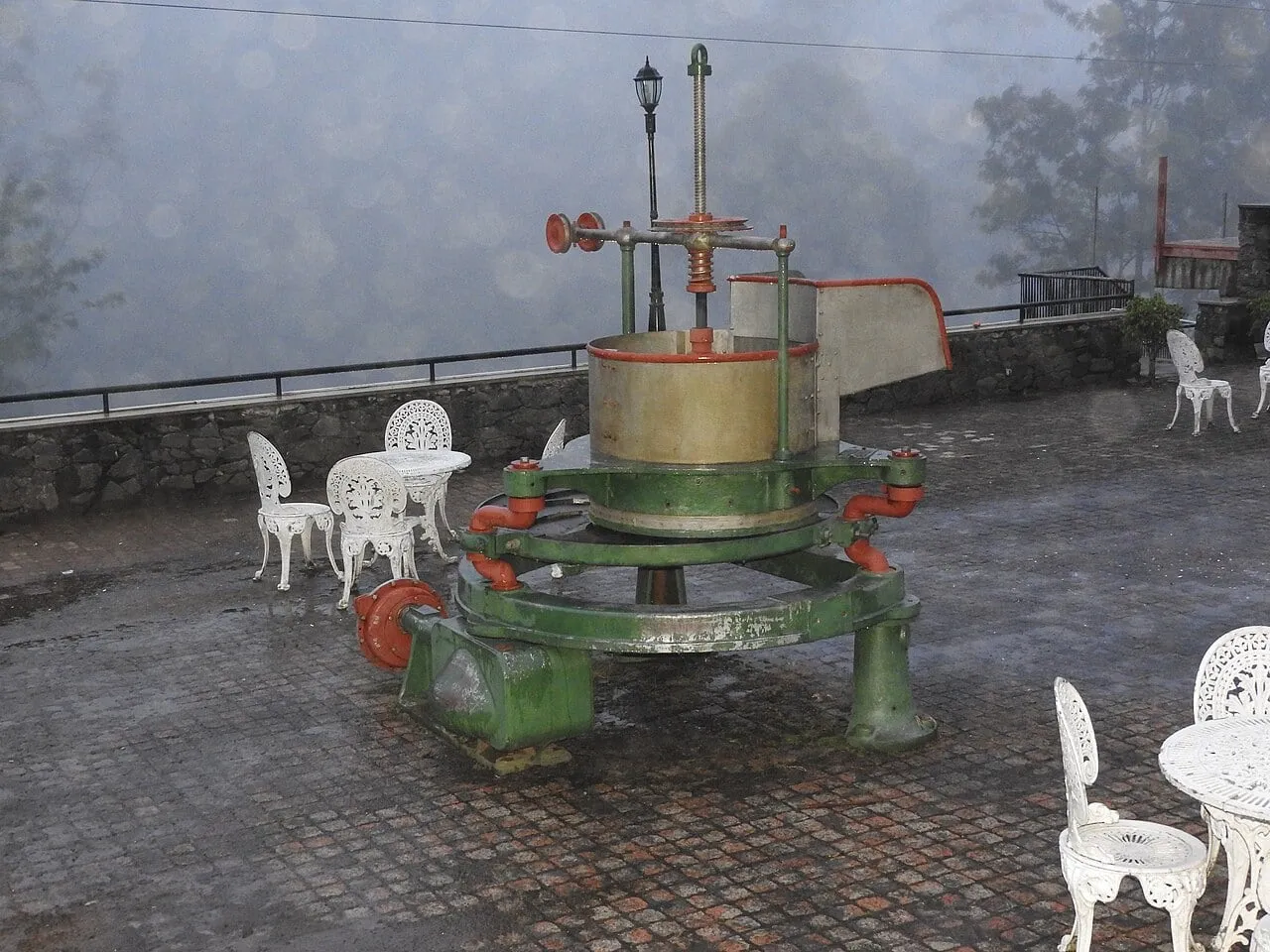
The traditional route connects withering, rolling, oxidation and drying. Withered leaves enter a rolling machine, where twisting and tissue disruption prepare them for subsequent oxidation. Rolling therefore affects both leaf shape and contact between compounds inside the leaf[8].
With the old machine, first identify the cylinder holding the leaves and the cap above it, then compare this with the toothed rollers used in CTC. Equipment structure offers a clearer starting point than treating the two methods as a simple quality ranking.
CTC (Crush-Tear-Curl)
CTC mechanically macerates withered leaves into smaller particles, producing a different shape from traditional rolling[7]. Connect a particular tea’s processing method with its dry-leaf appearance and brewing behaviour; the names CTC and Orthodox alone do not establish quality.
Sorting follows drying. The official process describes separating tea by size and grade before weighing and packing[8]. Read terms such as OP, BOP, Fannings and Dust in relation to leaf form and particle size, separately from judging aroma and flavour.
Quick Guide to International Ceylon Leaf-Grade Codes
In Sri Lankan and international black-tea trade, letter codes on packaging (OP, FBOP, BOPF) describe post-drying sieve size, leaf wholeness, and the presence of golden tips, rather than certifying estate elevation or overall quality[1][8]:
| Grade Code | Full Name | Leaf Form & Particle Profile | Extraction Speed & Typical Use |
|---|---|---|---|
| OP | Orange Pekoe | Long, wiry whole-leaf strips, typically without golden tips | Moderate extraction speed; well suited to straight teapot brewing, common in mid- and high-grown Orthodox teas |
| FOP / FBOP | Flowery (Broken) Orange Pekoe | Whole leaf (FOP) or semi-broken leaf (FBOP) containing silvery/golden terminal buds (tips) | Expresses tippy honey-floral notes; FBOP infuses faster and fuller than whole-leaf OP |
| Pekoe (P) | Pekoe | Shorter, more tightly twisted curl-like leaves than OP | Produces a rounded, medium-to-full body; widely made across Nuwara Eliya, Kandy, and Ruhuna |
| BOP | Broken Orange Pekoe | Evenly broken leaf particles with substantially larger surface area | Releases bright red colour and brisk strength in 3–4 min; versatile for both straight drinking and milk tea |
| BOPF / Fannings | Broken Orange Pekoe Fannings | Finer flat particles smaller than BOP | Rapid extraction and deep liquor colour; prized for premium tea bags and strong milk-tea bases |
| D (Dust) | Dust | Finest sieve fraction of tiny tea particles | Extracts high strength within seconds; used in commercial tea bags and spiced/pulled milk teas |
Sri Lanka’s Seven Official Tea Districts: Elevation, Monsoon & Cup Profile
The Sri Lanka Tea Board recognises seven agro-climatic geographical indication districts spanning distinct elevation belts and monsoon aspects[1][3][5]:
| Official District | Elevation Category & Range | Climate & Peak Monsoon Window | Typical Liquor Colour & Sensory Profile |
|---|---|---|---|
| Nuwara Eliya | High Grown (~1 800–2 000 m+) | Coolest highland plateau with wide diurnal swings; peak dry-weather quality in Jan–Mar | Pale golden-champagne liquor; delicate highland floral and cypress notes, brisk and light-bodied, best drunk straight |
| Udapussellawa | High Grown (~1 200–1 700 m) | Bridges Nuwara Eliya and Uva; experiences two quality windows (Jan–Mar and Jul–Sep) | Rosier, slightly darker liquor than Nuwara Eliya, combining crisp highland aromatics with medium structure |
| Dimbula | High Grown (~1 100–1 600 m) | Western slopes of the central massif; dry cool Jan–Mar winds produce classic seasonal teas | Bright orange-red liquor with crisp citrus, jasmine, and cypress notes and balanced briskness |
| Uva | High Grown (~1 000–1 500 m) | Eastern slopes; dry, gusty Jul–Sep winds trigger the celebrated “Uva seasonal quality”[6] | Bright coppery-red liquor; seasonal flushes display unmistakable cooling mint, wintergreen, and rose-like terpenoids |
| Kandy | Mid Grown (~600–1 200 m) | Birthplace of commercial Ceylon tea (home to Loolecondera Estate); shaped by south-west monsoon | Bright coppery liquor with rounded malty-fruity warmth and medium body; works straight or with milk |
| Sabaragamuwa | Low Grown (sea level to ~800 m) | Borders the Sinharaja rainforest; warm, humid conditions drive rapid shoot growth | Jet-black dry leaf; deep reddish-brown liquor with smooth caramel-malt sweetness and full body |
| Ruhuna | Low Grown (sea level to ~600 m) | Southern coastal lowlands; warm sun and rich soils produce polyphenol- and sugar-rich shoots | Glossy black leaf often rich in golden tips; dark, syrupy, full-bodied liquor prized for straight tippy grades or milk tea |
Certification: the Lion Logo and GI protection
Sri Lanka was among the first tea-producing countries to establish a national origin-certification system.
Lion Logo: Administered by the Sri Lanka Tea Board, the Lion Logo may only be used on tea that is 100 % grown, processed and packed in Sri Lanka. It is the core mark of Ceylon-tea authenticity, protected under international intellectual-property law; any tea blended or repacked in a third country is ineligible[3].
ISO and organic certifications: The industry widely holds ISO 22000 and HACCP certifications, and a growing number of estates carry USDA Organic, EU Organic and Rainforest Alliance labels to meet demand in Europe and North America.
Flavour spectrum: from bold to fresh
The flavour differences across Ceylon tea are the combined outcome of altitude, monsoon, processing and cultivar:
- Low Grown (0–600 m): mean temperature 24–30 °C, high polyphenols and relatively lower amino acids, high polyphenol / amino-acid ratio, producing a bold, astringent, deep-red liquor. It is the backbone of English Breakfast and Assam–Ceylon blends [5].
- Mid Grown (600–1 200 m): mean temperature 18–24 °C, moderate polyphenol / amino-acid ratio, orange-red and bright, mellow and well-balanced with rich aroma. Kandy mid-grown teas work both straight and with milk [5].
- High Grown (1 200–2 500 m): mean temperature 10–18 °C, enriched amino acids and aroma compounds, low polyphenol / amino-acid ratio, bright golden liquor, fresh and high-aromatic with floral, honey and fruity notes. Nuwara Eliya and Uva seasonal teas are the flagship high-grown specialties, best appreciated straight[5][6].
Figures are representative ranges; actual values vary by estate location, year, micro-climate and processing.
Common Myths & Scientific Clarifications
Myth 1: “Is Ceylon black tea uniformly bold, astringent, and suitable only for milk tea?”
Scientific Clarification: Ceylon tea covers a diverse spectrum determined by elevation gradients rather than a single harsh profile [5]. In lowland districts like Ruhuna and Sabaragamuwa (0–600 m), hot equatorial climates foster rapid catechin synthesis and high polyphenol-to-amino-acid ratios, yielding robust, deep-red infusions perfectly structured for milk [5]. Conversely, in high-grown terroirs above 1,800 m such as Nuwara Eliya and summer Uva, cool alpine mists lower astringency while concentrating fragrant monoterpenes and amino acids [5][6]. These mountain teas pour luminous golden liquors offering delicate citrus, geranium, and eucalyptus notes tailored for plain drinking. Match lowland broken grades with milk, but sip high-grown single estates straight.
Myth 2: “Does the ‘Lion Logo’ on packaging guarantee that a Ceylon tea is highest grade?”
Scientific Clarification: The Ceylon Lion Logo is a legal guarantee of geographic authenticity and domestic packing rather than a tier of quality [3]. Overseen by the Sri Lanka Tea Board, the symbol mandates two strict requirements: the tea must be 100 % grown and manufactured in Sri Lanka, and it must be packed directly into consumer units within the island to prevent adulteration abroad [3]. Both affordable everyday dust grades and prize-winning single-estate Orange Pekoe teas can legitimately bear the logo; conversely, top-tier orthodox tea shipped in bulk to Europe for repackaging cannot display it [3]. Use the Lion Logo to verify unadulterated origin, then check district and grade marks for cup quality.
Myth 3: “Does Uva tea exhibit its famous mint-eucalyptus seasonal aroma all year round?”
Scientific Clarification: This world-renowned character appears only during a brief climatic window triggered by severe environmental stress [6]. From July to September, the south-west monsoon sheds its moisture on the central western massif and descends down the eastern Uva slopes as hot, dry katabatic winds known locally as the Kachchan [6]. This desiccating wind imposes acute moisture stress on the tea bushes, inducing defense secondary metabolism that rapidly synthesizes high concentrations of methyl salicylate, linalool, and geraniol [6]. Outside this dry window, regular monsoon rainfall supports standard vegetative growth, resulting in pleasant but ordinary mid-grown black teas lacking this minty signature. Seek lots marked specifically with July–September harvest dates.
Myth 4: “Do grade designations like OP, FBOP, and BOP indicate quality ranks like Grade 1 or Grade 2?”
Scientific Clarification: These alphanumeric codes describe leaf particle size, whole-leaf completeness, and tip content rather than agricultural quality or flavor supremacy [1][8]. Inherited from British colonial trade, OP (Orange Pekoe) designates unbroken, wiry leaf strips that extract slowly to produce subtle, aromatic infusions [1][8]. In contrast, BOP (Broken Orange Pekoe) refers to smaller fragmented leaf pieces with greater surface area, designed for rapid extraction of brisk tannins, theaflavins, and deep coppery color [1][7]. Adding “Flowery” (FBOP) indicates the presence of silvery or golden unopened buds [8]. Select whole-leaf OP for slow brewing in a porcelain pot, and broken BOP or CTC for milk tea.
Related entries
- World tea map — Sri Lanka’s place in the global tea landscape and cross-country production scale
- Congou vs CTC black tea — detailed comparison of Orthodox strip-rolling and CTC maceration kinetics
- British Afternoon Tea Culture — how Victorian empire trade turned Ceylon tea into a pillar of British tea drinking
- China’s four tea regions — an altitude- and latitude-based terroir reference from China
- The tea plant — how Camellia sinensis var. assamica and var. sinensis contribute differently to polyphenols and flavour
References
- R-250 — Tea Research Institute of Sri Lanka (TRI). (2020). Handbook on Tea Manufacture and Agronomy in Ceylon. Talawakelle, Sri Lanka. https://www.tri.lk/
- R-162 — Ukers, W. H. (1935). All About Tea (Vols. 1–2). The Tea and Coffee Trade Journal Company, New York. https://archive.org/details/AllAboutTeaV1
- R-141 — Sri Lanka Tea Board. Sri Lanka Tea Production & Export Statistics 2024. https://www.srilankateaboard.lk/
- R-134 — Willson, K. C., & Clifford, M. N. (1992). Tea: Cultivation to Consumption. Chapman & Hall.
- R-233 — FAO. (2022). Global Tea Market: Current status and medium-term prospects to 2030. Food and Agriculture Organization of the United Nations, Rome. https://www.fao.org/markets-and-trade/commodities/tea/en/
- R-139 — Harler, C. R. (1964). The Culture and Marketing of Tea. Oxford University Press.
- R-064 — Sarkar, S., Chowdhury, A., Das, S., Chakraborty, B., Mandal, P., & Chowdhury, M. (2016). Major tea processing practices in India. International Journal of Bioassays, 5(11), 5143–5150. https://doi.org/10.21746/ijbio.2016.11.0015
- R-379 — Sri Lanka Tea Board. (n.d.). From Leaf to Sip: Production & Detailed Process. https://pureceylontea.com/production-detailed-process/ — Official account of hand plucking, trough withering, machine rolling, oxidation, drying and sorting. Relevant sections read 2026-10-27; not evidence for manufacturing shares or all biochemical claims.
Article Knowledge Network
Explore the connections between the teas, processes and flavours in this article.