
Start with the essentials
Tea and health involve both personal experience and research evidence. Alertness, sleep and discomfort are observable responses; studies of cardiovascular outcomes, weight or cancer require distinctions between drinking habits, tea liquor and concentrated extracts.
This article starts with caffeine and individual response, then considers theanine, evidence, iron and medicines. Separating research findings from personal circumstances helps inform everyday decisions without treating tea as a treatment promise.
Three key points
- Record experience concretelyTiming, amount, strength and other caffeine sources help describe individual responses.
- Study designs support different conclusionsAssociations, mechanisms and human interventions require separate interpretation.
- Drinks and extracts differDose, composition and use matter; conditions and medicines require specific advice.
What to consider in everyday tea drinking
Record timing, amount, strength and sleep alongside other caffeine sources. Bring these details to a clinician or pharmacist when considering iron treatment, health conditions or long-term medicines rather than applying universal cup counts or intervals.
Read the exposure before the conclusion
Identify whether a study examines brewed tea, a concentrated extract or an isolated compound, and whether it studies people, animals or cells. Observational associations can also reflect diet, exercise and other habits. The table describes evidence limits rather than assigning teas a health score.
| Topic | Supported finding | Scope |
|---|---|---|
| Caffeine | Can increase alertness and affect sleep[1] | Individual response and total intake matter |
| Theanine and attention | Small human trials provide leads[5] | Trial doses do not translate directly into cups |
| Cardiovascular health, weight and cancer | Findings vary with the exposure and method[4] | They do not establish tea as treatment |
| Green-tea extracts | Certain supplement exposures raise liver-safety concerns[2] | Assess separately from ordinary tea |
| Iron absorption | Tea with a meal can reduce non-haem iron absorption[3] | Timing and study conditions matter |
| Fluoride in brick tea | Risk has been studied in specific high-exposure populations[6] | Do not generalise to every product or drinker |
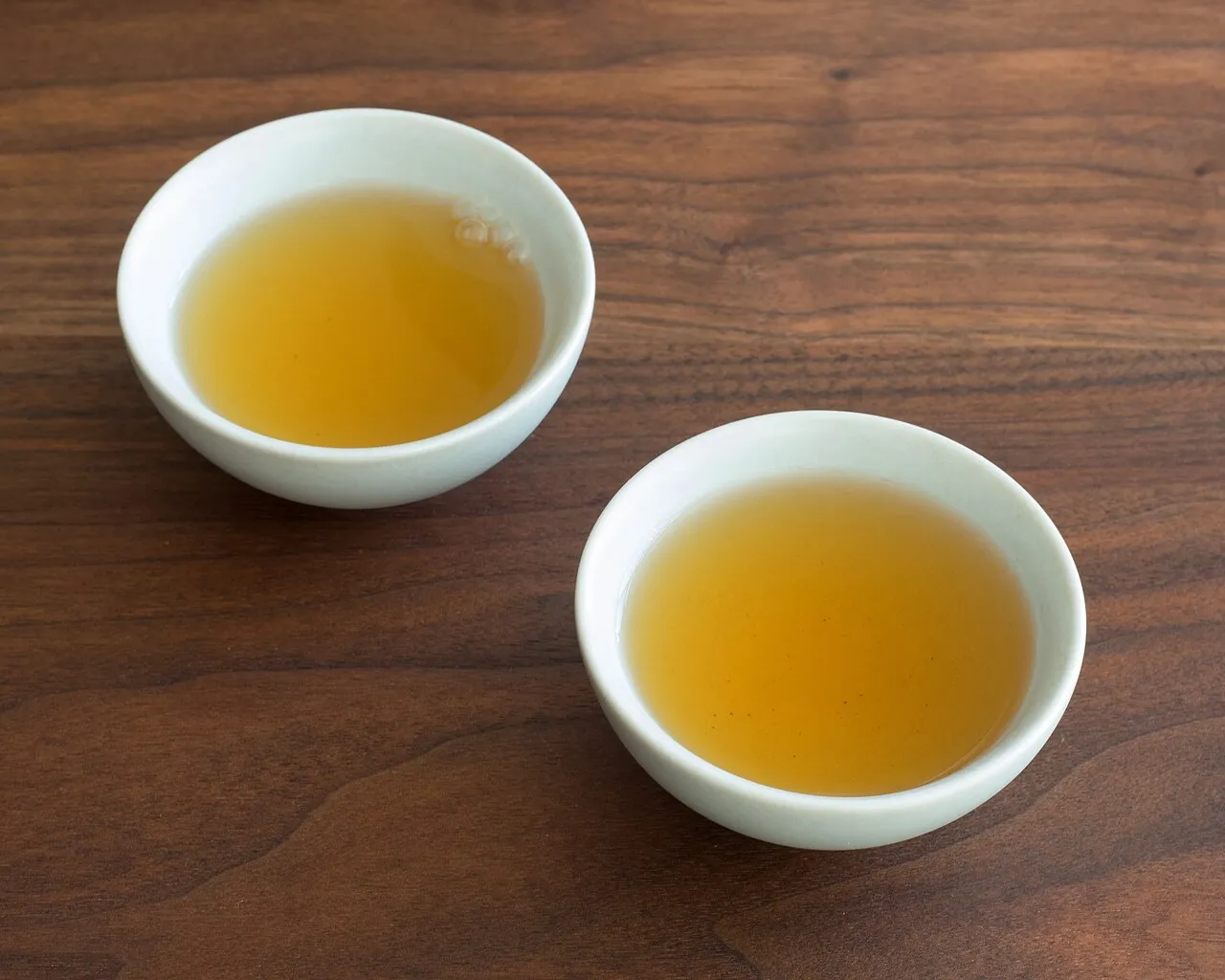
Caffeine: total intake and personal response
EFSA assessed single doses up to 200 mg and daily intake spread through the day up to 400 mg as generally raising no safety concerns for healthy adults. Its pregnancy assessment uses up to 200 mg/day. These values are not intake targets or guarantees of individual tolerance[1].
Count coffee, tea, energy drinks and relevant medicines together. Cup size, leaf quantity and preparation vary, so a number of cups is not a fixed dose. Adjust intake and timing if sleep or comfort is affected; discuss medical conditions, pregnancy, breastfeeding and long-term medication with a professional.
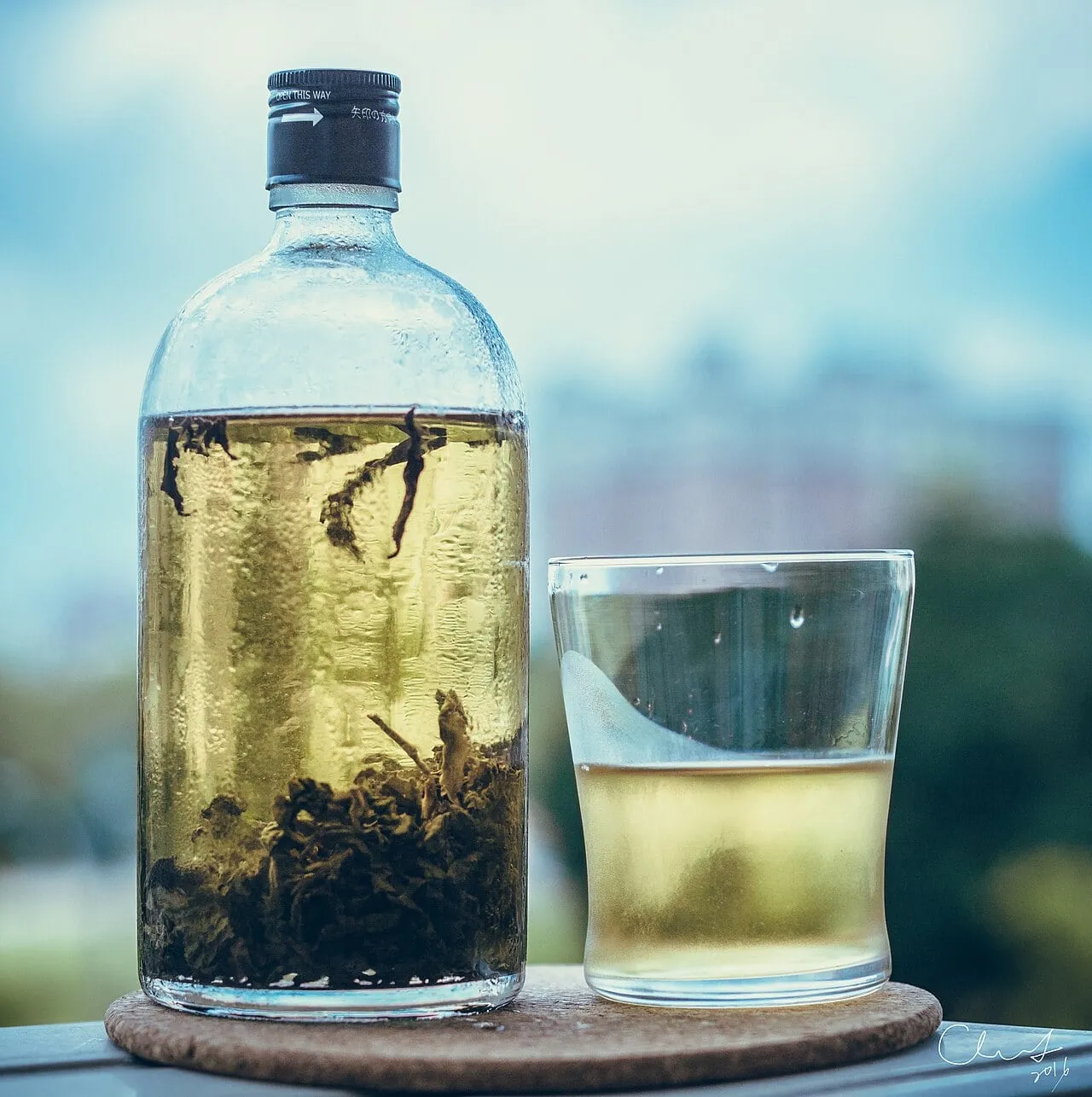
Cold brewing also extracts caffeine. A fixed percentage relative to hot brewing cannot represent every sample. See the cold-brew guide.
Caffeine, extracts and evidence
Pick a claim; read the three points.
Total intake and your response
- Caffeine across the day
- Your sleep and heart rate
- Adjust amount and timing
EFSA: 200 mg at once, 400 mg a day for adults; 200 mg in pregnancy.
Sources & limits
See this article’s references (R-335, R-336, R-337, R-339, R-342). The cards use no universal removal rates, caffeine ratios or ageing years; EFSA figures are safety limits, not targets.
General information; health conditions and medicines need individual advice.
Cold brew also brings tea leaves into contact with water. The steeping time and caffeine content of this example are not recorded, and colour cannot establish intake.
Theanine: distinguish a research lead from a promise
Small controlled trials have examined theanine with caffeine and reported changes in some cognitive or mood measures[5]. This does not establish an identical effect from an ordinary cup or make tea a treatment for anxiety or insomnia.
Health outcomes: interpret the type of evidence
NCCIH reports inconsistent human findings for cancer and notes that many cholesterol trials study extracts[4]. Observational associations and short-term biomarkers cannot alone establish improved long-term disease outcomes.
Choose tea around preference, sleep and the overall diet. An unsweetened drink may suit someone replacing sweetened beverages; raising tea strength for a supposed therapeutic effect is not necessary.
Extracts differ from the drink
EFSA associated supplemental EGCG exposures of 800 mg/day or more with elevated liver enzymes in trials. Lower exposure is not thereby established as safe, and the finding cannot be converted directly into a number of tea cups[2]. Assess concentrated supplements separately.
Why Cell, Animal, and Supplement Studies Do Not Equal Daily Tea Drinking
Popular headlines about tea and disease often blend findings from very different study designs. Before applying a headline to everyday tea drinking, check which tier of evidence the study actually examined[2][4]:
| Evidence Tier | Typical Exposure / Dosing | What Question It Can Answer | Why It Cannot Be Equated with “Drinking Tea Treats Disease” |
|---|---|---|---|
| In vitro cell / animal models | Bathing cultured cells in purified EGCG or dosing rodents with concentrated extracts | Explores molecular pathways and candidate biological mechanisms | After oral consumption in humans, catechins undergo extensive intestinal and hepatic metabolism; free plasma levels are far lower than petri-dish concentrations |
| High-dose green-tea extract supplement trials | Bolus capsules delivering hundreds of milligrams of concentrated catechins/EGCG | Evaluates short-term biomarkers (e.g., blood lipids) and safety boundaries of concentrated supplements | Bolus capsules create sharp plasma peaks unlike sipping brewed tea and have been linked to elevated liver enzymes at ≥800 mg EGCG/day in trials[2] |
| Observational cohort studies | Questionnaires tracking habitual tea intake across thousands of participants over years | Identifies statistical associations between tea-drinking habits and cardiometabolic or mortality outcomes | Habitual tea drinkers often differ in diet, smoking, activity, and socioeconomic factors (confounding); correlation does not establish clinical causation[4] |
| Controlled human trials (RCTs) of tea or constituents | Standardized tea infusions or measured L-theanine + caffeine doses tested against placebo | Measures acute physiological responses such as alertness, attention, or mealtime iron absorption under defined conditions[1][3][5] | Trials are often small and short-term with tightly specified preparations; they do not establish brewed tea as a clinical therapy for chronic conditions |
Iron and medication: context matters
A small controlled study found reduced non-haem iron absorption when tea accompanied a meal, with less inhibition when tea was delayed by one hour[3]. This does not establish that iron treatment becomes completely ineffective.
Follow medication-specific instructions for taking tablets with water and ask a clinician or pharmacist about tea. There is no universal one- or two-hour interval for every medicine.
Iron, medicines and fluoride
Pick a claim; read the three points.
Tea with an iron-rich meal
- An iron-rich meal
- Tea with it lowers absorption
- An hour later lessens it
If iron-deficient or taking iron, follow your clinician’s timing.
Sources & limits
See this article’s references (R-335, R-336, R-337, R-339, R-342). The cards use no universal removal rates, caffeine ratios or ageing years; EFSA figures are safety limits, not targets.
General information; health conditions and medicines need individual advice.
Fluoride: assess the actual exposure
Brick-tea research involves particular populations and sustained exposures[6]. Tea, water, total intake and duration all matter. Liquor colour cannot measure fluoride. Seek traceable products and relevant advice if habitual intake is high.
Keep a useful drinking record
For several days, note timing, cup volume, leaf quantity, steeping time, other caffeine sources and sleep or symptoms. This supports individual adjustment and professional discussion more effectively than a universal cup count.
The core claims above received a source check; this article has not undergone external clinical or tea-science review.
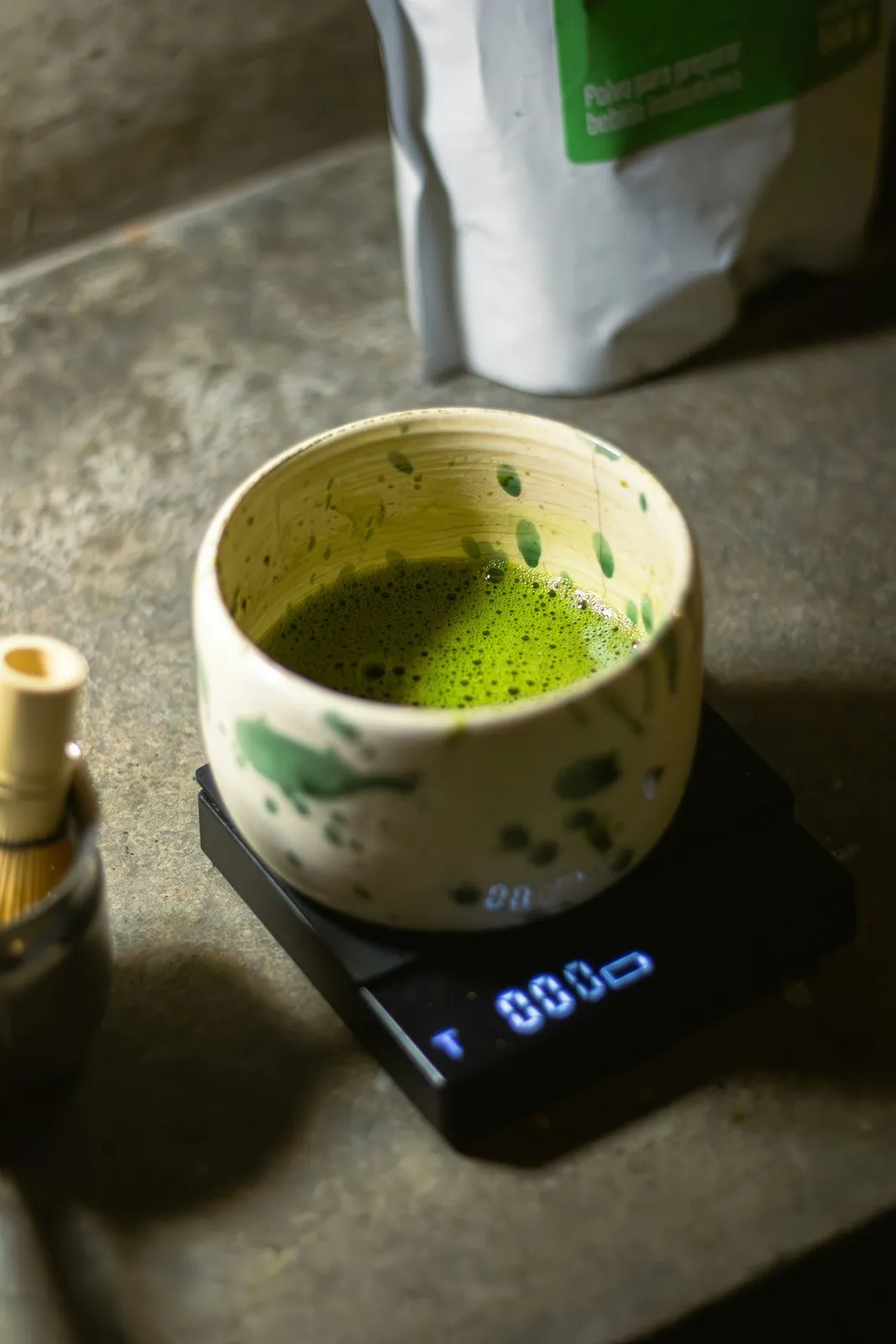
Recording the amount used can help compare your own preparations. A scale can be used when making matcha, but this photograph does not establish caffeine content or a recommended amount.
Related Articles
- Myth-Busting Common Tea Beliefs: Check the conditions behind seven widespread claims on pesticide rinsing, overnight tea, sobering up, and iron absorption.
- The Balance of Umami and Bitterness: L-Theanine & Caffeine: Learn how nitrogen metabolism and leaf maturity shape L-theanine and caffeine levels in the plant.
- Tea Polyphenols & the Catechin Family: Trace how catechins such as EGCG oxidise and polymerise across the six tea categories.
- Cold Brew Science: Review low-temperature extraction trends and refrigerated hygiene boundaries.
- Anhua Fuzhuan Tea: Understand the mature-leaf material and microbial fermentation craft behind traditional compressed brick teas.
- Brewing Basics: Adjust leaf quantity, water temperature, and steeping duration to manage strength in everyday cups.
References
- R-216 — EFSA NDA Panel (EFSA Panel on Dietetic Products, Nutrition and Allergies) (2015). Scientific Opinion on the safety of caffeine. EFSA Journal, 13(5), 4102. https://doi.org/10.2903/j.efsa.2015.4102
- R-217 — EFSA ANS Panel; Younes, M., et al. (2018). Scientific opinion on the safety of green tea catechins. EFSA Journal, 16(4), 5239. https://www.efsa.europa.eu/en/efsajournal/pub/5239
- R-335 — Ahmad Fuzi, S. F., et al. (2017). A 1-h time interval between a meal containing iron and consumption of tea attenuates the inhibitory effects on iron absorption. American Journal of Clinical Nutrition, 106(6), 1413–1421. https://doi.org/10.3945/ajcn.117.161364
- R-342 — National Center for Complementary and Integrative Health (2025-02). Green Tea: Usefulness and Safety. https://www.nccih.nih.gov/health/green-tea
- R-221 — Haskell, C. F., Kennedy, D. O., Milne, A. L., Wesnes, K. A., & Scholey, A. B. (2008). The effects of L-theanine, caffeine and their combination on cognition and mood. Biological Psychology, 77(2), 113–122. https://doi.org/10.1016/j.biopsycho.2007.09.008
- R-224 — Cao, J., et al. (2003). Brick tea fluoride as a main source of adult fluorosis. Food and Chemical Toxicology, 41(4), 535–542. https://doi.org/10.1016/s0278-6915(02)00285-5
Article Knowledge Network
Explore the connections between the teas, processes and flavours in this article.