
Start with the essentials
Jasmine tea is made by processing a finished tea further: dry base tea is mixed with jasmine flowers that are opening and releasing scent at night, the leaf absorbs their aroma, and the flowers are sieved out before the tea is dried. The cycle can be repeated, often ending with a short round of fresh flowers for a lively top note.
This article relates reprocessed teas to the six categories, explains each scenting step, uses one study to show how rounds change aroma, and separates scented tea from added petals and flavouring.
Three key points
- Reprocessed tea builds on a base categoryThe base tea gives body and the flowers supply aroma.
- Aroma is absorbed through scentingMixing, cooling, sieving and re-drying build intensity over rounds; the final round adds freshness.
- Petals in the cup are not proof of scentingSpent flowers are usually removed; name, ingredients and standard show what the product is.
What to notice when tasting
Smell the dry leaf, then the lid and empty cup. Notice whether the floral note is fresh and integrated or sharp and fleeting, then match what you sense with the base tea, ingredients and standard on the label.
Beyond the six categories: what is a reprocessed tea?
The six tea categories separate green, white, yellow, oolong, black and dark tea by their primary processing. Reprocessed teas take one of these finished teas and process it further: scenting it with fresh flowers, compressing it, packing it into bags or grinding it to powder[1].
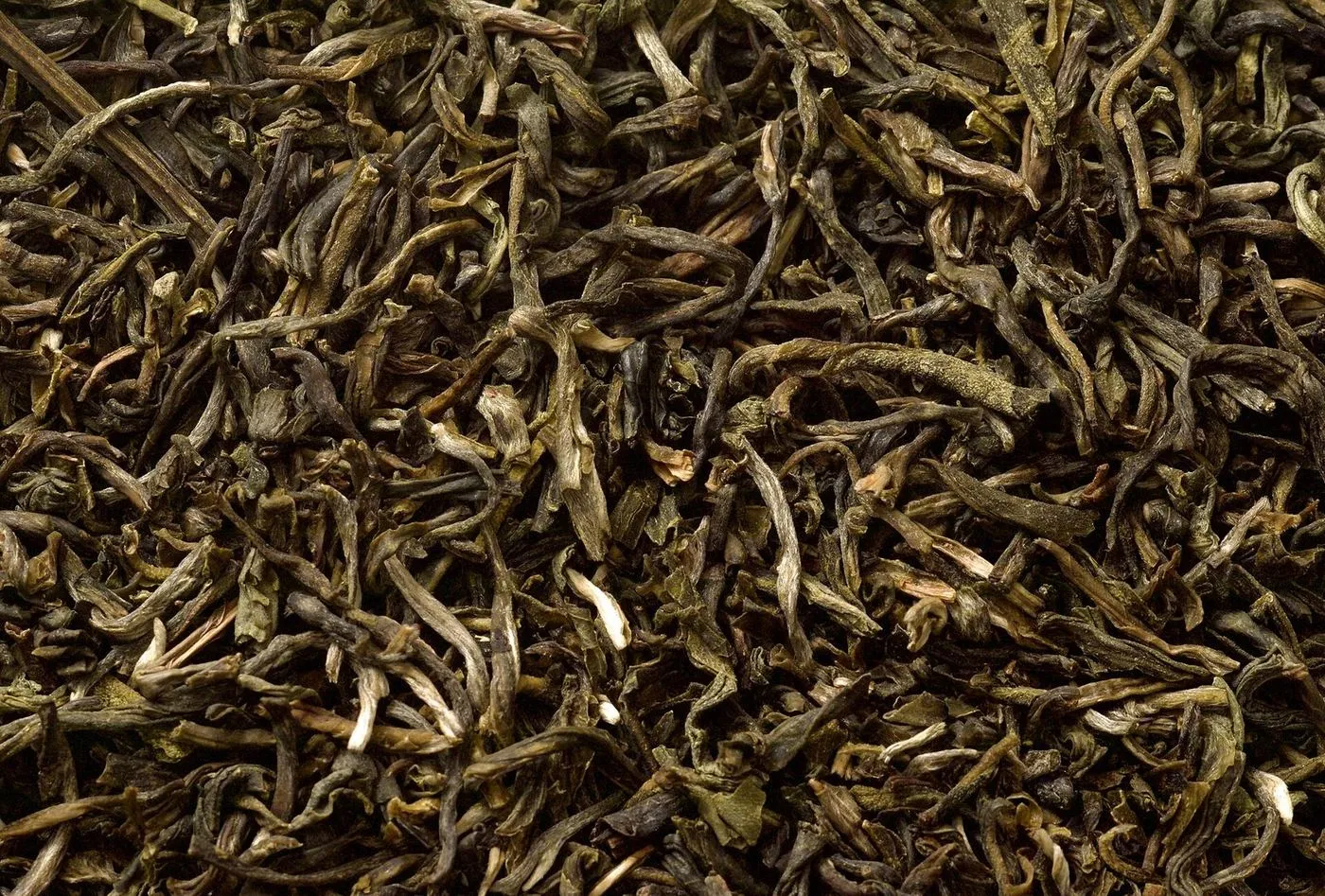
“Reprocessed” therefore describes a layer of processing, not a seventh flavour. A jasmine tea still has a base tea: usually green tea, though white, black and oolong bases also exist. The base gives the cup its body; the flowers supply aroma. Both shape the result.
Compression needs a separate reading. White tea cakes, pu-erh cakes and Fuzhuan bricks are first classified by their raw material and primary processing as white or dark tea; pressing them is a change of form. For a specific product, follow the standard it declares.
Scenting: letting dry tea absorb fresh flowers
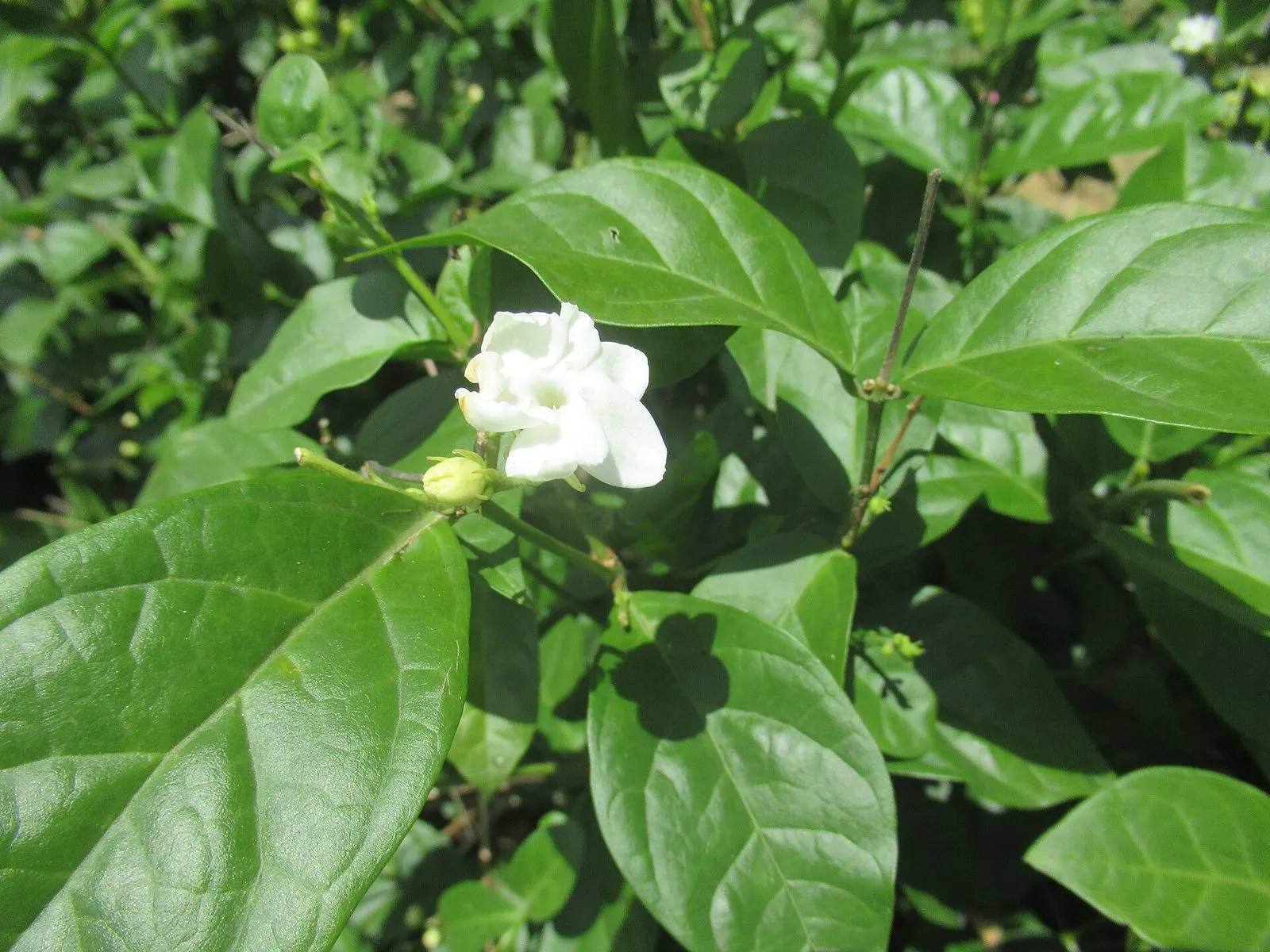
The key step is scenting (窨制, xūn zhì). Dry base tea is layered or mixed with freshly opened, fragrant flowers so that the leaf absorbs their aroma. The spent flowers are then sieved out and the damp tea is dried again[2][3].
| Step | What happens | Why |
|---|---|---|
| Base preparation | Re-dry and cool the base tea, controlling moisture | Dry leaf absorbs aroma and moisture more readily |
| Flower care | Harvest jasmine buds in the late afternoon and let them open | Jasmine opens and releases scent at night |
| Mixing | Combine tea and flowers in layers or heaps | The leaf keeps absorbing aroma as the heap rests |
| Cooling (通花) | Spread the heap when it warms, then re-heap | Respiring flowers release heat; too much heat dulls the aroma |
| Sieving (起花) | Separate spent flowers from the damp tea | Spent flowers left in add a stuffy note |
| Re-drying (复火) | Dry the tea again | Restores dryness for the next round or for storage |
| Final round (提花) | A short last round with a small amount of top flowers, without re-drying | Adds a fresh, lively top note |
These step names come from the national processing specification. Flower ratios, times and temperatures are adjusted for the base grade, the flowers and the maker’s experience[3].
One round of scenting, step by step
Six steps, from opening flowers to the final round.
Buds picked at dusk open overnight
- Jasmine picked in bud late in the day
- Spread and piled until they open into a “bowl”
- Fragrance peaks as the flowers open
Jasmine releases its scent at night, so the tea is mixed in when the flowers are giving off the most.
Details & sources
- What happens
- Pick buds at dusk; spread and pile them to open
- Why
- Jasmine opens and gives off scent at night
Step names and purposes follow the processing code GB/T 34779-2017 as summarised in this article [3]; the 45 °C and 35 °C points come from one study [4]. Real amounts, times and temperatures vary with the tea base, the flowers and the maker.
Flower counts, pile shapes and the aroma column show the steps and the direction of change, not to scale; amounts and temperatures come from one study.
“Four rounds plus a final round” in one study
A study from Fujian Agriculture and Forestry University followed the national specification through four scenting rounds and a final round, sampling volatiles after each[4]. Its settings illustrate the rhythm of the process but are one specific schedule, not universal parameters:
- jasmine was used when opened into a “bowl” shape at around 9 p.m.;
- the first round used about 70 kg of flowers per 100 kg of base tea, falling to 60, 50 and 40 kg in later rounds;
- heaps warmer than 45 °C were spread to cool to about 35 °C before re-heaping;
- the final round used about 10 kg of flowers per 100 kg of tea for about 6 hours, without drying.
The number and amount of volatile compounds rose with each round, and the freshness, intensity, purity and persistence of the aroma increased. The first two rounds changed the tea most; the final round mainly added freshness[4]. That is why products advertise their number of rounds: it usually relates to aroma intensity, but on its own, without flower quality, base tea and process control, it does not guarantee a good cup.
Four rounds plus a final round
Same tea each round; watch the flowers and the aroma.
Round 1: the most flowers
- 100 kg of tea base
- About 70 kg of jasmine
- Aroma builds in the tea (schematic)
In the study, the first two rounds changed the aroma the most.
Details & sources
- Flowers
- About 70 kg per 100 kg tea
- Aroma in the study
- Large rise in volatile compounds
Flower amounts and the 6-hour final round follow one study’s “four rounds plus a final round” [4]. It is one worked example, not a standard recipe.
Flower counts, pile shapes and the aroma column show the steps and the direction of change, not to scale; amounts and temperatures come from one study.
What jasmine aroma is made of
A study of jasmine tea infusion identified 66 volatile compounds, six of which were rated potent odorants; a model mixture of those six came close to the tea’s aroma[5]. The authors found linalool (floral) and methyl anthranilate (grape-like, sweet) most critical: leaving out the latter, or swapping linalool for its other enantiomer, noticeably changed the model[5].
This helps explain two common impressions. Good jasmine tea smells fresh and integrated with the liquor; a sharp, surface-level perfume that vanishes after a few infusions, or a stewed note, is a reason to look at processing and storage. Aroma judgements still rest on tasting, not on a single compound.
Dried petals in the cup are not the scented aroma
In traditional scenting the spent flowers are sieved out, so finished tea usually carries few dried jasmine flowers[3]. Some products add a few dried flowers for appearance; dried flowers hold far less aroma than the fresh ones used in scenting.
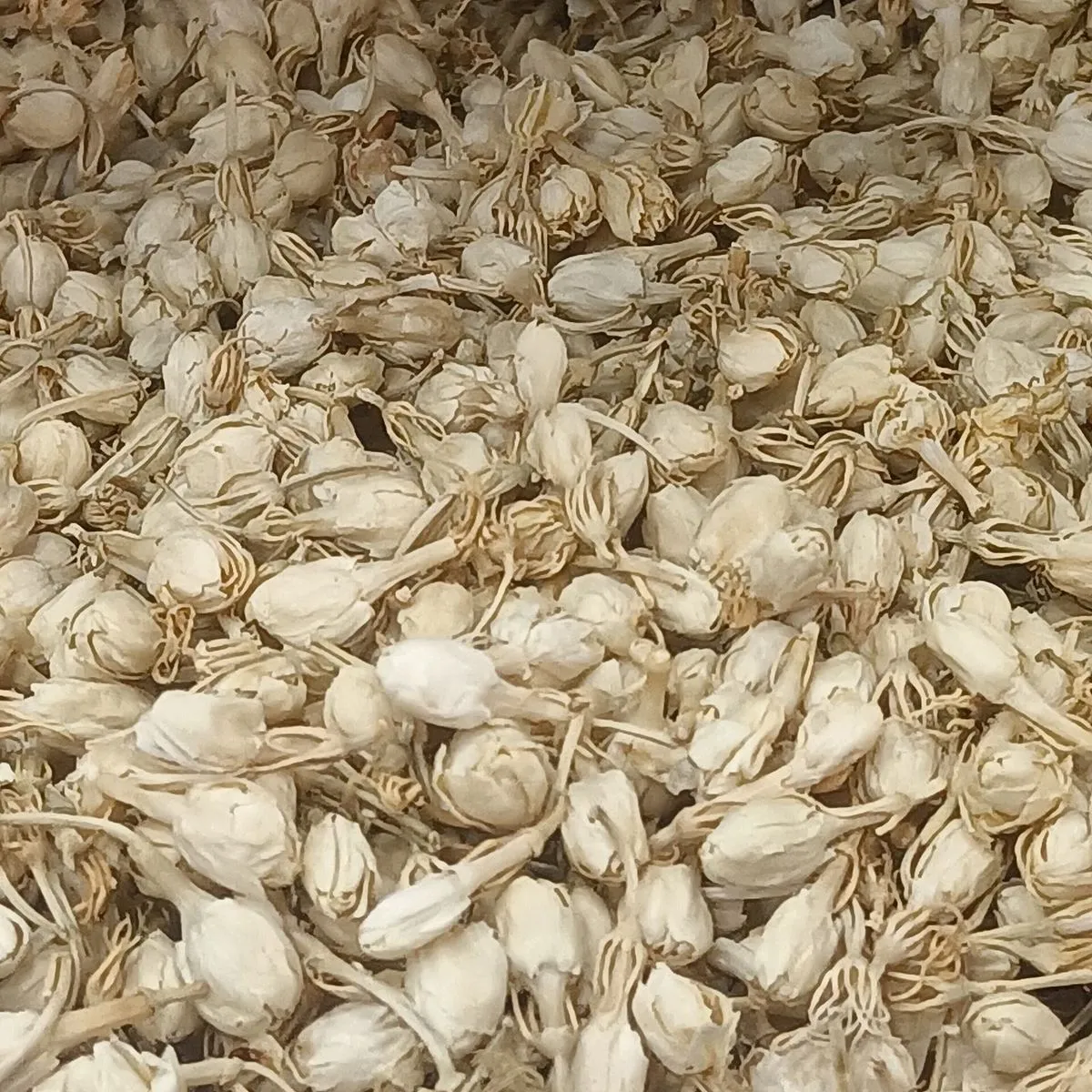
A cup full of petals therefore does not indicate many scenting rounds, and seeing none does not mean the tea was not scented. Read the product name, ingredients and declared standard: flower-scented tea, tea blended with flowers or fruit, and tea with added flavourings are labelled differently. See Reading tea labels.
Reading grades and standards
Jasmine tea has its own Chinese national standard, GB/T 22292-2017, in force since 2018, which classifies products by base tea and form and sets sensory and physicochemical requirements for each grade[2]. A “special grade” or “grade one” is comparable only within that system, not with the same words on a Longjing or Congou black tea.
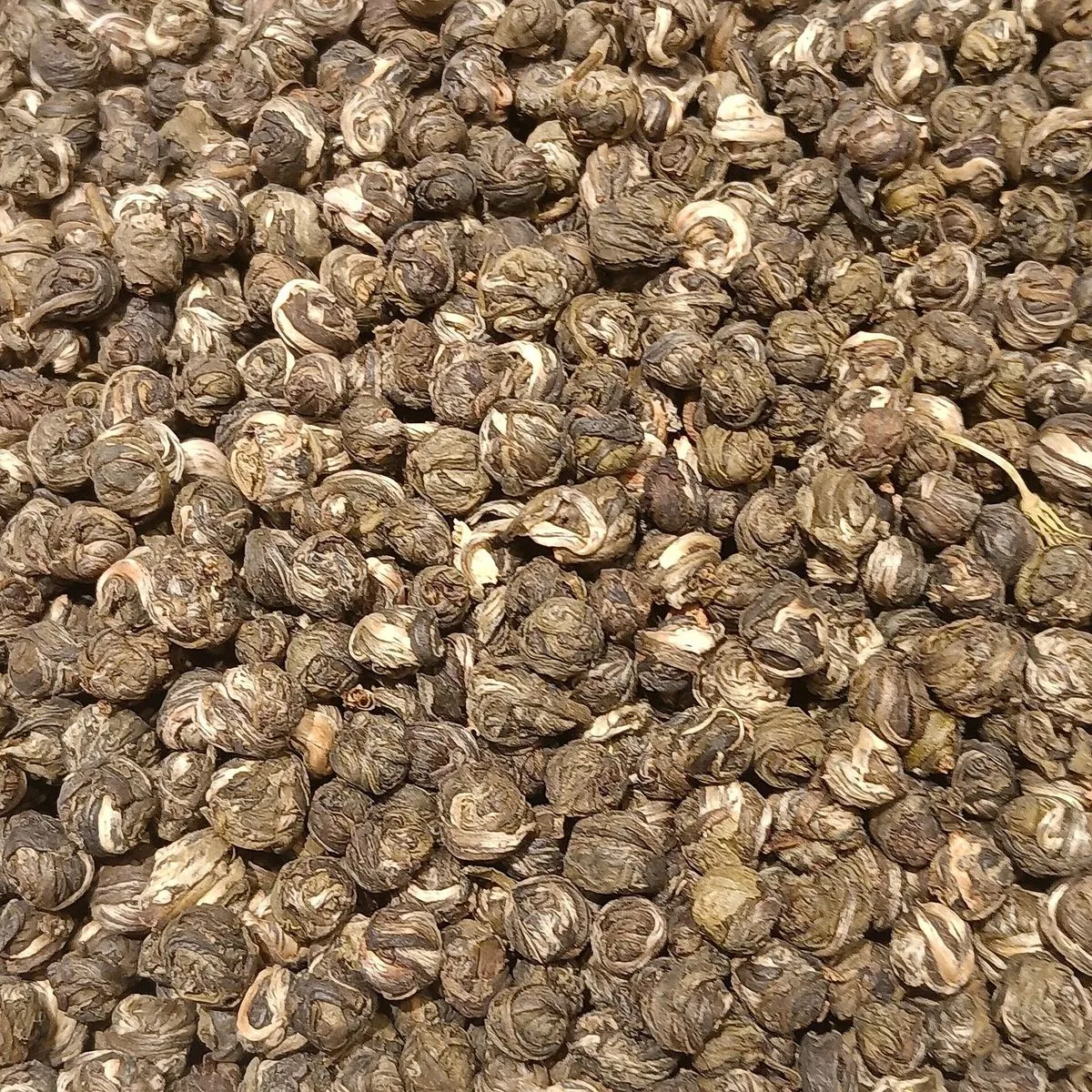
Names such as “jasmine silver needle”, “jasmine pearls” or piaoxue mostly describe leaf shape or local usage. Whether they are formal grades depends on the standard the product declares.
Brewing and storage
Most jasmine tea uses a baked green tea base, so start from green tea settings: water a little below boiling, in a glass or gaiwan, then smell the lid and the empty cup. To keep the aroma lively, do not let the first infusion sit too long. See Brewing basics.
Floral aroma fades and picks up odours more easily than the tea’s own aroma. Seal and shade an opened pack and keep it away from strong smells; it is usually a tea to drink fresh rather than to age. See Storing tea at home.
Jasmine tea on a green tea base contains caffeine, so count it in the evening. See Caffeine and sleep.
Not only jasmine
The same idea applies to other flowers: magnolia, chloranthus, osmanthus and rose can all scent tea, often paired with a suitable base such as osmanthus with oolong or black tea. Each flower opens and releases scent on its own schedule, and the process is adjusted accordingly. For any floral tea, ask three questions: what is the base, was the flower scented in or added, and what standard does it follow?
Related entries
- The six tea categories: understand the base categories before the processing added on top.
- Reading tea labels: tell scented tea, flower blends and flavoured tea apart on a label.
- Composition and flavour: where tea aroma compounds come from and how they are perceived.
- How to buy tea: compare grades and prices with side-by-side tasting.
- Storing tea at home: protecting floral teas from moisture and odours once opened.
References
- R-160 — GB/T 30766-2014.《茶叶分类》(Tea classification). National Technical Committee for Tea Standardization (SAC/TC339).
- R-412 — General Administration of Quality Supervision, Inspection and Quarantine; Standardization Administration of China (2017). Jasmine tea 《茉莉花茶》(GB/T 22292-2017). Issued 2017-11-01, effective 2018-02-01, replacing GB/T 22292-2008.
- R-413 — General Administration of Quality Supervision, Inspection and Quarantine; Standardization Administration of China (2017). Technical specification for processing of jasmine tea 《茉莉花茶加工技术规范》(GB/T 34779-2017). Issued 2017-11-01, effective 2018-05-01.
- R-411 — Zhang, C., Zhou, C., Tian, C., Xu, K., Lai, Z., Lin, Y., & Guo, Y. (2023). Volatilomics Analysis of Jasmine Tea during Multiple Rounds of Scenting Processes. Foods, 12(4), 812. https://doi.org/10.3390/foods12040812
- R-410 — Ito, Y., Sugimoto, A., Kakuda, T., & Kubota, K. (2002). Identification of potent odorants in Chinese jasmine green tea scented with flowers of Jasminum sambac. Journal of Agricultural and Food Chemistry, 50(17), 4878–4884. https://doi.org/10.1021/jf020282h
Article Knowledge Network
Explore the connections between the teas, processes and flavours in this article.